
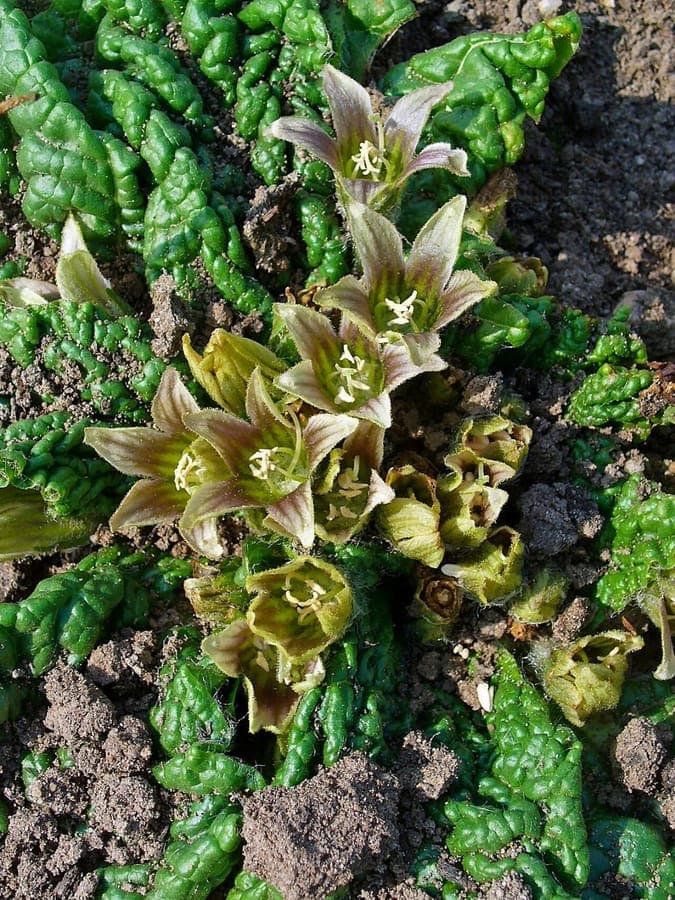
H. Zell / CC BY-SA 3.0, via Wikimedia Commons
Mandrake (Mandragora officinarum): complete guide
Mandragora officinarum
¿Quieres ver Mandrake (Mandragora officinarum): complete guide en tu jardín?
1 minuto, sin tarjeta de crédito
Overview
The mandrake (Mandragora officinarum), legendary in European folklore and medical history, is a remarkable Mediterranean perennial belonging to the Solanaceae family. Native from northern Italy through the Balkans to the Levant, this botanical rarity has captivated gardeners, herbalists, and occultists for millennia. The mandrake's anthropomorphic roots, according to folk tales, emit bloodcurdling screams when harvested - a myth that has surrounded this plant with mystique for over two thousand years. While the screaming root is purely legendary, the plant's genuine toxicity and remarkable growth habits make it genuinely fascinating.
In contemporary gardening, the mandrake remains a collector's specimen, typically grown by botanical enthusiasts willing to provide precise Mediterranean conditions. The plant contains tropane alkaloids including scopolamine and hyoscyamine, compounds historically used in medieval medicine with varying degrees of success and significant risk. Every part of the mandrake is poisonous, making this unsuitable for households with children or pets. However, for experienced gardeners seeking a living connection to botanical history, few plants rival the mandrake's unique combination of mystery, rarity, and horticultural challenge.
Appearance & bloom cycle
The mandrake emerges as a low-growing herbaceous rosette reaching 20-40 centimeters in height, occasionally exceeding 50 centimeters under optimal conditions. The plant's distinctive taproot, thick and often 20-40 centimeters deep, anchors a crown of long, deeply lobed dark green leaves arranged in a basal rosette. Individual leaves stretch 20-30 centimeters long with irregularly wavy margins, creating an almost prehistoric appearance.
Flowers appear remarkably early, typically from January through March in Mediterranean regions, representing one of the first blooms to appear in seasonal cycles. Each flower consists of five petals arranged in a star shape, colored cream to pale lavender with prominent dark purple veins. These flowers, measuring 3-4 centimeters across, arise from leaf axils close to the ground. Following successful pollination by early bees or hand-pollination, globular berries develop over several weeks, transitioning from green to brilliant yellow when fully ripe. These berries, roughly the size of golf balls, contain hundreds of brown seeds embedded in gelatinous pulp.
Ideal location
Mandrakes demand full sun to partial shade with a minimum of 6-8 hours of direct sunlight daily for vigorous growth and reliable flowering. In Mediterranean climates with scorching summers, afternoon shade prevents stress during July and August. The plant tolerates temperature fluctuations reasonably well once established, but extreme heat combined with inconsistent watering causes decline. Position the mandrake where it receives morning sun and some afternoon protection, particularly in continental or hot-summer climates.
The plant absolutely requires a cold winter dormancy period spanning 8-12 weeks with temperatures between 5-10 degrees Celsius. Without adequate chilling, flowering fails almost entirely and vegetative growth becomes stunted. This dormancy mirrors the Mediterranean winter cycle essential to the plant's biological rhythms. Protect plants from harsh winds that can shred foliage, and ensure adequate air circulation to prevent fungal diseases, particularly in humid regions. In temperate climates, container culture with winter storage in cool greenhouses or unheated frames works excellently.
Soil requirements
Mandrake cultivation hinges critically on soil drainage. This Mediterranean native cannot tolerate waterlogged conditions for more than brief periods, quickly succumbing to root rot. The ideal soil mixture balances fertility with exceptional drainage: a pH between 6.5 and 7.5 provides optimal nutrient availability. For container culture, prepare a custom mix combining three parts quality potting soil with two parts coarse sand, one part perlite, and one part fine gravel or pumice.
When planting in gardens, prepare raised beds or mounded areas ensuring water rapidly percolates away from the root zone. Work mineral amendments 30 centimeters deep, incorporating sand, small gravel, and grit throughout. The mandrake responds to light feeding with minimal organic matter - excessive nitrogen promotes lush foliage at the expense of flowers. Add well-aged compost at no more than 20 percent of the soil volume. Avoid fresh manure, which can encourage soft growth and diseases. Slightly alkaline conditions (pH 7.0-7.5) appear optimal based on native habitat observations.
Watering
Mandrake watering requires consistent attention and judgment. During active growth periods (spring and autumn), water thoroughly when the top 2-3 centimeters of soil becomes dry to the touch. This establishes a rhythm avoiding both drought stress and waterlogging - the twin pitfalls of mandrake cultivation. In summer months, when growth naturally declines and flowering ceases, reduce watering frequency by half. The plant enters semidormancy, requiring water only to prevent complete desiccation.
Winter presents the greatest challenge: maintain slightly moist soil without sogginess as the plant slumbers through cold months. Many Mediterranean growers allow pots to dry nearly completely from October through January, watering sparingly only if visible wilting appears. In temperate climates with extended wet winters, maintain slightly more moisture but ensure drainage remains excellent. Overwatering during dormancy causes certain root rot from pathogenic fungi.
Use soft water ideally - rainwater is excellent. Hard tap water containing dissolved limestone gradually shifts soil pH upward, eventually creating nutrient deficiencies. Water at the plant's base, never over foliage, which can introduce fungal spores and damage delicate tissues. In containers, ensure drainage holes remain unobstructed, elevating pots on feet if necessary for air circulation beneath containers.
Diseño gratis
¿Quieres ver Mandrake (Mandragora officinarum): complete guide en tu jardín? Crea un diseño gratis ahora.
Pruning
Mandrakes require minimal pruning given their naturally compact, low-growing form. Simply remove dead, damaged, or diseased foliage at the base as needed. Make clean cuts without tearing, using sterilized pruning tools to prevent wound infections. Gloves are recommended when handling plants due to toxicity.
After flowering concludes, remove spent flower stems if desired, though this isn't necessary. The plant naturally sheds dead tissues. Any diseased foliage should be removed immediately and disposed of safely away from compost bins - never compost mandrake material due to toxicity and persistent alkaloid residues. Sterilize all tools with alcohol or bleach solutions between plants.
Maintenance calendar
January-February: Observe plants closely as flowering begins. Provide minimal water, only enough to prevent complete drying. Ensure cold temperatures remain steady between 5-10 degrees Celsius. Begin gradually increasing light exposure as days lengthen.
March: Flowering peaks; hand-pollinate flowers with a small brush if outdoor insects are scarce. Gradually increase watering as new growth emerges. Transition potted specimens to warmer locations if temperatures remain harsh.
April-May: Vigorous foliage growth and berry development. Maintain consistent moisture with excellent drainage. Provide 6-8 hours of direct sun daily. Develop a feeding schedule: light fertilization every three weeks with half-strength dilute liquid fertilizer.
June-July: Growth slows dramatically as summer heat arrives. Move container plants to partial shade in extremely hot regions. Reduce watering frequency and monitor carefully for heat stress despite seeming dormancy.
August: Peak dormancy; the plant may appear nearly lifeless. Ensure soil dries between waterings but doesn't remain desert-dry indefinitely. Monitor for fungal issues in humid climates; improve air circulation with gentle fans.
September-October: Growth resumes gradually as temperatures moderate. Increase watering progressively. Begin acclimating plants to cool conditions if kept indoors during winter.
November-December: Transition to winter dormancy gradually over four weeks. Dramatically reduce watering and stop all feeding. Provide cool conditions (5-10 degrees Celsius) without allowing hard freezes that damage or kill the plant.
Winter hardiness
Mandragora officinarum tolerates temperatures to approximately -8 degrees Celsius briefly, but sustained freezing kills above-ground tissues and damages roots. In regions with harsh winters below -10 degrees Celsius, year-round container cultivation under winter protection is essential. In Mediterranean climates, plants established in gardens with excellent drainage survive winter outdoors with occasional frost protection during extremely cold snaps.
In temperate regions from the UK through central Europe, container gardening with winter storage in unheated frames, cold greenhouses, or sheltered shed locations is mandatory. This provides necessary cold dormancy without lethal freezing. Mulch can offer modest protection outdoors, but reliable winter survival requires frost-free storage. Plants kept indoors in heated homes rarely flower reliably the following year due to insufficient chilling hours.
Companion plants
Mandrakes pair beautifully with drought-tolerant Mediterranean plants sharing similar cultural requirements: various Euphorbia species, miniature bearded irises, sedums, and alpine fescues create harmonious communities. These companions accept identical drainage, watering, and feeding regimes. Avoid planting near vigorous spreaders that overwhelm neighbors or moisture-demanding plants requiring frequent watering. Mandrakes appear most dramatic as individual specimens in rock gardens, container collections, or historic medicinal gardens where their unique form and early flowers command full attention.
In themed Mediterranean gardens, position mandrakes as focal points in sunny borders surrounded by silver-leaved artemisias, spreading thymes, and delicate spring bulbs. Their early flowering provides interest when most garden areas remain bare, creating living documentation of seasonal cycles and botanical history.
Closing
Cultivating Mandragora officinarum represents a meaningful horticultural challenge combining botanical knowledge with historical perspective. This plant demands respect due to its toxicity and refuses compromise on cultural conditions - there are no shortcuts with mandrakes. Yet successful cultivation teaches fundamental lessons applicable to all Mediterranean plants: the importance of drainage, seasonal rhythm, and patience. Every flower represents months of careful attention rewarded with botanical brilliance. Start modestly with one or two specimens in containers, master the essentials, then expand your mandrake collection. Discover more about rare Mediterranean plants and expert cultivation techniques at gardenworld.app.
For gardeners seeking connection to botanical history and willing to provide precise care, the mandrake offers unparalleled rewards. The plant's legendary status, supported by genuine botanical interest, makes it far more than mere garden curiosity - it's a living manuscript of Mediterranean ecology and human botanical knowledge spanning millennia. Explore comprehensive plant guides and cultivation resources at gardenworld.app.
¿Quieres ver Mandrake (Mandragora officinarum): complete guide en tu jardín? Crea un diseño gratis ahora.
Sube una foto, elige un estilo y obtén un diseño fotorrealista con lista de plantas en menos de un minuto.
Más de 10.000 jardines diseñados
Sin tarjeta de crédito


Plantas similares
Solanum dolichosepalum: complete guide
Solanum dolichosepalum
Discover Solanum dolichosepalum, an Andean nightshade with striking long sepals. Growing tips, hardiness, and companion planting for your patio.
Solanum ripense: complete guide
Solanum ripense
Discover Solanum ripense, a moisture-loving Andean nightshade for pond edges and conservatories. Growing tips, hardiness, and companions.
Solanum tomentosum: complete guide
Solanum tomentosum
Discover Solanum tomentosum, a thorny South African nightshade with felted leaves. Growing tips, hardiness, and companion planting ideas.