
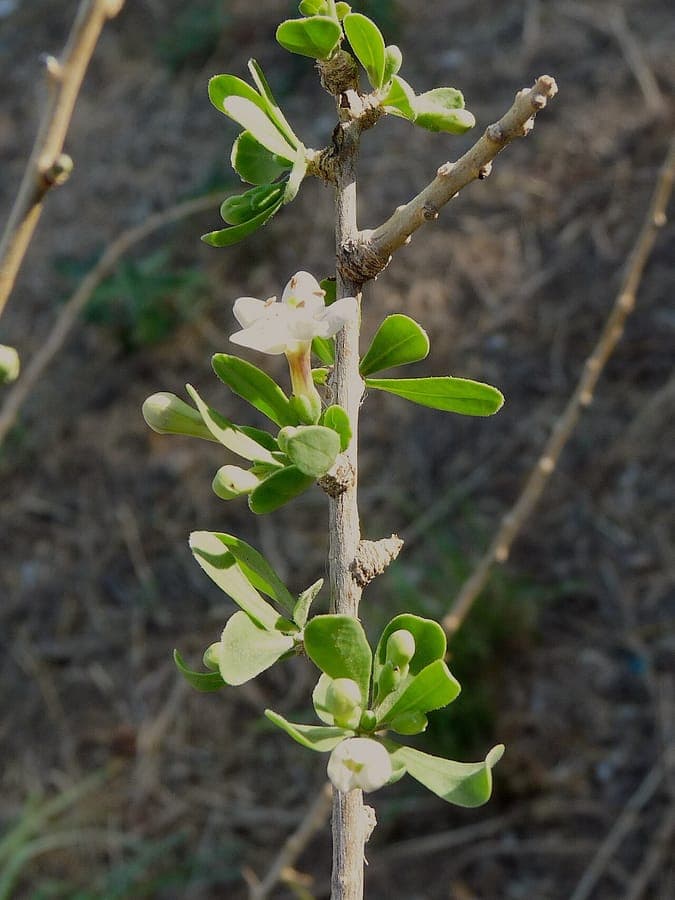
Wikiwiki / CC BY-SA 4.0, via Wikimedia Commons
Lycium europaeum: complete guide
Lycium europaeum
¿Quieres ver Lycium europaeum: complete guide en tu jardín?
1 minuto, sin tarjeta de crédito
Overview
Lycium europaeum, commonly known as European boxthorn or Lyciet d'Europe, is a versatile Mediterranean shrub from the Solanaceae family. This garden-worthy plant grows naturally around the Mediterranean and is adapted to hot, dry conditions. With its elegant flowers and ornamental red to orange berries, it offers an excellent choice for drought-tolerant gardens.
This shrub originates from Mediterranean coastal regions, from North Africa to the Middle East. It is valued by landscape architects for its adaptability to challenging conditions and its role as a bird attractor. Lycium europaeum offers both aesthetic and ecological value in modern gardens.
Appearance and Bloom Time
Lycium europaeum grows as an open shrub reaching approximately 1.5 meters high. The branches are sometimes armed with short thorns. The small, narrow leaves are semi-deciduous and remain green year-round. This gives the plant a characteristic, airy appearance.
Flowers appear from March to October, depending on climate. The small, purple flowers are discreet but charming. In summer and fall, red to orange berries appear, consumed by birds. These berries provide year-long interest and bird food.
Ideal Location
Lycium europaeum grows best in full sun and shows a strong preference for open, warm locations. A minimum of 8 hours of direct sunlight daily is ideal. The plant tolerates full sea wind and coastal exposure exceptionally well.
This is an excellent choice for dry gardens, Mediterranean gardens, coastal reinforcement projects, and warm-side borders. In gardenworld.app designs, it is regularly used for garden boundaries and ecological elements. The plant also lends itself well to container cultivation.
Soil
Lycium europaeum grows in virtually all soil types, provided they are well-drained. The plant is very tolerant of poor soils and even grows on gravel and sandy grounds. Heavy clay must be improved by adding sand and gravel.
PH preference is neutral to basic (pH 6.5-8.0). Organic material can be added but is not essential. This plant is exceptionally adapted to the sparse soils of Mediterranean regions.
Diseño gratis
¿Quieres ver Lycium europaeum: complete guide en tu jardín? Crea un diseño gratis ahora.
Watering
Once established, Lycium europaeum is exceptionally drought-tolerant. This is not a plant requiring much water. In dry gardens, it can grow for months without additional rainfall.
Young plants should receive regular water during the first growing season. Water carefully during dry periods, but ensure good drainage. Adult plants easily survive on rainfall and can grow very dry.
Pruning
Lycium europaeum grows wild and can grow substantially. Regular pruning in early spring helps maintain compact form. Remove old, hardened wood and dead branches.
The plant tolerates heavy pruning well and grows out quickly. This makes it a good candidate for hedges and shaped elements. Use clean tools to prevent spreading of plant diseases.
Maintenance Calendar
Spring (March-May): Prune for form and size. Begin watering if rainfall is lacking.
Summer (June-August): Minimal maintenance. Observe bloom. Water only in extreme drought.
Fall (September-November): Enjoy berries and bird visits. Prepare for winter.
Winter (December-February): Protect against hard frost in harsh areas. Usually no protection needed.
Winter Hardiness
Lycium europaeum is moderately winter-hardy and tolerates temperatures down to approximately -10 degrees Celsius. In average temperate climates, it can overwinter outdoors, although it may be severely damaged in harsh frosts.
In very cold zones (USDA 5 and colder), it must be protected or grown indoors. In Mediterranean and temperate zones, it grows permanently outdoors. In gardenworld.app zones 7-10, winter protection is usually not needed.
Companion Plants
Lycium europaeum combines beautifully with other Mediterranean plants. Try it with rosemary, lavender, and santolina for texture and fragrance. This combination creates an authentic Mediterranean garden.
Also combine with agapanthus, cistus, and gaura for blooming background. In dry gardens, it works well next to tamarix and artemisia. This strategy provides interesting texture and bloom patterns.
Closing Remarks
Lycium europaeum deserves more attention in modern dry gardens. With its adaptability, drought tolerance, and bird food provision, it offers a valuable, sustainable option. Whether you are planting a Mediterranean garden or seeking a bird-friendly design - this European shrub merits a place in your plan.
Available at your local plant retailer. Discover this robust Mediterranean shrub and bring warm elegance to your dry garden plan - gardenworld.app helps you plant successfully.
¿Quieres ver Lycium europaeum: complete guide en tu jardín? Crea un diseño gratis ahora.
Sube una foto, elige un estilo y obtén un diseño fotorrealista con lista de plantas en menos de un minuto.
Sin tarjeta de crédito


Plantas similares
Solanum dolichosepalum: complete guide
Solanum dolichosepalum
Discover Solanum dolichosepalum, an Andean nightshade with striking long sepals. Growing tips, hardiness, and companion planting for your patio.
Solanum ripense: complete guide
Solanum ripense
Discover Solanum ripense, a moisture-loving Andean nightshade for pond edges and conservatories. Growing tips, hardiness, and companions.
Solanum tomentosum: complete guide
Solanum tomentosum
Discover Solanum tomentosum, a thorny South African nightshade with felted leaves. Growing tips, hardiness, and companion planting ideas.