
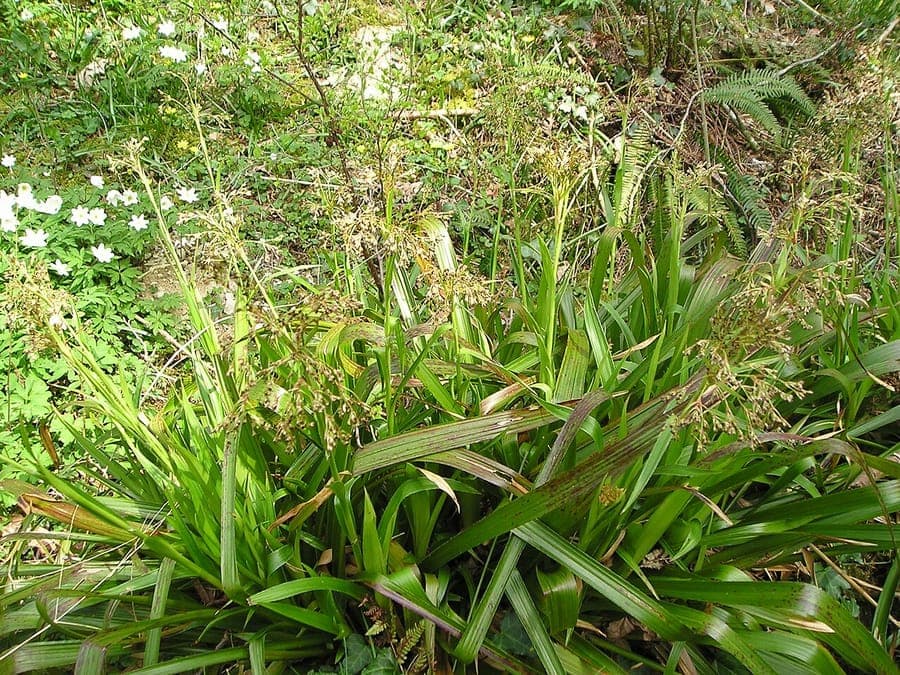
Cwmhiraeth / CC BY-SA 4.0, via Wikimedia Commons
Great wood-rush: complete guide
Luzula sylvatica
¿Quieres ver Great wood-rush: complete guide en tu jardín?
1 minuto, sin tarjeta de crédito
Luzula sylvatica: Complete Guide to Growing Great Wood-Rush
Luzula sylvatica, commonly known as great wood-rush or greater wood-rush, stands as the largest and most imposing member of the Luzula genus and distinguishes itself through dramatic beauty and exceptional suitability for large shaded gardens and woodland landscapes. This European grass species grows naturally throughout extensive forest regions from Scandinavia to the Caucasus, transforming forest floors with its substantial, elegantly outgrown tufts. In contemporary landscape design, this plant is highly sought for creating grand, impactful shade scenes that combine botanical dignity with landscape impact.
The botanical name Luzula sylvatica refers directly to its natural habitat: "sylvatica" means "woodland" or "pertaining to forests". This is indeed a plant that feels at home in forest-like environments and reaches its full majesty there. In British gardens, great wood-rush can grow 45 to 60 centimetres tall, sometimes even larger under ideal conditions, making it a highly prominent structural element.
Appearance and Flowering Display
Great wood-rush is characterized by very broad, soft, coarsely-textured leaves far larger than those of related species. These leaves can reach 15 millimetres wide, significantly larger than the typical 3-5 millimetres of other Luzula species. The plant forms dense, full tufts occupying considerably more space than its relatives, making it particularly suited for large open shade areas. The leaves are dark green and persistent year-round, making it a valuable structural plant even in midwinter.
The flowering display of Luzula sylvatica is spectacular in scale and scope. The plant produces between May and July long, slender, elegantly drooping flower spikes on stems reaching 50 to 70 centimetres tall, much higher than the foliage. These inflorescences consist of small clustered flowers initially white-brownish but yellowing as they mature. The drooping growth habit of these flower spikes gives the plant its characteristic silhouette and adds a different structural quality than vertically-growing species.
Following flowering and seed-set, small seed capsules form with characteristic hairy covering. These seed capsules provide the plant with visual interest in late summer, though the primary visual importance of this species lies in its growing season foliage.
Ideal Growing Location
Great wood-rush thrives optimally in zones from full to light shade and can prosper without difficulty in areas where other plants scarcely grow. This species performs best in large, open shade areas, such as beneath imposing deciduous trees or along woodland edges. The plant is extremely shade-tolerant and accepts up to 100 percent shade without visual decline.
The plant grows naturally on humus-rich, moisture-retentive forest soils and performs best in British gardens when similar soil composition is provided. Preference lies with areas that are regularly moist but not to permanent waterlogging. The plant is very tolerant of acid soils and also thrives on neutral to slightly acidic substrates.
Soil and Nutritional Requirements
Great wood-rush prefers very humus-rich, moisture-retentive soils with a pH range of 4.5 to 6.5, though it can grow to pH 7.0. The presence of substantial organic matter is essential for optimal growth. Incorporating 5 to 8 centimetres of well-rotted compost or leaf mould at planting gives the plant an excellent starting position.
Annual feeding is recommended. A yearly application of 2 to 3 centimetres of leaf mould mulch in spring (March to April) promotes vigorous growth. In very poor soils, supplementation with organic fertilizers such as bone meal or fish emulsion proves useful, though the plant thrives without synthetic fertilizers provided sufficient organic matter is present.
Diseño gratis
¿Quieres ver Great wood-rush: complete guide en tu jardín? Crea un diseño gratis ahora.
Watering and Moisture Management
Luzula sylvatica is more moisture-preferring than many grass species and grows naturally in areas with regular moisture availability. In British gardens with regular rainfall, supplemental watering is usually unnecessary except during dry periods exceeding three weeks without rain. The plant tolerates moisture-rich soils well and can even grow in semi-wet conditions provided roots don't remain permanently waterlogged.
When planting in normally draining soils, regular watering proves important during the first two growing seasons. Once established (after two full seasons), the plant tolerates considerable dry periods, though growth under such conditions will be less vigorous. Monitoring soil moisture during dry summers is recommended, particularly in years with very limited rainfall.
Pruning and Maintenance
Great wood-rush requires very minimal pruning. Because it is considerably larger than related species, removing dead leaves and previous stems gently in late winter (February to March) can prove beneficial. This is best accomplished by carefully inserting the hand deep into the plant and removing dead material.
Formal mowing or pruning is inadvisable and damages the plant's natural form. Allow the plant to maintain its natural height and form, adding considerably more dimension to garden design than trimmed variants. The plant retains attractive volume and structure even in midwinter.
Seasonal Maintenance Calendar
The simple seasonal calendar for Luzula sylvatica: March to April: Removal of dead leaves, application of leaf mould mulch May to July: Flowering period, soil moisture observation August to September: Seed ripening, cautious watering during droughts October to November: Winter preparation December to February: Minimal maintenance
Winter Hardiness
Luzula sylvatica is exceptionally hardy. The plant grows naturally in European forest regions extending to the Caucasus and tolerates winters of -20°C and lower without any damage. This species is suitable for all British climate zones, including the northernmost regions. The plant also tolerates heavy snow cover without damage.
Suitable Plant Combinations
Great wood-rush combines excellently with other large shade plants. With large ferns such as Dryopteris erythrosora or Polystichum setiferum, it creates a stately woodland effect. The broad leaves of Fatsia japonica contrast beautifully with Luzula sylvatica's finer foliage.
With shade-flowering plants such as Helleborus foetidus or Smilacina racemosa, Luzula sylvatica forms an elegant backdrop. In woodland edge plantings, combining with young deciduous trees such as Acer campestre or Fagus sylvatica creates natural transitions.
For stately effects in large gardens, Luzula sylvatica combines with Hosta cultivars, their large leaves together creating highly imposing foliage effects. This is only suitable for larger gardens given the space both plants require.
Availability in Britain
Luzula sylvatica is available from various garden centres and specialized online suppliers. Online research reveals numerous suppliers stocking this large variant. Planting distance for ground cover: 1-2 plants per square metre, depending on desired coverage. For dramatic solo plantings: one specimen per 2-3 square metres.
Conclusion
Luzula sylvatica offers an unparalleled solution for large, open shade areas in British gardens. With its imposing growth, hardiness, and minimal maintenance requirements, it is a valuable structural element in sustainable, large-scale garden designs. For comprehensive advice on integration into garden schemes and plant combinations, consult gardenworld.app where professional garden design is available.
¿Quieres ver Great wood-rush: complete guide en tu jardín? Crea un diseño gratis ahora.
Sube una foto, elige un estilo y obtén un diseño fotorrealista con lista de plantas en menos de un minuto.
Más de 10.000 jardines diseñados
Sin tarjeta de crédito


Plantas similares
Heath wood-rush: complete guide
Luzula multiflora
Explore Luzula multiflora, a versatile grass species for shaded gardens. Learn about care, growth habits, local suppliers, and garden design integration.
Hairy woodrush: complete guide
Luzula pilosa
Explore Luzula pilosa, an elegant shade plant for gardens. Learn care requirements, growth habits, sourcing options, and design integration.