
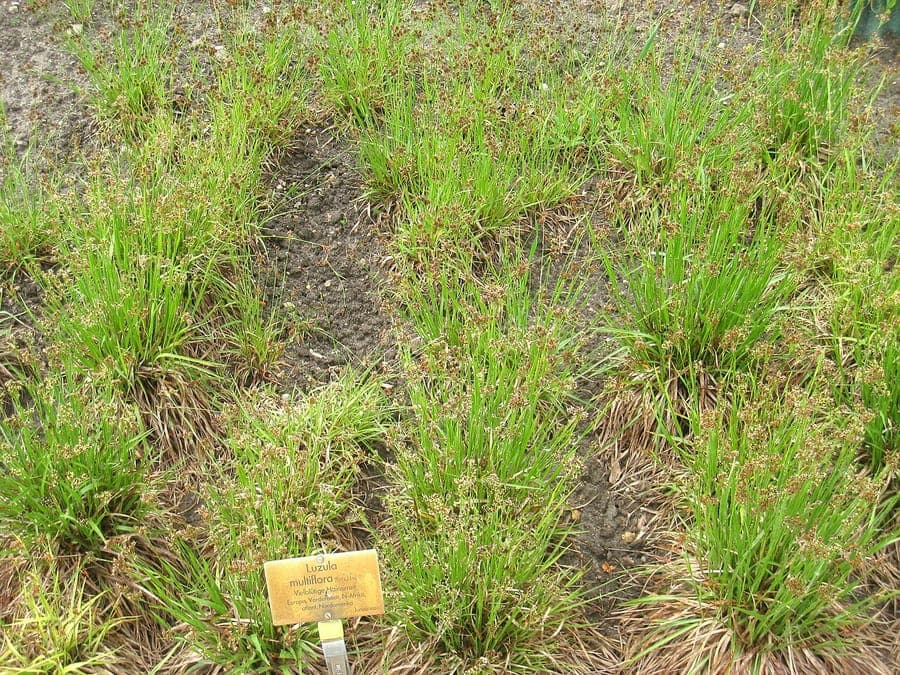
Daderot / Public domain, via Wikimedia Commons
Heath wood-rush: complete guide
Luzula multiflora
¿Quieres ver Heath wood-rush: complete guide en tu jardín?
1 minuto, sin tarjeta de crédito
Luzula multiflora: The Complete Guide to Growing Heath Wood-Rush
Luzula multiflora, commonly known as heath wood-rush or common woodrush, is a remarkable grass-like perennial that brings elegance and practicality to shaded garden spaces. This European species belongs to the Juncaceae family and grows naturally throughout subarctic and temperate zones of the Northern Hemisphere, from Scandinavia to Siberia and as far south as Costa Rica and the Falkland Islands. In modern landscape design, this plant has become essential for creating sustainable, low-maintenance gardens that embrace natural aesthetics and ecological principles.
The botanical name Luzula multiflora refers to the plant's defining characteristic: the numerous flower heads it produces throughout the growing season. This resilient grass-like perennial grows in dense, elegant tufts reaching 15 to 30 centimetres in height, making it ideal for ground cover in shaded zones where many traditional grasses struggle. The fine structure and feathery appearance of the plant create a soft, almost ephemeral quality that provides textural contrast to other garden elements.
Appearance and Blooming Pattern
Heath wood-rush distinguishes itself through dark green, fine-textured leaves that persist throughout the year, making this species invaluable in winter gardens where evergreen structure is desired. The leaves are narrow and grass-like, measuring approximately 3 to 5 millimetres wide, with distinctive hairiness particularly visible along the leaf margins and blade surfaces. This characteristic hairiness gives the plant one of its common names and becomes especially pronounced as the plant matures.
The flowering display of Luzula multiflora occurs between April and June, producing numerous brownish inflorescences held on slender stems above the leaf canopy. These flower heads consist of small, individually insignificant flowers arranged in distinctive ball-like clusters called spikes. While not showy in traditional horticultural terms, the geometric arrangement of these inflorescences provides architectural interest that landscape designers increasingly value. The flowers develop in successive waves throughout the spring and early summer, extending the visual interest of the plant far beyond a typical brief flowering window.
Following pollination and successful flower development, each flower produces a small seed enclosed in a distinctive hairy involucre. This seed production mechanism allows established populations to self-seed gently in suitable garden conditions, creating natural-looking drifts over time. The maturation of seeds occurs through July and August, with dispersal mechanisms favouring wind and water movement.
Ideal Growing Location
Heath wood-rush thrives in shaded conditions that would prove inhospitable to most other grass species. This makes it an outstanding choice for planting beneath mature trees, in half-shaded borders, and along woodland edge conditions. The plant is profoundly shade-tolerant and accepts light levels from 70 to 100 percent shade, earning it recognition among gardeners managing difficult deep-shade situations.
Botanical studies reveal that in nature, this species colonizes well-drained but consistently moist, humus-rich forest floors and heathland soils in cool-temperate to subarctic regions. In garden settings, optimal performance occurs when plants are positioned in locations that maintain moderate moisture without waterlogging. The species also exhibits remarkable tolerance for acid soils, thriving in pH ranges between 4.5 and 6.5, making it suitable for sandy, poor-fertility, and sandy-loam substrates.
When incorporating this plant into garden design, consideration of moisture patterns and root competition from adjacent trees proves essential. Many mature trees develop deep root systems that might dry surface layers, yet Luzula multiflora adapts well to such dry-shade conditions, though growth may be less vigorous than in consistently moist locations.
Soil and Nutrition
The preferred soil for Luzula multiflora consists of moisture-retentive, humus-rich, acidic conditions. A pH range of 4.5 to 6.5 proves ideal, though the plant tolerates slightly more neutral soils adequately. The presence of organic matter, decomposing leaf litter, and woody fragments creates ideal growing conditions. Gardeners who maintain natural leaf-fall in shaded areas, allowing leaves to decompose in situ, create naturally ideal growing conditions for this species.
Organic fertilization approaches are recommended over synthetic alternatives. Annual applications of well-rotted compost or leaf mould during March to April promote vigorous growth and enhance the plant's ability to compete with root pressure from neighbouring plants. Heavy synthetic nitrogen fertilization should be avoided, as this promotes unnatural, excessive growth that compromises the plant's graceful form and natural aesthetic.
Diseño gratis
¿Quieres ver Heath wood-rush: complete guide en tu jardín? Crea un diseño gratis ahora.
Watering and Moisture Management
Although Luzula multiflora occurs naturally in moist habitats, it is misleading to assume the plant requires waterlogged conditions constantly. The species tolerates consistently moist soils excellently but requires adequate drainage to prevent root rot. In British and northern European gardens, regular rainfall typically proves sufficient, with supplemental irrigation needed only during dry periods exceeding three weeks without rainfall.
In naturally wet gardens and near pond margins, the plant thrives when positioned along water edges. In standard border situations, incorporating additional organic material at planting improves moisture retention without creating waterlogged conditions. This is achieved by amending planting soil with 25 to 30 percent leaf mould.
During extended drought periods (May through September without meaningful rainfall), supplemental watering benefits young plants, particularly during the first two growing seasons. Once established, mature plants tolerate substantial dry periods, though growth and flowering intensity will decrease noticeably.
Pruning and Maintenance
One of Luzula multiflora's greatest advantages is its minimal maintenance requirements. The plant requires no regular pruning and rarely produces overgrown, scraggly growth requiring intervention. However, a gentle tidying during late winter (January to February) benefits gardens where appearance during dormant seasons matters. This consists simply of removing accumulated dead leaves and previous season's debris by hand-combing or gentle brushing.
Formal pruning is unnecessary and actually undesirable, as it disrupts the plant's natural form. Gardeners practising winter interest principles will find Luzula multiflora presents an attractive winter silhouette even in cold months, with persistent leaves providing structure and textural interest.
Where self-sown seedlings appear in inappropriate locations (such as paving joints or structural elements), they can be gently removed or transplanted. Early spring (March to April) proves optimal timing, when young seedlings remain soft and pliable.
Maintenance Calendar
The seasonal management calendar for Luzula multiflora is straightforward: March to April: Remove dead leaves, apply leaf mould mulch; May to September: Monitor soil moisture, water only during extended droughts; October to November: Allow natural autumn transition; December to February: Minimal intervention, gentle removal of accumulated debris.
Winter Hardiness and Climate Tolerance
Luzula multiflora demonstrates exceptional winter hardiness throughout British and northern European gardens, growing naturally in subarctic regions from Scandinavia to Siberia. The plant suits all temperate climate zones and tolerates winter temperatures of -20°C and considerably lower without damage. Each spring, new growth emerges unblemished, confirming the species' extreme cold tolerance.
The plant also tolerates heavy snow cover without damage and resists snow-pack crushing that affects tender species. This makes it a reliable choice for gardens in exposed highland areas or regions experiencing severe winters.
Suitable Plant Combinations
Heath wood-rush combines beautifully with other shade-preferring plants sharing similar moisture requirements. For ground cover effects, fern species such as Athyrium filix-femina or Dryopteris erythrosora planted alongside Luzula multiflora create pleasing contrasts, with vertical fronds complementing the more horizontal growth habit of the woodrush. The architectural texture of fern fronds and the fine appearance of Luzula prove nearly ideal partners.
Shade-flowering companions including Helleborus niger (Christmas rose) and Epimedium species integrate beautifully, with blooms set dramatically against Luzula's verdant foliage. For subtle foliage interest, shade-loving foliage plants such as Heuchera 'Obsidian' with dark, dramatic leaves create striking contrast against the plant's medium green tones.
In woodland-edge plantings, Luzula multiflora combines effectively with young deciduous trees or shade-tolerant shrubs including Ilex aquifolium (holly) or Euonymus europaeus, creating natural-appearing woodland edge effects.
Availability and Sources
Luzula multiflora is widely available from specialist plant retailers and online suppliers throughout Britain and northern Europe. For British gardeners, recommended suppliers include specialist woodland plant nurseries and major garden centres. Online research via gardening websites and gardenworld.app reveals numerous suppliers. Plant approximately two to three plants per square metre for complete ground coverage within one to two growing seasons. Smaller starter plants (typically 1-2 litre pots) establish rapidly and prove more economical than larger specimens.
Conclusion
Luzula multiflora is a dependable, clean-performing plant that transforms shaded corners of any temperate garden. Its graceful growth habit, absolute winter hardiness, and minimal maintenance requirements make it an excellent choice for sustainable, ecologically responsible landscape design. Whether creating a traditional shade border or developing woodland-edge effects, this heath wood-rush merits a place in contemporary gardens. For assistance integrating this plant into broader garden designs and discovering complementary species, professional guidance available through gardenworld.app proves invaluable for creating cohesive, beautiful shaded landscapes.
¿Quieres ver Heath wood-rush: complete guide en tu jardín? Crea un diseño gratis ahora.
Sube una foto, elige un estilo y obtén un diseño fotorrealista con lista de plantas en menos de un minuto.
Más de 10.000 jardines diseñados
Sin tarjeta de crédito


Plantas similares
Hairy woodrush: complete guide
Luzula pilosa
Explore Luzula pilosa, an elegant shade plant for gardens. Learn care requirements, growth habits, sourcing options, and design integration.
Great wood-rush: complete guide
Luzula sylvatica
Discover Luzula sylvatica, ideal ground cover for large shaded gardens and woodland landscapes. Learn care, growth patterns, and sourcing.
Drooping sedge: complete guide
Carex pendula
Discover how to grow Carex pendula: ideal conditions, watering needs, pruning tips, and companion plants for this graceful, shade-loving sedge.