
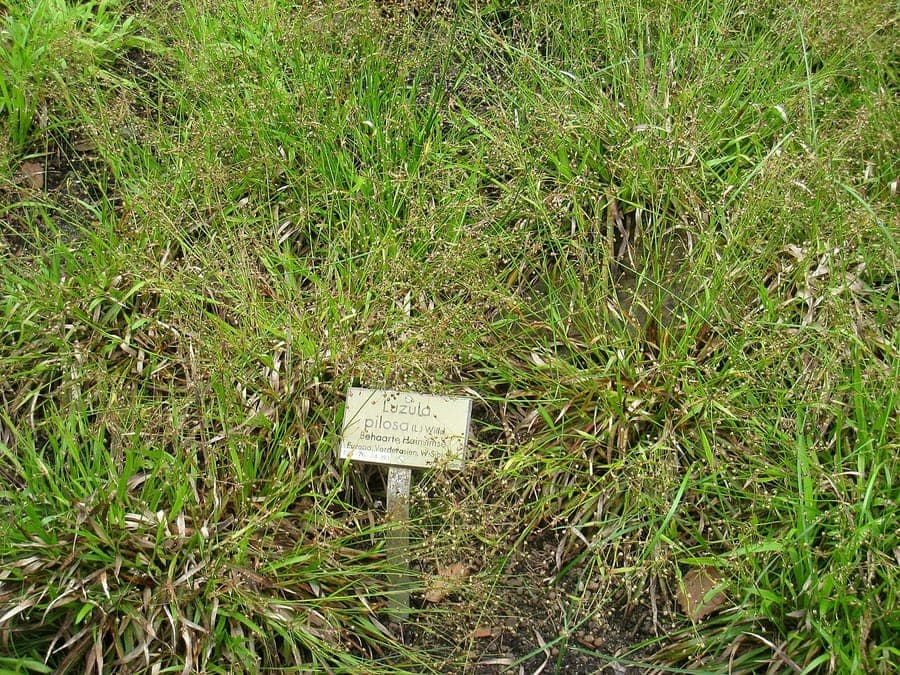
Daderot / Public domain, via Wikimedia Commons
Hairy woodrush: complete guide
Luzula pilosa
¿Quieres ver Hairy woodrush: complete guide en tu jardín?
1 minuto, sin tarjeta de crédito
Luzula pilosa: Complete Guide to Growing Hairy Woodrush
Luzula pilosa, commonly called hairy woodrush, is an elegant, fine-textured grass species that distinguishes itself through subtle beauty and exceptional suitability for European woodland edge and shade gardens. This species grows naturally throughout temperate Europe from Scandinavia to Siberia and has held a respected place in advanced landscape design programs for decades. In contemporary garden design, this plant is increasingly valued for creating naturalistic, low-maintenance landscapes that combine ecological value with refined aesthetics.
The botanical name Luzula pilosa refers directly to the plant's most distinctive feature: clearly visible hairiness on leaves and other plant structures. This characteristic hairiness distinguishes it from related species and makes it easily recognizable in the field. The plant grows in elegant, compact tufts reaching approximately 20 to 35 centimetres in height, making it suitable for medium-scale ground cover in mixed shade borders.
Appearance and Flowering Period
The hairy woodrush presents itself as a refined, grass-like plant with extremely slender, finely hairy leaves. These leaves are persistent and retain their green colour year-round, making this species invaluable in gardens where winter structure is desired. The leaf hairiness is clearly palpable and visible, especially under magnification or when back-lit against light, when it can lend an almost silvery sheen to the foliage.
Flowering of Luzula pilosa begins in March and continues through May, making it an early bloomer in the garden calendar. Flower heads form on elegant, extended stems that rise above the foliage, producing small clusters of delicate flowers. Flower colour ranges from brownish-white to pale rose, varying according to cultivar and growing conditions. This subtle colour variation makes the flowering period interesting for observant gardeners.
Following pollination, flowers produce small black seeds. These seeds can cause self-seeding in appropriate terrain, though this is usually manageable and even desirable in naturalistic planting schemes. Seed ripening occurs from June through July, after which period the seed-bearing stems retain textural value throughout autumn.
Ideal Growing Position
Luzula pilosa thrives optimally in areas receiving at least 50 percent shade, though it also performs well in full shade. This makes it a multifunctional plant for diverse shade situations: beneath deciduous trees with thin canopies, in northeast or northwest-facing borders, or in woodland edge plantings. The plant tolerates acid soils better than neutral, growing naturally in poor, somewhat sandy substrates.
In British gardens, the ideal situation combines light to moderate shade with moisture-retentive, humus-rich soil. However, the plant also suits drier shade situations, though these produce less luxuriant growth. In woodland edge plantings receiving light, diffuse shading from high tree cover, the plant performs exceptionally well.
Soil and Nutritional Requirements
Luzula pilosa prefers acid soils with pH ranges of 4.0 to 6.0, though it can grow to pH 7.0. Humus-rich, well-draining soils are preferred, though this species proves more tolerant of less-rich soils than some related species. Organic matter addition proves important: applying 3 to 5 centimetres of rotted compost or leaf mould at planting aids establishment.
Annual feeding is typically unnecessary, but applying 1-2 centimetres of leaf mould mulch as spring mulch in early March supports continued health. In poor soils, cautious application of low-nitrogen organic fertiliser (such as flower meal or blood and bone at pH 5-7) in early spring can prove beneficial.
Diseño gratis
¿Quieres ver Hairy woodrush: complete guide en tu jardín? Crea un diseño gratis ahora.
Water Management
Although Luzula pilosa grows naturally in areas with regular moisture availability, it is not aquatic and waterlogging proves harmful. In British conditions, regular rainfall typically suffices. Supplemental watering is needed only during periods exceeding four weeks without precipitation.
When planting in normally draining soils, initial watering proves important (two to three times weekly during the first month) to promote establishment. Once established (after two full growing seasons), the plant tolerates considerable dry periods without notable growth decline.
Pruning and Seasonal Care
Luzula pilosa requires minimal pruning. In practice, manually removing dead leaf material in late winter (February) typically suffices. A gentle "raking" in which dead leaf and stem material is carefully removed from the plant is all that is needed.
Formal pruning or mowing is inadvisable and damages the plant's natural growth habit. The plant maintains its winter silhouette well, and many landscape designers particularly appreciate the plant's architectural value during December through March.
Maintenance Calendar
The simple annual calendar for Luzula pilosa: March: Cleaning dead materials, application of leaf mould mulch April-May: Flowering period, no intervention needed June-July: Seed ripening, no actions required August-September: Observation of soil moisture, watering during droughts October-November: Winter preparation, no interventions December-February: Rest and minimal maintenance
Winter Hardiness
Luzula pilosa is exceptionally hardy and suitable for all British climate zones. Winters of -15°C to -20°C pose no problems, and the plant grows naturally in Scandinavian and Siberian regions experiencing much lower temperatures. The plant tolerates heavy snow loads without damage, making it reliable for elevated gardens and northern locations.
Suitable Plant Companions
Luzula pilosa combines excellently with other shade-preferring plants. With ferns such as Dryopteris filix-mas, it creates beautiful contrast of fine structure against the coarser texture of fern fronds. The delicate hairiness of Luzula pilosa contrasts beautifully with the smooth foliage of Fatsia japonica in larger gardens.
With early spring-flowering shade plants like Helleborus niger or Cyclamen coum, Luzula pilosa forms an elegant understory effect. In woodland edge plantings, combining with young deciduous trees or shrubs such as Euonymus europaeus and Ilex aquifolium creates natural transitions.
Availability in Britain
Luzula pilosa is available from specialist plant retailers and online suppliers. Online research reveals numerous suppliers stocking this species. Planting distance: 2-3 plants per square metre for complete ground cover effects.
Conclusion
Luzula pilosa offers a refined, practical solution for shade gardens. With its elegant growth, winter hardiness, and minimal maintenance requirements, it is a valuable component of sustainable garden design. For comprehensive advice on plant combinations and garden design, consult gardenworld.app where professional landscape design guidance is available.
¿Quieres ver Hairy woodrush: complete guide en tu jardín? Crea un diseño gratis ahora.
Sube una foto, elige un estilo y obtén un diseño fotorrealista con lista de plantas en menos de un minuto.
Más de 10.000 jardines diseñados
Sin tarjeta de crédito


Plantas similares
Heath wood-rush: complete guide
Luzula multiflora
Explore Luzula multiflora, a versatile grass species for shaded gardens. Learn about care, growth habits, local suppliers, and garden design integration.
Great wood-rush: complete guide
Luzula sylvatica
Discover Luzula sylvatica, ideal ground cover for large shaded gardens and woodland landscapes. Learn care, growth patterns, and sourcing.
Coralbells: complete guide
Heuchera sanguinea
Everything you need to know about growing Heuchera sanguinea: ideal conditions, watering schedule, pruning, and companion plants for shady borders.