
Wikimedia Commons / CC BY-SA 3.0, via Wikimedia Commons
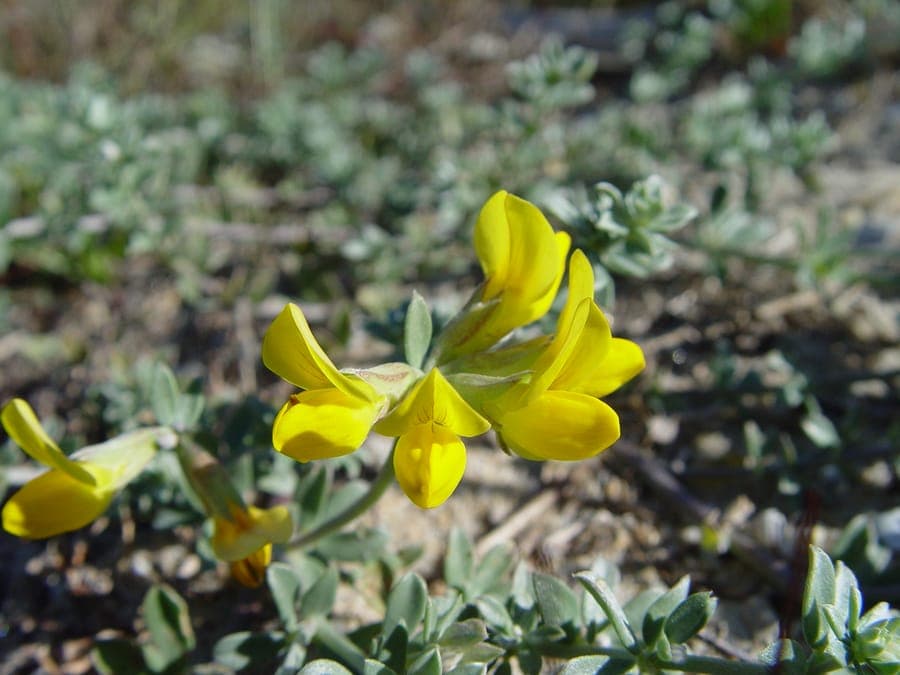
Cretan Bird's-foot Trefoil (Lotus creticus): complete guide
Lotus creticus
¿Quieres ver Cretan Bird's-foot Trefoil (Lotus creticus): complete guide en tu jardín?
1 minuto, sin tarjeta de crédito
Overview
Cretan bird's-foot trefoil (Lotus creticus) is a charming, small legume from the Mediterranean region, particularly Crete and other Mediterranean lands. This is a semi-hardy to hardy perennial characterized by very fine, feathery foliage and small yellow flowers.
This plant is particularly suitable for those seeking attractive gardening with ecological value. It's a forage plant for insects and a valuable element in wildflower borders. It grows compactly and requires minimal maintenance.
Appearance and bloom
Lotus creticus grows to about 15-30 cm tall, forming a compact, low-growing plant. The leaves are very fine and light, subdivided into small leaflets, giving the plant a delicate appearance. This feathery structure is highly attractive.
Flowers are small, yellow, about 0.8 cm in diameter, appearing in small, loose clusters. Flowering typically occurs May to September, peaking in summer. The flowers are very attractive to bees and other pollinators.
Ideal location
Cretan bird's-foot trefoil thrives best in full sun. Plant it in a location with at least six hours of direct sunlight daily. In partial shade it grows poorly. This is a heat-lover, so warm, sunny placement is essential.
Although a Mediterranean plant, it grows reasonably well in Northern Europe on warm sites. Plant it on the south side of a house or wall for best results.
Soil
Cretan bird's-foot trefoil is very tolerant of poor, thin soils. Actually, it grows better on poor, sandy, well-draining soils than on fertile ones. Heavy clay must absolutely be improved with sand.
Drainage is crucial. This plant dislikes wet feet. pH can range from 5.5 to 8, very flexible. Alkaline or neutral soil is actually preferred.
Planting and propagation
Easily grown from seed. Sow March-April directly in permanent location, or in pots on warm, light indoor spot for propagation. Seed prefers light, so don't sow deep. Ensure consistent moisture.
Germination typically occurs within 10-20 days at temperatures of 15-20 degrees. Seedlings can be planted out once about 5 cm tall.
Watering
After planting, minimal water is needed. Once well-rooted, this plant is highly drought-tolerant. In dry spells water can help, but isn't strictly necessary.
Above all, ensure the plant doesn't stay permanently wet. Overwatering is the #1 cause of failure. Better too dry than too wet.
Diseño gratis
¿Quieres ver Cretan Bird's-foot Trefoil (Lotus creticus): complete guide en tu jardín? Crea un diseño gratis ahora.
Maintenance
Minimal maintenance required. The plant grows somewhat untidy, so you can gently prune it back in March or April for neater form. This also promotes bushier growth.
Removing spent flowers isn't necessary for growth but can extend flowering. The plant self-seeds easily, so you can let it set seed for next generation.
Feeding
This plant makes no high nutritional demands. As a legume, it fixes nitrogen from air. Feeding is usually unnecessary. Too much feeding can lead to excessive leaf growth.
Winter hardiness
Lotus creticus is semi-hardy to hardy. In mild winters down to -10 degrees it can remain outdoors. In harsh winters it may die, but self-seeds readily.
If you protect your plant against extreme wet winters (e.g., with roof protection), it usually survives. In colder regions propagation and protection may be needed.
Maintenance calendar
March-May: Propagate indoors or sow directly. Water regularly. Plant out seedlings.
June-August: Peak flowering period. Minimal maintenance. Water in extremely dry spells.
August-October: Flowering continues. Collect seed. Winter preparation.
October-February: Dormancy. Minimal maintenance. Protect against extreme wet.
Companion plants
Cretan bird's-foot trefoil looks attractive beside:
- Other Mediterranean plants (Thymus, Rosmarinus, Lavandula)
- Silver foliage (Artemisia, Senecio)
- Other small legumes (Trifolium, Medicago)
- Ornamental grasses (Festuca glauca, Stipa)
- Wildflowers (Daisy, Poppy)
Pests and diseases
This plant is very problem-free. Possible issues:
- Rhizobia infections in extremely wet years (prevent with good drainage)
- Leaves can sometimes wilt quickly (usually water-related)
- Insects aren't really problematic
Ecological value
This is a plant with great ecological value. As a legume, it helps soil fertility. The flowers attract many pollinators. It's a forage plant for insects.
In wildflower borders it's a valuable addition for biodiversity.
Conclusion
Cretan bird's-foot trefoil is a delicate Mediterranean plant deserving attention in warm, sunny gardens. With its fine foliage, yellow flowers, and low maintenance needs, it's ideal for ecological, Mediterranean, or wildflower borders.
Plant it in full sun on well-drained, preferably poor soil. Protect against extreme wet winters. Available through seed merchants.
Want to discover more Mediterranean plants? Visit gardenworld.app for inspiration.
¿Quieres ver Cretan Bird's-foot Trefoil (Lotus creticus): complete guide en tu jardín? Crea un diseño gratis ahora.
Sube una foto, elige un estilo y obtén un diseño fotorrealista con lista de plantas en menos de un minuto.
Más de 10.000 jardines diseñados
Sin tarjeta de crédito


Plantas similares
Lotus corniculatus: complete guide
Lotus corniculatus
Discover bird's-foot trefoil: a robust, evergreen groundcover with bright yellow flowers. Ideal for rocky situations and naturalistic gardens.
Hop trefoil: complete guide
Medicago lupulina
Hop trefoil (Medicago lupulina) is a legume valuable for ground cover and fodder. Learn about cultivation, maintenance and benefits.
White clover: complete guide
Trifolium repens L.
White clover is an extremely useful ground cover with small white flowers. This guide helps you cultivate, maintain, and use it effectively in your garden.