
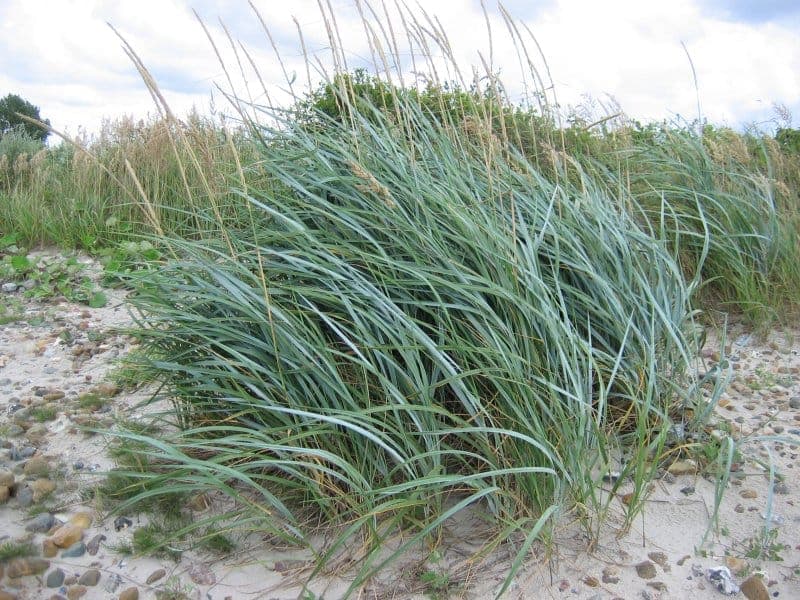
Kristian Peters -- Fabelfroh 09:25, 14 October 2005 (UTC) / CC BY-SA 3.0, via Wikimedia Commons
Lyme grass: complete guide
Leymus arenarius
¿Quieres ver Lyme grass: complete guide en tu jardín?
1 minuto, sin tarjeta de crédito
Overview
Lyme grass (Leymus arenarius), also called European dune grass, is a spectacular blue ornamental grass native to coastal zones of northern Europe, especially Scandinavia and the North Sea lands. This grass thrives in sandy soils where few other plants flourish, thanks to its deep root system and salt resistance. With its striking blue foliage, it grows 60-90 cm tall and produces impressive flower spikes in July-August. On gardenworld.app, Lyme grass is ideal for xeriscaping, erosion control, and modern grasslands where drama and texture are desired.
This grass isn't merely aesthetically attractive but also functional: it stabilizes sand, tolerates salt, and requires minimal water after establishment. Plant it in groups for maximum effect, along boundaries, or in large containers where its color can shine.
Appearance and bloom
Lyme grass forms a dense, upright grass clump with leaves that are blue-green to steel-gray - a very distinctive color in the plant world. Leaves are long, rather stiff, and somewhat spirally twisted. The stems reach 60-90 cm (2-3 feet) tall and bear in July-August magnificent flower spikes: elongated-lanceolate, initially green, later brown. The spikes remain ornamental throughout the season.
The plant forms no runners but spreads slowly via self-seeding. The entire grass retains its structure well into late autumn, making it valuable in winter garden designs. The blue foliage contrasts beautifully with dark plants or silhouetted against evening light.
Ideal location
Lyme grass thrives in full sun on sandy to very arid sites. Plant it in locations where many other plants desiccate. It tolerates full salt (coastal areas) and resists wind erosion excellently. A southwest-facing, open location is ideal where the grass can stretch in all directions.
On gardenworld.app, place Lyme grass in xeriscape zones, along boundaries for wind texture, or as dramatic accent in contemporary gardens. It's perfect for rooftops or prairie landscapes where minimal water use is critical.
Soil and nutrition
Lyme grass is highly tolerant of soil type and thrives best in sand to very lean soils. Heavy clay and nutrient-rich earths cause rank, floppy growth. Neutral to slightly acidic pH (6.0-7.5) is ideal. No fertilization needed; the grass actually thrives best in poor conditions.
In gardens with substantial organic matter, add sand to planting holes. Once planted, Lyme grass requires virtually no feeding and grows even better without added compost or manure.
Watering
Water Lyme grass regularly in its first year to support establishment, especially during very dry periods. Once well-established (after approximately one season), the grass requires virtually no water - it reaches deep into sand for moisture. This is one of its greatest advantages in arid regions.
Even in normal gardens, you needn't actively water during average rainfall. In extreme drought, water can help, but it's rarely necessary. Overwatering can be harmful, especially on nutrient-rich soils.
Diseño gratis
¿Quieres ver Lyme grass: complete guide en tu jardín? Crea un diseño gratis ahora.
Pruning and maintenance
Lyme grass requires minimal maintenance. Don't cut back dead leaves unless severely damaged - the grass retains its structure better when allowed to self-sustain. In spring (March-April), you can cut the grass to 10-15 cm from the ground, stimulating new growth.
Don't remove all seed heads: leave some for seed production and bird feeding. The grass encourages self-seeding, creating more plantlets - ideal if you want to expand coverage.
Maintenance calendar
April-May: Plant new grasses or perform early spring cutback. Await growth.
June-July: Plant grows. Watch as blue color deepens.
August-September: Flowering and spike formation. Enjoy visual effect and bird visits.
October-November: Blue-gray foliage becomes more textured. Seed heads remain attractive.
December-March: Winter structure. Optionally cut back in March for new growth.
Winter hardiness
Lyme grass is exceptionally winter-hardy, thriving in USDA zones 3-9. It tolerates temperatures down to -35°C (-31°F) effortlessly. Throughout the Netherlands, Belgium, France, and Germany, winter protection is unnecessary. Actually, winter weathering of the planting sometimes works better than artificial pruning - the grass develops dynamic structure.
In very wet areas, winter waterlogging can be problematic. Plant in such zones on raised mounds or in sandy amendments.
Companion planting
Lyme grass pairs beautifully with:
- Other blue plants: Fescue glauca, blue junipers, and blue clematis form monochromatic palettes.
- Dark-foliaged plants: Heuchera or black Sedum create dramatic contrast.
- Low groundcover: Sedum, sandwort, and oenothera form supporting understory.
- Bright bloomers: Red or yellow flowers (tulips, coneflowers) provide color contrast.
On gardenworld.app, visualize contemporary, drought-tolerant gardens with Lyme grass as cornerstone plant.
Final tips
Lyme grass is essential for contemporary, drought-conscious gardens and erosion control. Plant in groups of at least 3-5 for dramatic effect. The blue color and winter-persistence make it valuable year-round. No extra feeding needed - actually better without. Combine with other drought-tolerant plants for a complete xeriscape design.
For a sustainable, drought-tolerant garden design on gardenworld.app, Lyme grass integrates perfectly as structure, texture, and color element. With photorealistic visualization, see exactly how the grass performs seasonally. Design your drought-tolerant masterpiece now.
¿Quieres ver Lyme grass: complete guide en tu jardín? Crea un diseño gratis ahora.
Sube una foto, elige un estilo y obtén un diseño fotorrealista con lista de plantas en menos de un minuto.
Más de 10.000 jardines diseñados
Sin tarjeta de crédito


Plantas similares
Ammophila arenaria: complete guide
Ammophila arenaria
Marram grass, nature's dune builder. Learn everything about cultivating this impressive beach plant. Valuable for dune conservation and coastal garden design.
Red fescue: complete guide
Festuca rubra
Grow red fescue (Festuca rubra) successfully in shade and dry sites. Tips for cultivation, ornamental grasses, and seasonal colour.