
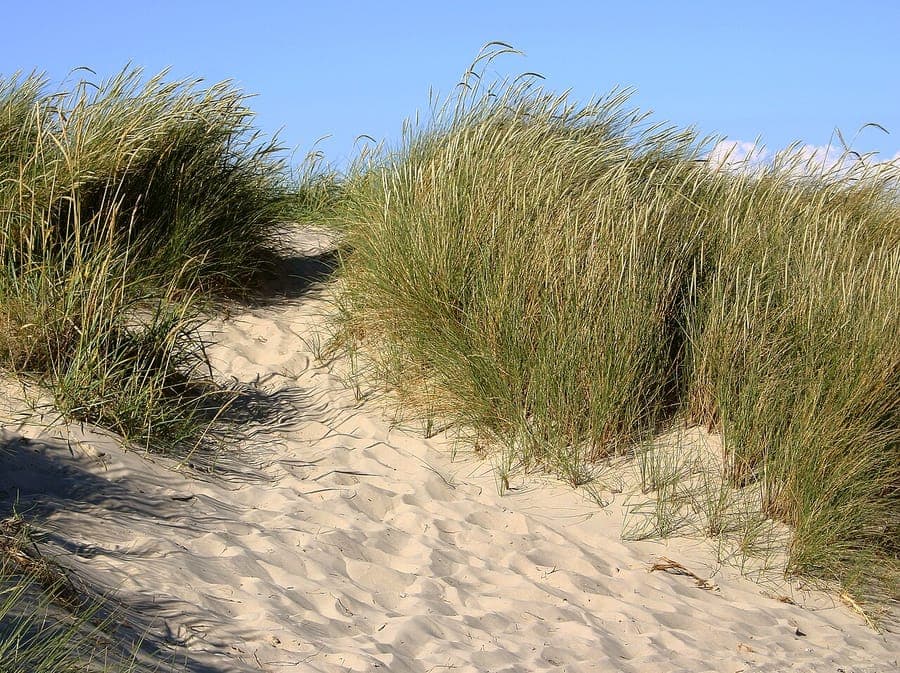
Malene Thyssen (User Malene) / CC BY-SA 3.0, via Wikimedia Commons
Ammophila arenaria: complete guide
Ammophila arenaria
¿Quieres ver Ammophila arenaria: complete guide en tu jardín?
1 minuto, sin tarjeta de crédito
Overview
Ammophila arenaria, commonly called marram grass or sea oats, is a robust grass species from the Poaceae family. This elegant beach grass is a key species for natural dune formation and coastal erosion control. Its dynamic growth pattern and golden coloring provide structure and beauty to coastal gardens.
Appearance & bloom
Marram grass grows in dense, upright tufts with long, narrow, greyish-green to golden foliage. Plants can reach 1 meter in height. From June to September, long, slender, golden-brown flower spikes appear. Deep underground root systems stabilize sand remarkably.
Ideal location
Marram grass thrives in sunny, windy coastal areas with sandy soil. It's perfect along beaches, in dunes, and coastal zones. It also grows in inland sandy areas with full sunlight exposure and good air circulation.
Soil
Ammophila arenaria is exceptionally adapted to sandy soils. It develops an impressive root system that penetrates deeply into sand. No feeding required, as the plant tolerates the poorest soils. Highly salt and wind-tolerant.
Diseño gratis
¿Quieres ver Ammophila arenaria: complete guide en tu jardín? Crea un diseño gratis ahora.
Watering
Once established, marram grass is very drought-resistant. Minimal watering is needed beyond the establishment phase. During extreme droughts, supplementary water may help.
Pruning
No pruning needed. Dead foliage can be gently removed in early spring. The natural growth pattern should be preserved.
Maintenance calendar
January: check stability after storms. February-March: remove dead foliage. April-May: growth season begins. June-September: flowering and seed set. October-December: plant hardens off.
Winter hardiness
Ammophila arenaria is fully hardy and thrives in all European coastal zones. It tolerates extreme wind and salt spray without issues.
Companion plants
Pair with other dune plants: Senecio jacobaea, Festuca arundinacea, Carex arenaria, Eryngium maritimum. Also lovely with Oenothera and Sedum acre.
Closing
Marram grass is essential for coastal stewardship and dune protection. It offers both ecological benefits and aesthetic beauty. Perfect for seaside gardens or grassland themes on sandy terrain. Find it at specialty nurseries. Visit gardenworld.app/en and gardenworld.app/nl.
¿Quieres ver Ammophila arenaria: complete guide en tu jardín? Crea un diseño gratis ahora.
Sube una foto, elige un estilo y obtén un diseño fotorrealista con lista de plantas en menos de un minuto.
Más de 10.000 jardines diseñados
Sin tarjeta de crédito


Plantas similares
Sporobolus pungens: complete guide
Sporobolus pungens
Sporobolus pungens is a stoloniferous Mediterranean coastal grass with outstanding salt and drought tolerance, perfect for seaside and dry gardens.
Mediterranean aegilops: complete guide
Aegilops biuncialis
Everything about Aegilops biuncialis, a Mediterranean annual grass with ornamental spikes and outstanding drought tolerance for dry gardens.
Silver bluestem: complete guide
Bothriochloa saccharoides
Full guide to Bothriochloa saccharoides (silver bluestem): site, soil, watering, winter hardiness, pruning, and garden companions.