
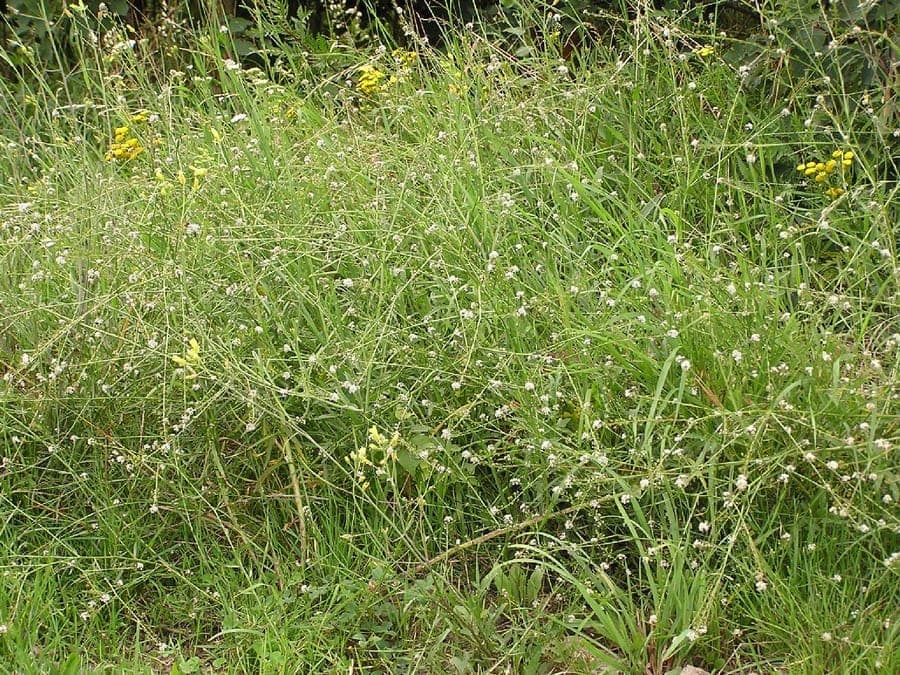
Michael Becker / CC BY-SA 3.0, via Wikimedia Commons
Tall pepperwort: complete guide
Lepidium graminifolium
¿Quieres ver Tall pepperwort: complete guide en tu jardín?
1 minuto, sin tarjeta de crédito
Overview
Tall pepperwort (Lepidium graminifolium) is an elegant perennial from the Brassicaceae family, native to South-Central Europe through the Mediterranean region. This plant excels in warm, dry locations and brings an airy, Mediterranean character to gardens. Its fine, grass-like foliage creates a uniquely delicate appearance.
Appearance and Bloom
This plant forms a loose, graceful mound reaching 40-60 cm tall and 50-70 cm wide. The stems are slender and elegant, clothed in narrow, grass-like leaves that appear almost succulent. From July to October, numerous tiny white or very pale pink flowers appear in loose clusters, giving the plant an ethereal quality. The flowers attract numerous beneficial insects.
Ideal Location
Tall pepperwort requires full sun, at least 6-8 hours of direct daily sunlight. Choose warm exposures such as south-facing slopes or locations near heat-reflecting walls. This plant is perfect for warm gardens and Mediterranean landscapes. Using gardenworld.app, you can optimize south-facing garden areas with this heat-loving plant.
Soil
The plant thrives in very well-drained, poor soils. Sandy, gravelly, or chalky soils are ideal. Heavy clay is unsuitable unless heavily amended with sand. A pH of 6.5-8.0 is perfect. Tall pepperwort tolerates compacted soils and can even thrive on rocky, sparse sites. Add organic matter only sparingly.
Watering
Once established, tall pepperwort is extremely drought-tolerant. Water more conservatively than other garden plants. Provide water only during prolonged drought, especially in the first year. In full summer, monthly watering may suffice. Avoid wet feet, particularly in winter. Overwatering causes rot.
Diseño gratis
¿Quieres ver Tall pepperwort: complete guide en tu jardín? Crea un diseño gratis ahora.
Pruning
Minimal pruning is needed. Remove yellowed or damaged foliage in spring. After flowering, old stems can be removed, though this rarely occurs. The plant naturally forms an elegant, airy shape. In warm climates, a light spring trim may encourage bushier growth.
Maintenance Calendar
- March-April: Remove dead material, check for damage
- May-June: Monitor growth regularly
- July-October: Blooming period, rarely water
- November-February: Minimal care, water only in extreme drought
- Year-round: Check that the plant isn't overtaken by invasive groundcover
Winter Hardiness
Tall pepperwort is moderately hardy to -15°C (USDA zone 6b). In regions with harsher winters, grow in containers or provide protection. This plant is sensitive to wet winters and excessive snow. In warm regions (zone 8+), it remains virtually evergreen.
Companion Plants
Tall pepperwort pairs beautifully with:
- Russian sage (Perovskia atriplicifolia): similar forms
- Sunrose (Helianthemum): same preferences
- Cheddar pink (Dianthus): fine texture combinations
- Sea lavender (Limonium): compatible water needs
- Santolina: similar Mediterranean requirements
Avoid pairing with moisture-loving plants.
Conclusion
Tall pepperwort deserves recognition as an elegant plant for warm, dry locations. Its grass-like foliage and delicate white flowers create authentic Mediterranean character. For gardeners in warm-temperate climates, this is a must-have plant. Visit gardenworld.app for more insights into Mediterranean plant combinations and how tall pepperwort can refine your front yard design.
Where to Buy
Find tall pepperwort at specialty nurseries focusing on Mediterranean and drought-tolerant plants. Look for healthy specimens with intact grass-like foliage.
¿Quieres ver Tall pepperwort: complete guide en tu jardín? Crea un diseño gratis ahora.
Sube una foto, elige un estilo y obtén un diseño fotorrealista con lista de plantas en menos de un minuto.
Más de 10.000 jardines diseñados
Sin tarjeta de crédito


Plantas similares
Heart-pod hoary cress: complete guide
Lepidium draba
Master the care of heart-pod hoary cress with this comprehensive guide. Growing tips, maintenance schedule, and perfect companion plants.
Smith's pepperwort: complete guide
Lepidium heterophyllum
Master the cultivation of Smith's pepperwort with this comprehensive guide. Ideal for rock gardens and space-limited designs.