
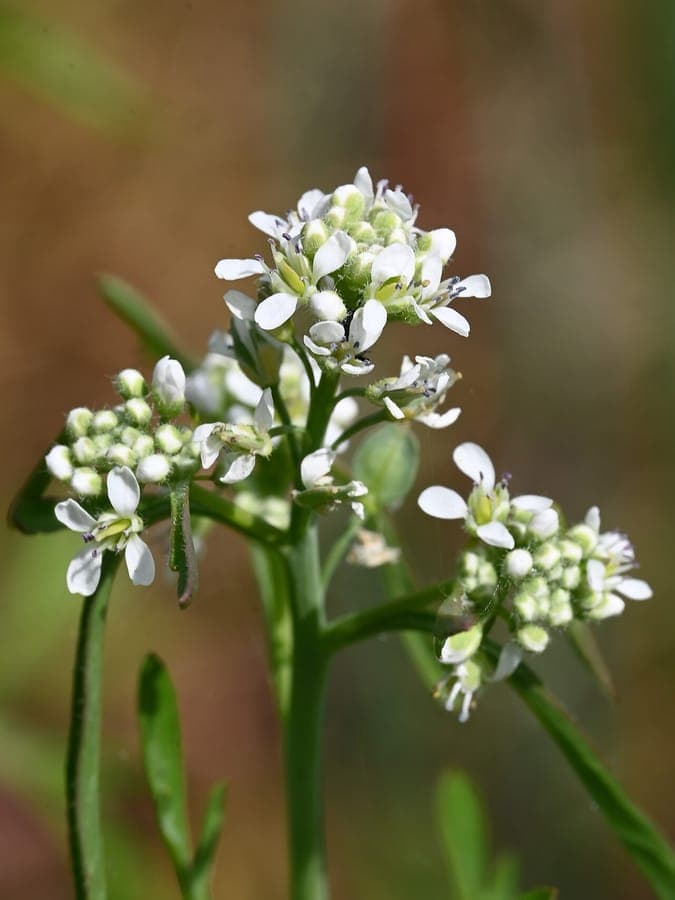
Krzysztof Ziarnek, Kenraiz / CC BY-SA 4.0, via Wikimedia Commons
Heart-pod hoary cress: complete guide
Lepidium draba
¿Quieres ver Heart-pod hoary cress: complete guide en tu jardín?
1 minuto, sin tarjeta de crédito
Overview
Heart-pod hoary cress (Lepidium draba) is a robust perennial plant from the Brassicaceae family, thriving from Europe to East China and North Africa. This distinctive plant is prized for its early spring blooms, drought tolerance, and minimal care requirements. It's an excellent choice for gardeners seeking reliable, low-maintenance plants.
Appearance and Bloom
The plant forms a compact mound reaching 30-50 cm tall and 40-60 cm wide. Its gray-green stems are distinctly hairy, giving the plant a silvery appearance. The leaves are arranged rosette-fashion initially, then scatter along the stems. From May to June, tiny white flowers cluster into dense panicles, creating a spectacular display. These flowers attract butterflies and bees throughout the blooming period.
Ideal Location
Select a sunny to partially shaded location with at least 4-6 hours of direct sunlight daily for optimal blooming. This plant tolerates wind well and excels on exposed sites or hillsides. Using gardenworld.app, you can design landscape schemes that perfectly complement this versatile plant.
Soil
Heart-pod hoary cress performs best in well-drained soil. Sandy, gravelly, or chalky soils are ideal. Heavy clay causes root rot, so amend with sand or gravel. A pH of 6.0-7.5 is acceptable, though alkaline soils suit it best. The plant tolerates poor and dry soils exceptionally well, making it perfect for difficult garden spots.
Watering
Once established, this plant is extremely drought-tolerant. Water only during extreme dry spells and the initial establishment period. Water at the beginning of the growing season but avoid wet roots in winter. Natural precipitation usually provides sufficient moisture. After planting, maintain consistent soil moisture until deep roots develop.
Diseño gratis
¿Quieres ver Heart-pod hoary cress: complete guide en tu jardín? Crea un diseño gratis ahora.
Pruning
Minimal pruning is needed. Deadhead spent flowers after blooming to prevent excessive self-seeding and maintain neat appearance. After flowering, cut back older stems to 15-20 cm to keep the plant compact. Light spring shaping encourages bushy growth.
Maintenance Calendar
- March: Remove dead material, check for fungal issues
- April-May: Water regularly in dry periods, enjoy the blooms
- June: Remove spent flowers
- July-August: Minimal care, monitor watering needs
- September-October: Prepare plant for winter
- November-February: Winter dormancy, provide extra drainage in cold regions
Winter Hardiness
Heart-pod hoary cress is extremely hardy to -25°C (USDA zone 5a). No protection needed in most European gardens. In regions with extreme cold and freeze-thaw cycles, add grit drainage around the base. Good drainage matters more than temperature for winter survival.
Companion Plants
This plant pairs beautifully with:
- Lavender (Lavandula angustifolia): both prefer dry sun
- Sage (Salvia officinalis): similar requirements, excellent color contrast
- Sedums: interesting texture combinations
- Marjoram (Origanum): both attract beneficial insects
- White phlox: overlapping bloom times create harmony
Avoid pairing with moisture-loving plants like hydrangeas or astilbe.
Conclusion
Heart-pod hoary cress deserves prominence in modern gardens. Its combination of early spring flowers, drought tolerance, and minimal maintenance makes it ideal for busy households. Whether designing a rock garden or wildflower meadow, this plant delivers years of reliable performance. Visit gardenworld.app to discover how heart-pod hoary cress can transform your front yard into a low-maintenance landscape.
Where to Buy
Find heart-pod hoary cress at garden centers specializing in Mediterranean and drought-tolerant plants. Look for healthy specimens with characteristic gray hairy foliage.
¿Quieres ver Heart-pod hoary cress: complete guide en tu jardín? Crea un diseño gratis ahora.
Sube una foto, elige un estilo y obtén un diseño fotorrealista con lista de plantas en menos de un minuto.
Más de 10.000 jardines diseñados
Sin tarjeta de crédito


Plantas similares
Dittander: complete guide
Lepidium latifolium L.
Dittander is a hardy perennial with white flowers, thriving on dry sites with minimal care needed. Very valuable for birds, bees and pollinators.
Tall pepperwort: complete guide
Lepidium graminifolium
Discover the elegance of tall pepperwort with this detailed care guide. Growing tips, propagation, and Mediterranean landscape design.