
Roger Culos / CC BY-SA 3.0, via Wikimedia Commons
Earth-chestnut: complete guide
Lathyrus tuberosus
¿Quieres ver Earth-chestnut: complete guide en tu jardín?
1 minuto, sin tarjeta de crédito
Overview
Earth-chestnut (Lathyrus tuberosus), also known as tuberous pea, is a fascinating plant that faded into obscurity but is now making a heroic comeback in gardens of plant collectors and food gardeners. This member of the pea family (Fabaceae) occurs naturally from Europe through Siberia to Iran. The plant distinguishes itself by two exceptional properties: beautiful purple flowers and underground tubers that are edible and sweet-tasting - a true food plant that belongs in the kitchen garden.
Earth-chestnut grows as a climbing herb reaching 30–80 cm in height, depending on support and conditions. The flowering stems carry up to twelve purple flowers that attract many bees and butterflies. The plant was once a common food crop - the tubers were roasted and eaten like nuts, or used in soups and stews. With the rise of synthetic fertilizers and the introduction of potatoes, earth-chestnut largely disappeared from our tables and gardens. With gardenworld.app you can create a food-oriented garden design where earth-chestnut takes its rightful place alongside other forgotten food plants.
Appearance and bloom cycle
Earth-chestnut has a slender growth habit with irregularly pinnate leaves whose petioles end in tendrils (climbing threads). The leaflets are fine and elegant, 4–8 cm long, giving the plant an airy appearance. Flowers appear from May to July in dense clusters of up to twelve per flowering unit. The blooms are bright blue-purple to purple, approximately 1.5 cm across, with the classic pea-flower form: a large upper petal, two wing petals, and a keel.
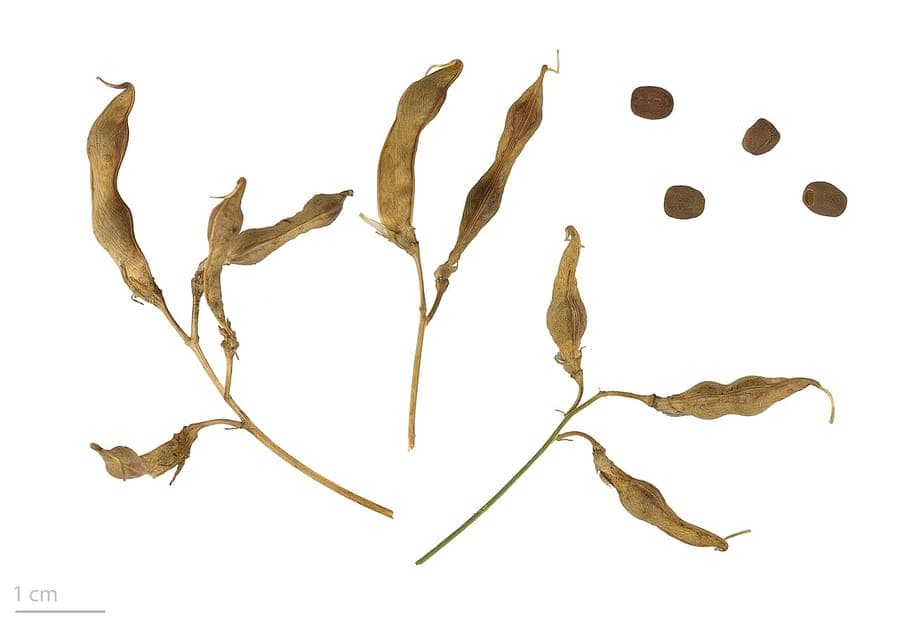
After flowering, flat seed pods develop, but the true treasure lies underground: the tubers. These form on thin root branches and are about 1–2 cm in diameter, smooth-skinned, and tan-coloured. They taste sweet and slightly almond-like - quite different from potatoes. The plant has an elegant, refined climbing form that works beautifully on a trellis, stake, or frame.
Ideal location
Earth-chestnut prefers full sun to light shade. Plant it in a warm, sunny spot receiving at least 4–6 hours of direct sun per day. This promotes flowering and tuber development. A south- or west-facing wall, a warm raised bed, or a position along a garden shed is ideal. Because the plant stays small and climbs elegantly, it fits perfectly against a trellis, fence, or windowsill. Wind can damage the delicate stems, so choose a reasonably sheltered spot.
Earth-chestnut grows excellently in pots and containers, which is advantageous because you can control soil conditions more precisely. It also thrives in open ground. For a reliable food harvest, cultivation in a raised bed or container garden is recommended.
Soil requirements
Earth-chestnut is not fussy about soil but thrives best in well-drained, moderately fertile soil. A pH between 6.0 and 7.5 is ideal. As a member of the pea family, the plant can fix nitrogen from the air using root nodules, so extra nitrogen fertilizer is unnecessary - indeed, excess nitrogen reduces tuber formation.
Work organic material such as compost or leaf mold into the soil before planting, approximately 2–3 cm deep in the top 20 cm of ground. On very clayey, poorly draining soil, it is best to use a potting mix - ensuring good soil drainage significantly boosts tuber development. Avoid waterlogged soils that remain wet through winter.
Watering
Earth-chestnut likes consistently moist soil without waterlogging. Water regularly during the growing season (May–September), but ensure excess water drains freely. A 2–3 cm layer of mulch helps retain moisture and maintain even soil temperature. During very dry, hot spells, give supplemental water and watch for wilting.
From October through April, when the plant dies back and enters dormancy, watering is minimal. If you wish to continue tuber cultivation, keep soil only just barely moist.
Diseño gratis
¿Quieres ver Earth-chestnut: complete guide en tu jardín? Crea un diseño gratis ahora.
Pruning and training
Earth-chestnut requires no pruning in the traditional sense. Simply guide the climbing stems gently upward along the support. In early spring (March–April), remove any dead or damaged foliage. After the first hard frost (November), the above-ground parts die back - this is normal. The tubers survive underground and re-emerge in spring. You can harvest the dead vegetation and compost it.
Maintenance calendar
March–April: Install support or trellis. Ensure good drainage. Optionally add a thin layer of soil improver (compost or leaf mold). Check previous year's tubers for rot.
May–July: Peak growing and flowering period. Water regularly. Guide tendrils carefully upward. Enjoy the flowers and visiting pollinators.
August–September: Flowering winds down. Continue watering but less frequently. Monitor soil moisture.
October–November: Plant dies back after frost. Tubers overwinter in soil. Mulch with leaves or straw for extra insulation.
December–February: Deep dormancy. Ensure good drainage. In very wet winters, remain alert to tuber rot in open ground.
Winter hardiness
Earth-chestnut is hardy across northern and central Europe. The tubers tolerate temperatures down to approximately -15°C (USDA zone 5) when growing in well-drained soil in open ground. In containers, winter protection requires more care - place the pot against a wall or under an overhang, or insulate it with bubble wrap or straw.
In climates with severe winters (below -20°C), you can carefully dig the tubers, store them in dry sand in a cool shed, and replant in spring. This gives greater control over quality and tuber retention.
Tuber harvest and use
The true reward of earth-chestnut cultivation comes in autumn and winter. Once the plant dies back (October–November), you can dig carefully. Use your hands or a garden fork - work gently to avoid damaging tubers. The tubers have a brown skin and are smooth. They can be prepared and eaten immediately.
The flavour is sweet, slightly almond-like, and delicate: quite different from potatoes. You can boil them, roast them, puree them, or add them to soups. They also taste good raw in a salad. Harvesting yields approximately 50–100 grams of tubers per plant - not a large amount, but the exotic flavour makes it worthwhile.
On gardenworld.app you could realize a food garden design combining multiple forgotten food plants - earth-chestnut, salsify, parsnip, chervil root, and other historic crops.
Companion plants
Earth-chestnut climbs beautifully when planted with other flowering vines. An elegant combination is earth-chestnut with morning glories (Ipomoea purpurea) along a garden shed - both are graceful climbers with showy flowers. They contrast well with ground-covering herbs or succulents such as sedum.
In a food garden, combine earth-chestnut with other tuber crops such as potatoes, scorzonera, or salsify. For structure and support, use bamboo stakes or hazel twigs.
Final thoughts
Earth-chestnut (Lathyrus tuberosus) is more than a food crop - it is a living piece of plant history, beautiful to the eye and delicious to the palate. For gardeners interested in growing their own food and discovering lost varieties, earth-chestnut is a must-try. The small effort required for tuber harvest repays itself in delicious, replaceable autumn treasures. Plant earth-chestnut now in a sunny spot and enjoy your first tubers this autumn.
Purchase seeds or tubelets from specialist seed suppliers or on gardenworld.app where you will receive expert advice for food-oriented garden design.
¿Quieres ver Earth-chestnut: complete guide en tu jardín? Crea un diseño gratis ahora.
Sube una foto, elige un estilo y obtén un diseño fotorrealista con lista de plantas en menos de un minuto.
Más de 10.000 jardines diseñados
Sin tarjeta de crédito


Plantas similares
Spring-vetch: complete guide
Lathyrus vernus
Everything about Spring-vetch (Lathyrus vernus): planting, flowering, frost hardiness and maintenance calendar. An elegant early spring bloomer with colourful flowers.
Hedge vetch: complete guide
Vicia sepium
Discover hedge vetch, a frost-hardy climber with purple flowers. Perfect for hedgerows, borders, and natural gardens throughout Europe.