
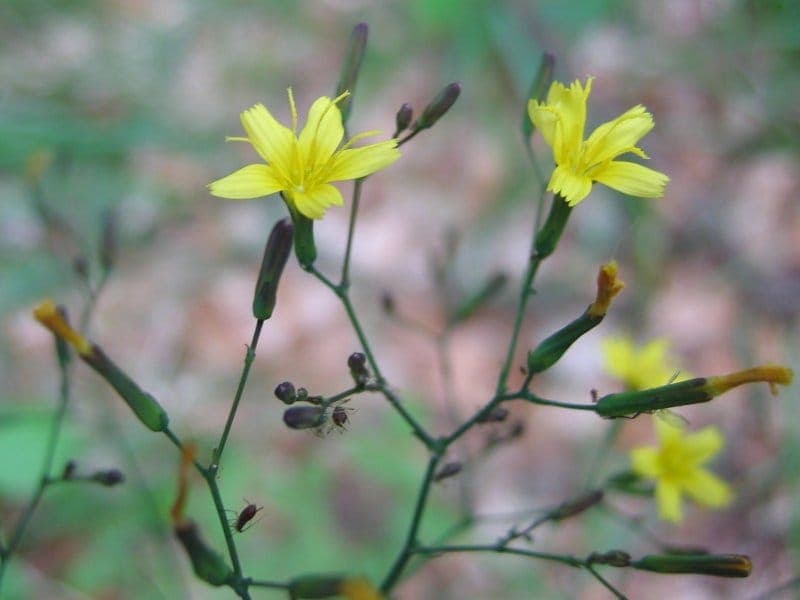
Kristian Peters -- Fabelfroh 07:53, 20 October 2006 (UTC) / CC BY-SA 3.0, via Wikimedia Commons
Wall-lettuce: complete guide
Lactuca muralis
¿Quieres ver Wall-lettuce: complete guide en tu jardín?
1 minuto, sin tarjeta de crédito
Overview
Wall-lettuce (Lactuca muralis), also called Ivy-leaved lettuce or Pale lettuce, is an elegant, finely-branched annual or winter-annual plant from the Asteraceae family (the same family as lettuce and chicory). This plant grows wild throughout Europe, from coastal to mountain areas, wherever it finds its preferred rocky, semi-shaded habitats. With its finely-cut, toothed leaves and minute purplish flowers, wall-lettuce makes a charming addition to wildflower gardens, naturalistic borders, and even vegetable patches.
Though wall-lettuce appears modest at first glance, this plant carries immense ecological significance. It feeds caterpillars of various butterfly species and serves as a valuable nectar source for bees and hoverflies. On gardenworld.app, garden designs can use wall-lettuce as underplanting beneath larger shrubs, as edging in borders, or as informal groupings in paving crevices. The plant adds texture and rustic, unpolished beauty to any design.
Appearance and bloom
Wall-lettuce grows as a compact, finely-branched plant, typically 30-60 cm (12-24 inches) tall, with thin, much-divided stems. The foliage is deeply lobed and toothed, with a soft, almost fern-like texture. The plant has an open, airy appearance - a quality many gardeners prize because it fits into spaces where other plants would appear too dense.
Flowers appear from May through October, peaking in July-August. They are extremely small (mere millimeters) and range from pale purple to nearly white, grouped in loose, branched inflorescences. Despite their modesty, these flowers are notably elegant and produce abundant pollen attracting butterflies and bees. After flowering, delicate, feathered seed-heads develop, resembling miniature dandelion seeds.
Ideal location
Wall-lettuce thrives in semi-shade to dappled light. It flourishes in crevices, under shrubs, and in shadowed corners where many other plants would struggle. Full sun is possible, but in warm climates the plant will bolt faster and remain less dense.
The plant appreciates a somewhat lean, well-draining spot. Ideal for crevices in paving, rocky gardens, and especially beneath larger trees and shrubs seeking semi-shade. In gardenworld.app designs, wall-lettuce elegantly tucks between larger plant masses.
Soil and nutrition
Wall-lettuce grows in both nutrient-rich and poor soils. It thrives in sand, clay, and loamy soils provided drainage is reasonable. The plant tolerates moisture variation well. pH can be neutral to slightly alkaline.
Extra feeding is unnecessary; indeed, in rich soils the plant produces excessive foliage with reduced flowering. In poor soils it becomes more compact and bloom-rich. Apply no fertilizer; let the plant thrive on its own terms.
Diseño gratis
¿Quieres ver Wall-lettuce: complete guide en tu jardín? Crea un diseño gratis ahora.
Watering
Once established, wall-lettuce requires minimal water. Rainfall suffices in most seasons. Only during extreme drought (especially in containers) supplement watering. This plant is notably drought-tolerant - a quality making it ideal for sustainable gardens and climate-resilient design.
In humid regions wall-lettuce can thrive the entire season without supplemental water. The plant's semi-shade preference also aids moisture retention; evaporation is lower.
Pruning and maintenance
Wall-lettuce demands zero maintenance. The plant self-maintains its form without intervention. Remove only dead sections or damaged stems in late autumn. Because it often self-seeds, you can remove spent seed-heads to prevent unwanted seedlings - or allow them for natural spread.
Let fallen leaf litter remain in autumn; it protects soil organisms and seeds. No formal pruning needed.
Maintenance calendar
February-March: Sow seeds directly in ground or pots.
April-May: Seedlings grow rapidly. Thin where dense.
June-July: Flowering begins. Bees visit enthusiastically.
July-October: Peak bloom. Seeds develop.
October-November: Seeds ripen. Harvest if desired.
December: Winter-annuals self-recognize and persist; allow fallen foliage to remain.
Winter hardiness
Wall-lettuce behaves as a winter-annual in temperate zones. Plants sown in autumn overwinter as rosettes and flower early in spring. In true dormancy, frost damage at -10°C is minimal, and usually the plant survives winter effortlessly.
In USDA zones 5-9, no winter protection is needed. In colder zones, spring sowing is preferable to autumn for better results.
Companion planting
Wall-lettuce pairs beautifully with:
- Other wildflora: Linum bienne (pale flax) or Verbascum thapsus (mullein) occupy the same ecological niche.
- Moisture-loving partners: Helleborus foetidus (stinking hellebore) shares the same semi-shade preference.
- Ground-dwellers: Hedera helix (ivy) or Vinca minor create stratified texture planting.
- Spring ephemerals: Anemone blanda or Scilla provide color episodes before wall-lettuce blooms.
On gardenworld.app, these combinations would create a natural, stratified wildflower planting with bird food and insect-support ecology.
Final tips
Wall-lettuce is a humble yet elegant wildflower that enriches a sustainable garden ecosystem. Sow directly in ground in autumn (October-November) or spring (March-April). Allow the plant to self-seed for a natural, informal effect.
For an ecological garden design that positions wall-lettuce in its ideal role as a pollinator plant, create a design on gardenworld.app. With visualization you'll see how wildflower groupings create texture and movement - and receive recommendations for other nectar plants supporting butterflies and bees. Sow now and create a thriving wildflower ecosystem.
¿Quieres ver Wall-lettuce: complete guide en tu jardín? Crea un diseño gratis ahora.
Sube una foto, elige un estilo y obtén un diseño fotorrealista con lista de plantas en menos de un minuto.
Más de 10.000 jardines diseñados
Sin tarjeta de crédito


Plantas similares
Blue lettuce: complete guide
Lactuca perennis
Blue lettuce (Lactuca perennis) is a remarkable perennial mountain plant with blue flowers. Learn everything about growing this stunning plant and incorporating it into gardens.
Lettuce (Lactuca sativa): complete growing guide
Lactuca sativa
Learn how to grow fresh lettuce at home with this comprehensive guide. Tips for continuous harvesting, ideal growing conditions, and popular varieties for spring to fall production.
Belgium endive: complete guide
Cichorium intybus
Everything you need to know about growing Belgium endive: light, soil, watering, pruning and seasonal care. Ideal for cottage and wildlife gardens.