
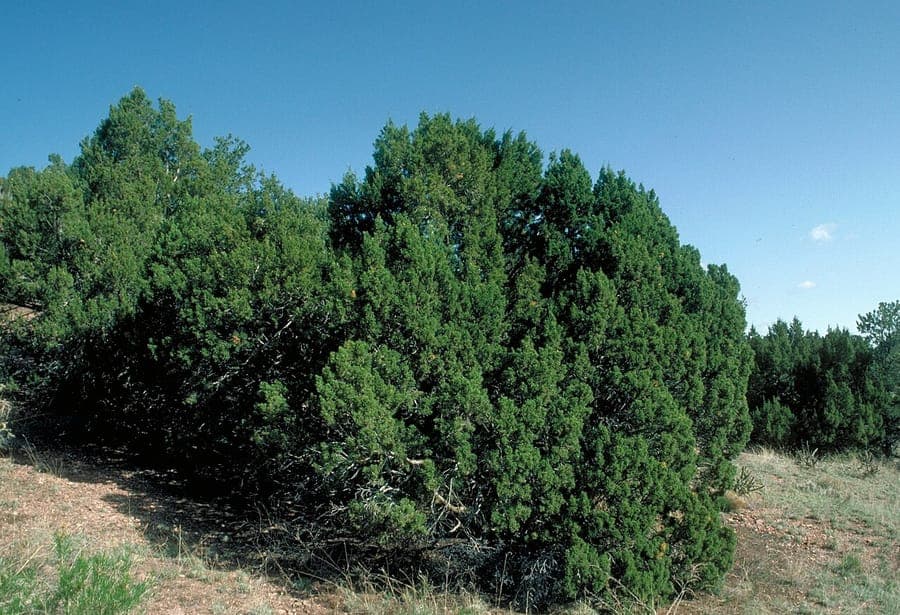
Dave Powell, USDA Forest Service, Bugwood.org / Public domain, via Wikimedia Commons
Cherry-stone juniper (Juniperus monosperma): complete guide
Juniperus monosperma
¿Quieres ver Cherry-stone juniper (Juniperus monosperma): complete guide en tu jardín?
1 minuto, sin tarjeta de crédito
Overview
The Cherry-stone juniper (Juniperus monosperma), also called one-seed or West Texas juniper, is a spreading conifer native to the southwestern United States. This species ranges from Nevada to Oklahoma and into Mexico, inhabiting dry mountain slopes and foothills. It is celebrated for exceptional drought and heat tolerance, making it perfect for water-conscious gardens.
Appearance and Bloom
The Cherry-stone juniper typically grows as an attractive shrub or small tree, usually reaching 6-9 meters tall. The foliage consists of fine, green needles with a natural bluish patina. The plant produces showy purple fruits that mature to a deep reddish-purple color, especially visible in August and September. These modified cones serve as food for birds and wildlife.
Ideal Location
Place the Cherry-stone juniper in full sun with at least 6 hours of direct sunlight daily. This plant thrives even in intense, dry heat and bright light conditions. Good air circulation is important, reflecting its mountain origins. Avoid low-lying areas that collect water after rainfall.
Soil
This juniper thrives in sandy to rocky soil with poor fertility and excellent drainage. Calcareous, alkaline soil with pH 7-8.5 is ideal for peak performance. The plant tolerates extremely dry, poor soils that would cause failure in many species. Do not amend with excessive organic material, as this creates unnecessarily moist conditions.
Watering
Once established, this juniper is remarkably drought-secure. Water only during extreme dry spells or extended droughts. Young plants do require regular watering during the first growing season to establish deep root systems. Avoid excessive watering, which causes root rot in this species.
Diseño gratis
¿Quieres ver Cherry-stone juniper (Juniperus monosperma): complete guide en tu jardín? Crea un diseño gratis ahora.
Pruning
Pruning is generally unnecessary as the plant maintains an attractive natural form. Remove only dead or diseased branches when needed. Allow the plant to develop its natural graceful shape without formal pruning. Avoid late summer pruning that might stimulate tender growth susceptible to frost.
Maintenance Calendar
March-April: Growing season begins post-winter. May-June: Minimal maintenance needed, plant is fully drought-secure. July-August: Fruit set visible, no watering required. September-October: Fruits mature and display vibrant colors. November-February: Dormancy, tolerates complete drought.
Winter Hardiness
The Cherry-stone juniper is hardy for USDA zones 5-9, tolerating temperatures to approximately -18°C. The plant performs better without protection in harsh climates, so avoid mulching. In extremely cold zones with temperatures below -20°C, protection may be necessary.
Companion Plants
The Cherry-stone juniper pairs well with other drought-tolerant plants such as yucca, agave, and native southwestern shrubs. Birds and wildlife utilize the purple fruits as a food source, making it valuable for ecological garden designs. Available at major garden centers.
Closing
Gardenworld.app strongly recommends this species for dry, sunny gardens in temperate to warm zones. This is a maintenance-free plant for those wanting to minimize water usage and environmental impact. Visit gardenworld.app for expert advice on incorporating this plant into water-wise garden schemes that are both sustainable and beautiful.
¿Quieres ver Cherry-stone juniper (Juniperus monosperma): complete guide en tu jardín? Crea un diseño gratis ahora.
Sube una foto, elige un estilo y obtén un diseño fotorrealista con lista de plantas en menos de un minuto.
Más de 10.000 jardines diseñados
Sin tarjeta de crédito


Plantas similares
Western juniper (Juniperus occidentalis): complete guide
Juniperus occidentalis
Discover the Western juniper from the United States. Detailed guide for cultivation, care, and maintenance of this beautifully growing mountain conifer.
Black juniper (Juniperus indica): complete guide
Juniperus indica
Discover the Black juniper from the Himalayas. A comprehensive guide on cultivation, care, and hardiness of this elegant coniferous plant for your garden.
African juniper (Juniperus procera): complete guide
Juniperus procera
Discover the African juniper from East Africa. Comprehensive guide for cultivation and care of this impressive ornamental conifer.