
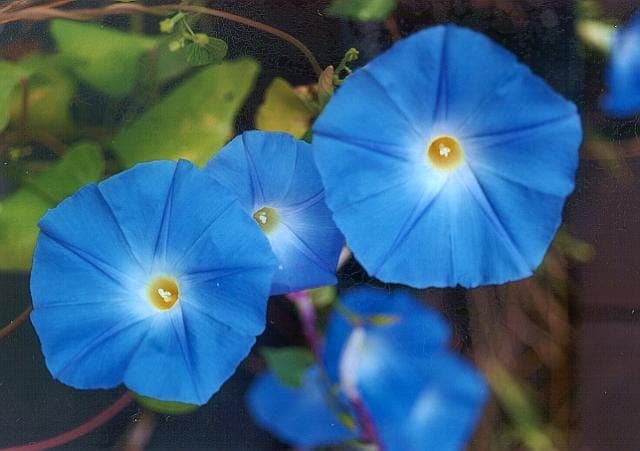
Russell E (Photograph of Ipomoea violacea, taken by rkundalini.) / CC BY-SA 3.0, via Wikimedia Commons
Ipomoea tricolor: complete guide
Ipomoea tricolor
¿Quieres ver Ipomoea tricolor: complete guide en tu jardín?
1 minuto, sin tarjeta de crédito
Overview
Ipomoea tricolor, better known by its iconic cultivar name 'Heavenly Blue', is one of the most beloved morning-glories in the world. This spectacular ornamental vine from Mexico is famous for its large, stunning sky-blue flowers with white and yellow centers. The three-colored blooms (blue-white-yellow) gave the plant its botanical name 'tricolor'.
Heavenly Blue is the gold standard among morning-glories. It grows rapidly, flowers prolifically, and creates a visual high point in almost any garden. The plant belongs to the Convolvulaceae family and is relatively easy to grow, making it ideal for both beginners and experienced gardeners.
Appearance and Bloom
Ipomoea tricolor grows as a vigorous, fast-climbing vine with large, heart-shaped leaves measuring 8 to 15 centimeters long. The foliage is deep green and very vital. Stems can reach 2 to 3 meters or even longer under favorable conditions, especially with good support.
The flowers are large, funnel-shaped blooms measuring 5 to 7 centimeters across. The signature feature: a heavenly sky-blue flower face with a white ring around the heart and bright yellow center. This tricolor effect is breathtaking. Flowers open at sunrise and close around midday. Blooming is overwhelmingly prolific throughout the summer and fall months.
Heavenly Blue continues producing flowers until the first hard frost. The cultivar is also remarkably uniform, meaning all blooms are virtually identical in color and form.
Ideal Location
Heavenly Blue morning-glory thrives in full sun with at least 6 to 8 hours of direct daily sunlight. A south or west-facing wall is ideal. While the plant can tolerate partial shade, it will produce far fewer flowers without full sun.
Provide vertical support: a pergola, framework, or large trellis. The plant loves to climb and will perform much better with support. Plant near the support so young vines can easily grow upward.
Avoid harsh wind exposure that might damage the plant, though it adapts well to most conditions.
Soil
Heavenly Blue morning-glory isn't fussy about soil. It grows well in most soil types, though it thrives best in fertile, well-draining earth. A mix of garden soil with 20-30% compost is adequate.
Optimal pH is neutral to slightly acidic (6.0 to 7.5). Heavy clay soils can be improved with sand and organic matter. For container growing, use universal potting soil.
The plant tolerates poorer soils better than many other ornamental climbers, provided drainage is good.
Diseño gratis
¿Quieres ver Ipomoea tricolor: complete guide en tu jardín? Crea un diseño gratis ahora.
Watering
During growth and flowering, water regularly. Water when the top 2 centimeters of soil feel dry. In warm summers, this may be necessary daily.
Always ensure well-draining conditions; waterlogging is detrimental. Mulch around the base with 5-7 centimeters of organic material. As autumn approaches and temperatures cool, gradually reduce watering frequency.
Feeding
Heavenly Blue responds well to regular feeding. Apply balanced fertilizer every two weeks or use slow-release granules monthly. Excessive nitrogen promotes leaf growth at the expense of flowers.
Pruning and Support
Tie young plants to their support and let them grow. Minimal pruning is needed for Heavenly Blue. Pinch off growing tips when young to stimulate branching, which helps produce more flowers.
Remove dead, damaged, or tangled growth. Ensure the plant doesn't become completely tangled in its own growth.
Maintenance Calendar
May: Plant out (after frost); install support; regular watering June-August: Peak growth and flowering period; feed and water September: Continued flowering; begin reducing water October: Final blooms; harvest seed (optional) November: Plant dies after frost in temperate climates
Diseases and Problems
Heavenly Blue is generally very healthy. Possible issues include:
- Aphids: spray with insecticidal soap
- Powdery mildew: ensure good air circulation; spray with sulfur if needed
- Root rot: ensure excellent drainage
The plant is remarkably resistant to most pests and diseases.
Winter Hardiness
Heavenly Blue morning-glory is frost-tender. In temperate climates, it's grown as an annual. The plant dies after the first frost. This is not a problem because seed can easily be collected.
Seed collection: allow a few flowers to go unpollinated so seed can ripen. Seed pods mature in September-October. Harvest and dry. Store seed in dry conditions.
Companion Plants
Heavenly Blue morning-glory pairs beautifully with:
- Red-flowering Ipomoea indica for color contrast
- Red clematis for complementary color
- Dark green small-leaved ivy
- White roses at the base
- Lavender for texture
Closing
Ipomoea tricolor 'Heavenly Blue' is the undisputed queen of morning-glories. With its iconic sky-blue blooms, rapid growth, and easy care, it's an absolute must-have for any garden. Find seed or starter plants at almost any garden center. Sow in May and enjoy sky-blue flowers through October. GardenWorld.app helps you design the perfect support structure. Start growing your Heavenly Blue today!
¿Quieres ver Ipomoea tricolor: complete guide en tu jardín? Crea un diseño gratis ahora.
Sube una foto, elige un estilo y obtén un diseño fotorrealista con lista de plantas en menos de un minuto.
Más de 10.000 jardines diseñados
Sin tarjeta de crédito


Plantas similares
Ipomoea indica: complete guide
Ipomoea indica
Master the blue dawnflower's care: sun requirements, soil prep, watering schedules, and over-wintering strategies for this tropical climber.
Ipomoea nil: complete guide
Ipomoea nil
Grow Japanese morning-glory easily: seed sowing, growth timeline, watering needs, and companion planting for reliable purple-blue blooms.
Ipomoea lobata: complete guide
Ipomoea lobata
Grow Spanish-flag beautifully: sun exposure, soil requirements, feeding schedule, and care for this stunning red-yellow ornamental climber.