
Michael Wolf / CC BY-SA 3.0, via Wikimedia Commons
Ipomoea lobata: complete guide
Ipomoea lobata
¿Quieres ver Ipomoea lobata: complete guide en tu jardín?
1 minuto, sin tarjeta de crédito
Overview
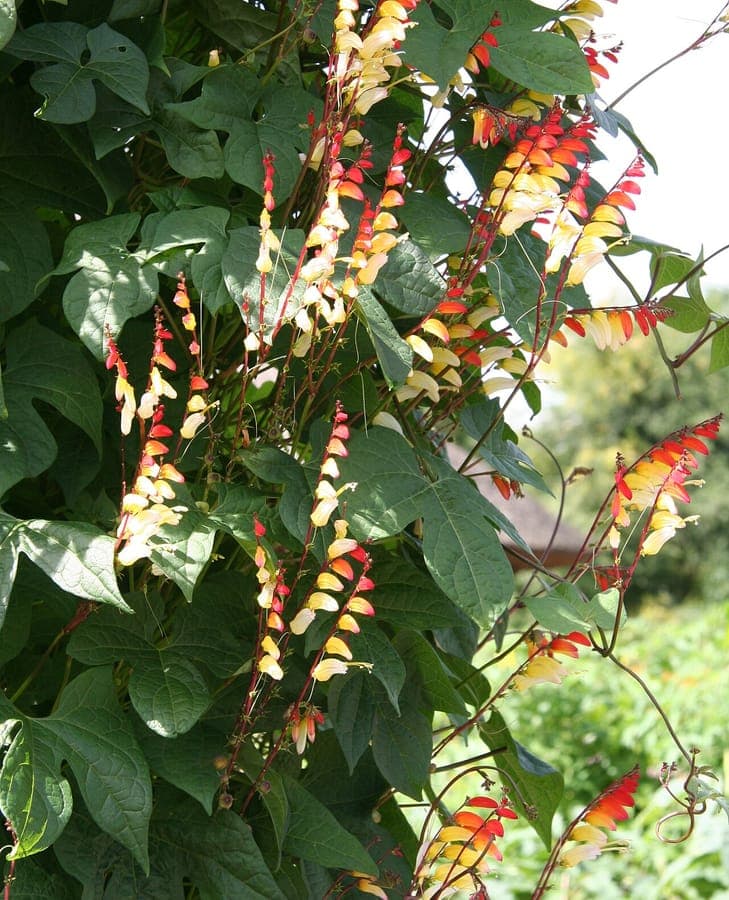
Ipomoea lobata, commonly known as Spanish-flag, Exotic Love Vine, or Fire vine, is a stunning tropical climbing plant from Mexico with one of the most unique flower displays in the plant world. Unlike its relatives, Spanish-flag doesn't produce individual round flowers. Instead, it displays hanging racemes of flowers that change color from deep red as buds to orange and yellow as they open, creating a natural progression that mirrors the colors of the Spanish flag.
This member of the Convolvulaceae family grows as a fast-climbing vine with distinctive lobed leaves. It's perfect for gardeners seeking something unconventional and dramatic. While it can be perennial in warm climates (USDA zones 9-11), it's typically grown as an annual or container plant in temperate zones. The rapid growth means you can achieve a spectacular display in just one season.
Appearance and Bloom
Ipomoea lobata grows as a vigorous, fast-climbing vine with deeply lobed leaves (from which the name 'lobata' derives). Leaves are 6 to 12 centimeters long, bright green, and provide an attractive backdrop for the distinctive flowers. Stems have a reddish tint and can reach 3 meters or more under favorable conditions.
The flowers are where the magic happens. Rather than individual blooms, they appear in hanging clusters (racemes) with dozens of flowers at once. Each flower starts deep red as a bud, turns orange as it opens, and gradually fades to bright yellow - creating a stunning natural gradient. The blooming season runs from July through October with continuous flower production.
Ideal Location
Spanish-flag thrives in full sun with at least 6 to 8 hours of direct daily sunlight. A warm, south-facing location is ideal. The plant tolerates shade poorly and will produce minimal flowers without adequate light.
Given its vigorous growth and height requirements, provide sturdy vertical support: a pergola at least 2 meters tall, a large trellis, or a framework of sturdy wire against a wall. Without support, the plant sprawls horizontally and loses its vertical impact.
The plant loves warm microclimates - against south-facing walls, on open terraces, or in sheltered corners where heat is retained.
Soil
Spanish-flag thrives in fertile, well-draining soil. A mix of garden soil with 30-40% compost works well. The plant tolerates poorer soils better than many other ornamental climbers, provided drainage is excellent.
Optimal pH ranges from neutral to slightly acidic (6.0 to 7.0). Incorporate slow-release fertilizer at planting. For container growing, use universal potting soil mixed with perlite for better drainage.
Diseño gratis
¿Quieres ver Ipomoea lobata: complete guide en tu jardín? Crea un diseño gratis ahora.
Watering
Spanish-flag enjoys regular water during the growing season, especially in warm weather. Water when the top 2-3 centimeters of soil feel dry. In hot, dry summers, daily watering may be necessary.
Always ensure excellent drainage - waterlogging causes problems. Mulch around the base with 5-7 centimeters of organic material to retain moisture. As temperatures cool in autumn, gradually reduce watering frequency.
Feeding
Spanish-flag responds well to regular feeding during growth. Apply a balanced fertilizer every two weeks or use slow-release granules monthly. Reduce feeding as autumn approaches.
Sulfur can help maintain slightly acidic soil. Yellowing leaves may indicate micronutrient deficiency, easily corrected with chelated micronutrient spray.
Pruning
Ipomoea lobata grows very fast. Regular pruning helps shape the plant and prevent legginess. Pinch off growing tips regularly to stimulate branching, which also promotes more flowering.
At season's end (October), cut the plant back to 30-50 centimeters. For container plants being overwintered, prune hard (near ground level) and store in a cool, bright location.
Maintenance Calendar
May-June: Plant out; water and feed regularly July-September: Peak bloom period; maintain water and feeding; regular pruning for shape October: Harvest seed (optional); prepare for winter storage November-April: Minimal care; drought conditions for indoor container plants
Winter Hardiness
Spanish-flag is frost-tender. In cold climates, grow it as an annual. In very warm regions (USDA 9-11), it can be perennial. For moderate zones, options include: growing as an annual (sow in May, enjoy summer/fall, remove after frost), container cultivation (grow in 20+ liter pot, move indoors for winter), or seed saving (Spanish-flag produces viable seeds readily).
Companion Plants
Spanish-flag combines beautifully with:
- Sky-blue Ipomoea tricolor for color harmony
- Yellow honeysuckle for complementary yellow
- Dark green hedging as backdrop
- White roses for contrast
- Red-flowering clematis
Closing
Ipomoea lobata brings drama and color to any garden. With its unique red-to-yellow flower progression, rapid growth, and relatively easy care, it's a winner for gardeners seeking something special. Look for seeds or starter plants at local nurseries or online. GardenWorld.app helps you find the perfect south-facing wall or pergola location. Start growing Spanish-flag today!
¿Quieres ver Ipomoea lobata: complete guide en tu jardín? Crea un diseño gratis ahora.
Sube una foto, elige un estilo y obtén un diseño fotorrealista con lista de plantas en menos de un minuto.
Más de 10.000 jardines diseñados
Sin tarjeta de crédito


Plantas similares
Ipomoea indica: complete guide
Ipomoea indica
Master the blue dawnflower's care: sun requirements, soil prep, watering schedules, and over-wintering strategies for this tropical climber.
Ipomoea tricolor: complete guide
Ipomoea tricolor
Master Heavenly Blue morning-glory: sunlight requirements, soil prep, watering schedule, and disease management for reliable sky-blue blooms.
Ipomoea nil: complete guide
Ipomoea nil
Grow Japanese morning-glory easily: seed sowing, growth timeline, watering needs, and companion planting for reliable purple-blue blooms.