
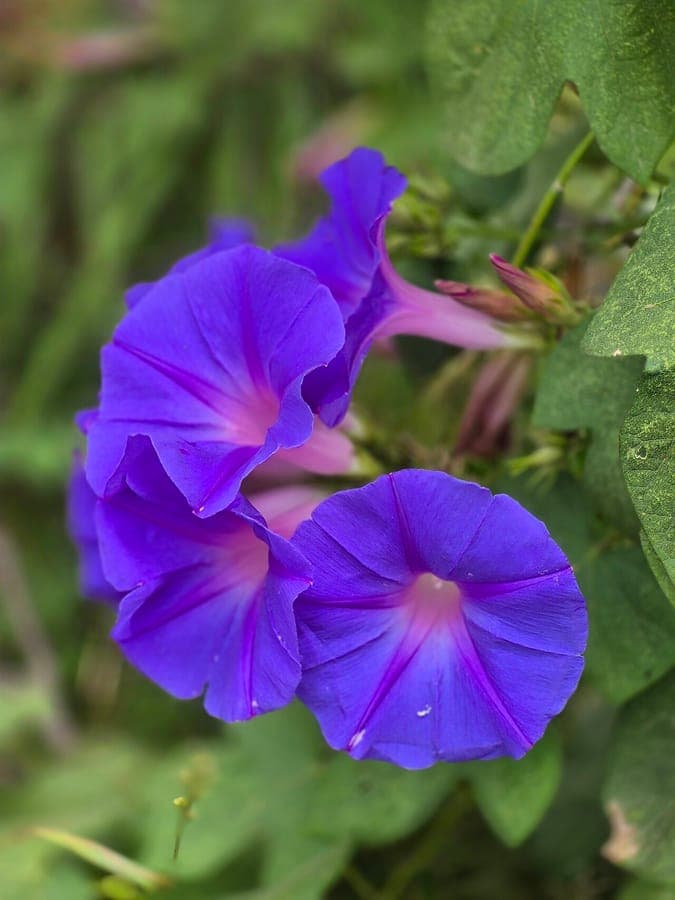
Gabriel Collares / CC BY 4.0, via Wikimedia Commons
Ipomoea indica: complete guide
Ipomoea indica
¿Quieres ver Ipomoea indica: complete guide en tu jardín?
1 minuto, sin tarjeta de crédito
Overview
Ipomoea indica, commonly called the blue dawnflower, is a spectacular tropical climbing vine native to tropical and subtropical America. This plant is celebrated for its enchanting sky-blue flowers that open at dawn and close by afternoon, giving it its romantic common name. Belonging to the Convolvulaceae family, it grows into a lush, vigorous vine with deep green foliage that transforms any garden structure into a flowering display.
The blue dawnflower is perfect for gardeners seeking a fast-growing climbing plant with dramatic color impact. In temperate climates, it's typically grown as an annual, though in warm regions it can behave as a perennial. This vine excels when trained against pergolas, fences, and trellises where it can climb freely and cover large vertical surfaces.
Appearance and Bloom
Ipomoea indica grows as a vigorous, sprawling vine with heart-shaped, dark green leaves measuring 5 to 12 centimeters in length. The foliage is dense and provides an attractive green backdrop for the flowers. Stems are smooth and can reach several meters long given adequate support and growing season.
The flowers are the star feature: large, funnel-shaped blooms measuring 4 to 6 centimeters across in gorgeous sky blue to deep purplish-blue. Each flower opens early in the morning and closes by afternoon, but the plant continuously produces new buds throughout the growing season, ensuring constant bloom from June through October in temperate zones.
Ideal Location
Blue dawnflower thrives in full sun with at least 6 to 8 hours of direct sunlight daily. A south-facing wall or pergola is ideal. While the plant tolerates partial shade, it will produce fewer flowers and grow less vigorously in reduced light.
Always provide sturdy support for climbing. A pergola, trellis, or string framework is essential for optimal growth and flowering. Plant near this support so young vines can naturally climb. Without support, the plant will sprawl along the ground and be less spectacular.
Ensure good air circulation to prevent fungal diseases. Avoid completely enclosed corners where air stagnates.
Soil
Blue dawnflower prefers fertile, well-draining soil rich in organic matter. A mix of garden soil or compost-based potting mix with 30-40% compost works excellently. If working in heavy clay, amend with sand and organic material to improve drainage.
Ideal pH ranges from neutral to slightly acidic (6.0 to 7.0). Test your soil and enrich it annually with compost. Good drainage is critical: waterlogged conditions lead to root rot. Container-grown plants should use a potting mix amended with perlite or pumice for extra drainage.
Diseño gratis
¿Quieres ver Ipomoea indica: complete guide en tu jardín? Crea un diseño gratis ahora.
Watering
During the growing and flowering season, water regularly whenever the top 2-3 centimeters of soil feels dry. In hot, dry summers, daily watering may be necessary, especially for container plants. Always ensure water drains well; never leave the vine in standing water.
Mulch around the base with 5-7 centimeters of organic material (shredded leaves, bark chips) to retain moisture and moderate soil temperature. As temperatures cool in autumn, gradually reduce watering frequency. In winter, in frost-prone areas, container plants need minimal water.
Pruning
Blue dawnflower grows vigorously and responds well to regular pruning. Pinch off growing tips regularly to encourage branching and fuller growth, which also promotes more flowering. At season's end (September-October), you can cut the plant back hard to 30-50 centimeters from ground level to prepare for winter.
Remove dead, damaged, or tangled growth. Pruning wounds heal quickly, and the plant will branch from multiple points below the cut.
Maintenance Calendar
May: Plant after all frost danger; begin regular watering and feeding June-August: Regular watering, tip-pinching, monitor for pests September: Begin gradually reducing water October: Final blooms; prepare for winter November-March: Minimal care; winter storage for container plants
Winter Hardiness
Ipomoea indica is frost-tender. In most of Western Europe, it can only grow outdoors during warm months. It's an annual in cool climates but can be perennial in warmer regions.
In frost-prone areas, you have three options: grow as an annual (sow in spring, enjoy summer, remove after frost), store over winter in cool conditions, or grow in containers moved indoors. If overwintering indoors, place in a cool, bright window with minimal watering.
Companion Plants
The blue dawnflower pairs beautifully with:
- Purple clematis for color harmony
- Passiflora for textural contrast
- Hydrangea for green backdrop
- White roses for color contrast
- Lavender at the base
Closing
Ipomoea indica brings tropical elegance to any garden. With its stunning blue flowers, vigorous growth, and relatively easy care, it's an excellent choice for gardeners seeking something special. Whether you source your starter plants from local nurseries, GardenWorld.app will help you design the perfect location in your garden. Begin growing your blue dawnflower today!
¿Quieres ver Ipomoea indica: complete guide en tu jardín? Crea un diseño gratis ahora.
Sube una foto, elige un estilo y obtén un diseño fotorrealista con lista de plantas en menos de un minuto.
Más de 10.000 jardines diseñados
Sin tarjeta de crédito


Plantas similares
Ipomoea lobata: complete guide
Ipomoea lobata
Grow Spanish-flag beautifully: sun exposure, soil requirements, feeding schedule, and care for this stunning red-yellow ornamental climber.
Ipomoea tricolor: complete guide
Ipomoea tricolor
Master Heavenly Blue morning-glory: sunlight requirements, soil prep, watering schedule, and disease management for reliable sky-blue blooms.
Ipomoea nil: complete guide
Ipomoea nil
Grow Japanese morning-glory easily: seed sowing, growth timeline, watering needs, and companion planting for reliable purple-blue blooms.