
Abu Shawka / Public domain, via Wikimedia Commons
Ilex mitis: complete guide
Ilex mitis
¿Quieres ver Ilex mitis: complete guide en tu jardín?
1 minuto, sin tarjeta de crédito
Overview
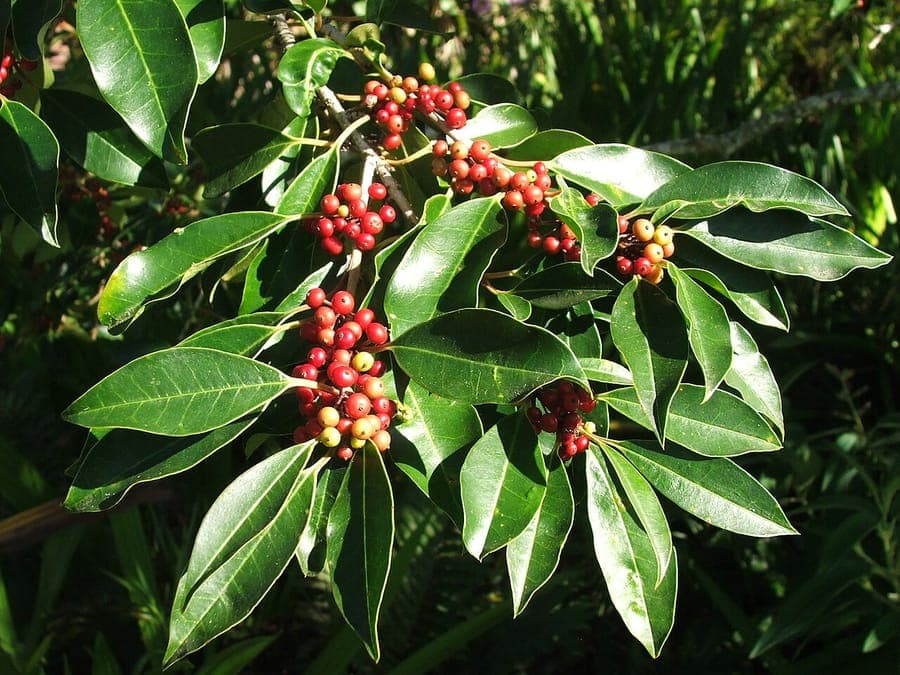
Ilex mitis, commonly called African Holly or Cape Holly, is a charming evergreen shrub from Africa. Unlike the familiar European holly, this African variant has finer structure but is equally hardy and beloved by birds. This plant is a true asset for front garden designs requiring winter structure and bird food. Glossy leaves remain green year-round, and in autumn red berries appear - a feast for passing birds.
Africcan holly brings winter interest and lasting appeal to any garden scheme.
Appearance and growth
African Holly grows as a compact shrub reaching 2-4 meters tall and equally wide. The leaves are small to medium, glossy smooth green with finely serrated edges. Like all hollies, male and female flowers are on separate plants, so you need a male specimen for berry production.
Flowers themselves are tiny, inconspicuous and greenish-white in late spring, but their transformation into red berries about the size of peas is the highlight. These berries persist on branches for months, attracting wildlife.
Ideal location
Ilex mitis thrives in full sun to partial shade. In reality, it grows almost anywhere. More sun means denser foliage and more berries; partial shade leads to more open branching. For maximum effect: sunny to lightly shaded.
Note: planting in full shade results in vegetative green foliage without berries - not ideal.
Soil
Ilex mitis is reasonably adaptable and grows in nearly all garden soils, from acid sand to heavy clay. That said, it looks most attractive in moderately fertile, well-draining soil. Heavy clay is fine, but add coarse sand and garden compost to lighten it somewhat.
The pH can be neutral to slightly acidic (6.0-7.5). Too much nutrition (heavily fertilized lawns) causes excessive growth and less elegant form.
Diseño gratis
¿Quieres ver Ilex mitis: complete guide en tu jardín? Crea un diseño gratis ahora.
Watering
Water regularly the first year, especially during dry spells. Once well-established, this evergreen is drought-independent. During dry summers, water carefully, especially under dense canopies where rain doesn't penetrate.
Don't keep the root zone permanently wet - African holly doesn't tolerate waterlogged conditions well. Ensure good drainage in heavy clay.
Pruning
Pruning is not obligatory - this plant grows naturally compact and bird-friendly. If you want to correct form: prune after flowering (May-June) for best regeneration. Avoid pruning in autumn-winter when birds need the berries.
Remove dead branches anytime. Regular pruning makes the plant denser without major form adjustments needed.
Maintenance calendar
May-June: Prune after flowering, wounds heal quickly. July-August: No interventions, plant sets seed. September-October: Berries ripen and color red. Don't prune - birds need food. November-March: Winter dormancy, no pruning needed. April-May: Flowering period, plant prepares for seed set.
Winter hardiness
Extremely cold-hardy to -10 degrees Celsius. This species naturally occurs in tropical and subtropical Africa, but where it grows, winters are mild. In the Netherlands, extremely cold winters (below -15) may damage foliage, but the plant survives.
In very cold climates, winter wrapping helps. In most Dutch gardens, no frost protection needed.
Companion plants
Combine Ilex mitis with other evergreen shrubs for winter interest: yew, cherry laurel, privet. Birds love diversity - mix different berry colors for attraction.
Underplanting: campanula, ivy (as ground cover around trunk). Overhead: other berry-bearing shrubs. Create an evergreen winter landscape.
Final thoughts
African Holly is an underestimated evergreen shrub deserving much more attention in gardens. It provides winter structure, bird food, and exotic appeal without any fussiness. Plant it, water it first year, then forget it - it does the work.
Available at most garden centers. Use gardenworld.app to determine where this holly looks best among your other evergreens.
¿Quieres ver Ilex mitis: complete guide en tu jardín? Crea un diseño gratis ahora.
Sube una foto, elige un estilo y obtén un diseño fotorrealista con lista de plantas en menos de un minuto.
Más de 10.000 jardines diseñados
Sin tarjeta de crédito


Plantas similares
Clustered holly: complete guide
Ilex aggregata
Clustered holly (Ilex aggregata) is a rare Andean holly with glossy foliage and bright red berry clusters, perfect for a sheltered, partly shaded corner.
Farges's holly: complete guide
Ilex fargesii
Farges's holly (Ilex fargesii) is an evergreen Chinese holly with glossy, spine-free foliage and bright red winter berries, ideal as a specimen or hedge.
Japanese Winterberry: complete guide
Ilex serrata
Discover Japanese winterberry: a deciduous holly with bright red berries that bring color to the garden deep into winter.