
Farges's holly: complete guide
Ilex fargesii
¿Quieres ver Farges's holly: complete guide en tu jardín?
1 minuto, sin tarjeta de crédito
Overview
Farges's holly (Ilex fargesii) is an elegant, evergreen holly from the holly family (Aquifoliaceae), native to the mountains of central and southeastern China, with a range extending into Myanmar and Tibet. The species is named after the French missionary and plant collector Paul Guillaume Farges, who brought numerous plants from the Chinese province of Sichuan to Europe in the late nineteenth century.
Unlike the spiny common holly (Ilex aquifolium), Farges's holly has smooth, untoothed leaf margins, giving the plant a refined, contemporary look. This feature makes the species particularly suitable for front gardens along paths and seating areas, where spiny foliage is less welcome. With gardenworld.app you can easily test how this elegant Chinese holly fits into a modern or Asian-inspired front garden.
Appearance and bloom
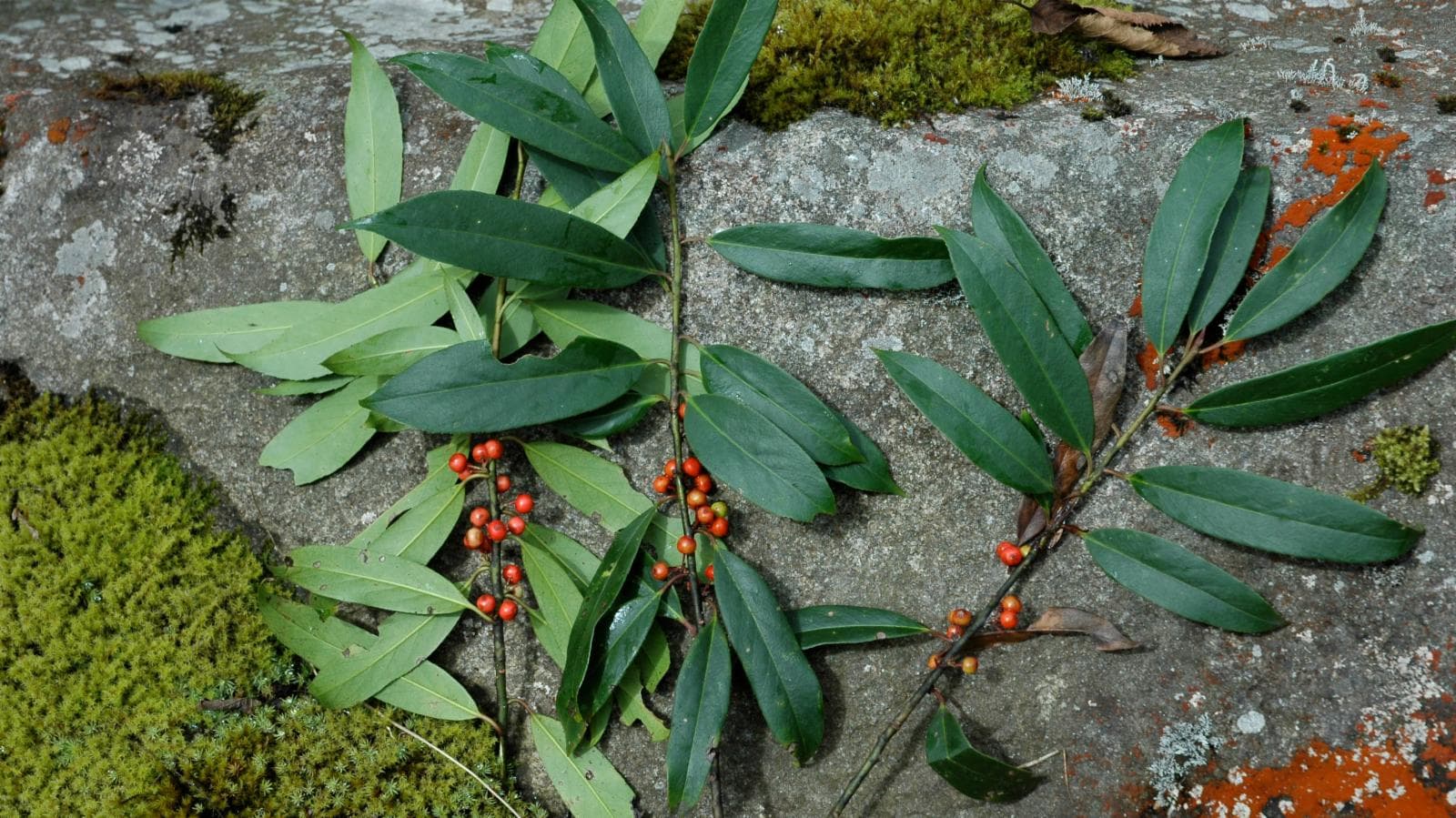
Farges's holly grows as a shrub or small tree, typically reaching 2 to 4 meters in cultivation, although wild specimens in China can grow to 6 to 8 meters. The leaves are glossy dark green, oblong-lanceolate, 4 to 9 centimeters long, with a smooth margin and a fine, elegant texture.
In April and May small white flowers appear in modest clusters along the branches. As with almost all hollies, the plants are dioecious, with male and female flowers on separate specimens, so a male pollinator nearby is needed for berry set. Pollinated female plants carry bright red berries from September through November, which often remain on the branches all winter, providing an important food source for thrushes and other garden birds.
Ideal location
Farges's holly thrives in both full sun and partial shade, making the species versatile for varied spots in the front garden. In partial shade under taller trees the plant develops a slightly looser, more natural silhouette, while in full sun it grows more compact and dense.
Thanks to its smooth, spine-free foliage, this holly is ideal as a specimen, low hedge or border planting along paths, patios and seating areas where people and pets pass by. The species also tolerates some air pollution and compacted soil, making it suitable for urban gardens. Use the design tool on gardenworld.app to see whether your front garden offers enough space and light for this attractive Chinese holly.
Soil
Farges's holly grows best in well-draining, humus-rich soil with a slightly acidic pH between 5.5 and 6.5, similar to the forest floor of its native habitat in the Chinese mountains. The plant also tolerates slightly limey soil, although growth on acidic ground is generally more vigorous.
When planting, work compost or well-rotted manure into the soil to help establishment. On heavy clay a layer of coarse sand improves drainage and prevents root rot during wet periods. An annual layer of leaf-compost mulch around the base keeps the soil moist and gradually supplies the plant with nutrients.
Watering
Farges's holly likes evenly moist soil, especially in the first and second year after planting, while the root system is still developing. Water weekly during dry periods so the soil doesn't dry out completely.
Once well established, the plant is reasonably tolerant of shorter dry spells, though prolonged drought can lead to leaf drop and reduced berry set. Container culture requires more frequent checking, since the root ball dries out faster than in open ground. In both cases ensure good drainage, since permanently wet soil is more damaging than a short dry period.
Diseño gratis
¿Quieres ver Farges's holly: complete guide en tu jardín? Crea un diseño gratis ahora.
Pruning
Farges's holly is pruning-tolerant and takes both light maintenance pruning and firmer formative pruning well. Prune preferably in early spring, before new growth begins, to maintain the desired shape and remove dead or damaged branches.
For a compact hedge or specimen shape you can trim the plant once or twice a year, in March and again in July if needed. Avoid heavy pruning of female plants just before flowering, since this can reduce autumn berry set. Older, neglected shrubs tolerate a firm rejuvenation cut back into old wood, after which they fill out fully again within a few seasons.
Maintenance calendar
March: Maintenance and formative pruning; start of the growing season. April-May: Flowering period with small white flowers; water regularly. June-July: New shoots develop; optional second trim for hedges. August: Quiet growth phase; check for drought stress. September-November: Berries turn bright red on female plants. December-February: Dormant period; berries often remain visible and attract birds.
Winter hardiness
Farges's holly is hardy to about -15 degrees Celsius, corresponding to USDA zone 7 to 9. This means the species is comfortably hardy across the winters of most of northern and central Europe without extra protection.
Only in the coldest, most exposed locations might young plants benefit from a sheltered spot or a layer of winter mulch around the root crown in their first autumn. Established shrubs more than two years old rarely need winter protection and keep their glossy foliage year-round.
Companion plants
Farges's holly combines beautifully with other Asian plants such as Acer palmatum, bamboo and Rhododendron, creating an atmospheric, Asian-inspired front garden. The glossy, dark green foliage provides a calm backdrop for flowering species with bright colors.
In a more classic border the holly also pairs well with boxwood, yew and other evergreen structural plants. For extra winter interest you can combine the plant with early-flowering bulbs such as snowdrops, which emerge beneath the shrub before the new season is properly underway. Check gardenworld.app to see which combinations best suit the style and light conditions of your own front garden.
Closing
Farges's holly is a refined, versatile holly that, with its smooth foliage and bright red winter berries, forms a valuable addition to any front garden. The combination of low maintenance, broad location tolerance and decorative berries makes this Chinese holly a great choice for both modern and classic garden designs.
Plant Farges's holly ideally in early spring (March to April) or in autumn (September to October), so the roots settle in before summer heat or hard frost arrives. Keep a spacing of 60 to 80 centimeters for a closed hedge during the first two growing seasons, or give a solitary specimen at least 150 centimeters of room to develop freely. An annual dose of compost in April plus a 5 centimeter mulch layer keep the soil cool and moist, which improves berry set.
You'll find Farges's holly at specialist tree nurseries and, increasingly, at larger garden centers such as Intratuin and Gamma. Design your front garden with gardenworld.app and discover exactly where this elegant Chinese holly will shine among your other planting.
¿Quieres ver Farges's holly: complete guide en tu jardín? Crea un diseño gratis ahora.
Sube una foto, elige un estilo y obtén un diseño fotorrealista con lista de plantas en menos de un minuto.
Más de 10.000 jardines diseñados
Sin tarjeta de crédito


Plantas similares
Clustered holly: complete guide
Ilex aggregata
Clustered holly (Ilex aggregata) is a rare Andean holly with glossy foliage and bright red berry clusters, perfect for a sheltered, partly shaded corner.
Japanese Winterberry: complete guide
Ilex serrata
Discover Japanese winterberry: a deciduous holly with bright red berries that bring color to the garden deep into winter.
Ilex yunnanensis: complete guide
Ilex yunnanensis
Discover the Yunnan Holly, an elegant Asian shrub with glossy foliage perfect for shady spots. Full care guide, tips, and companion planting.