
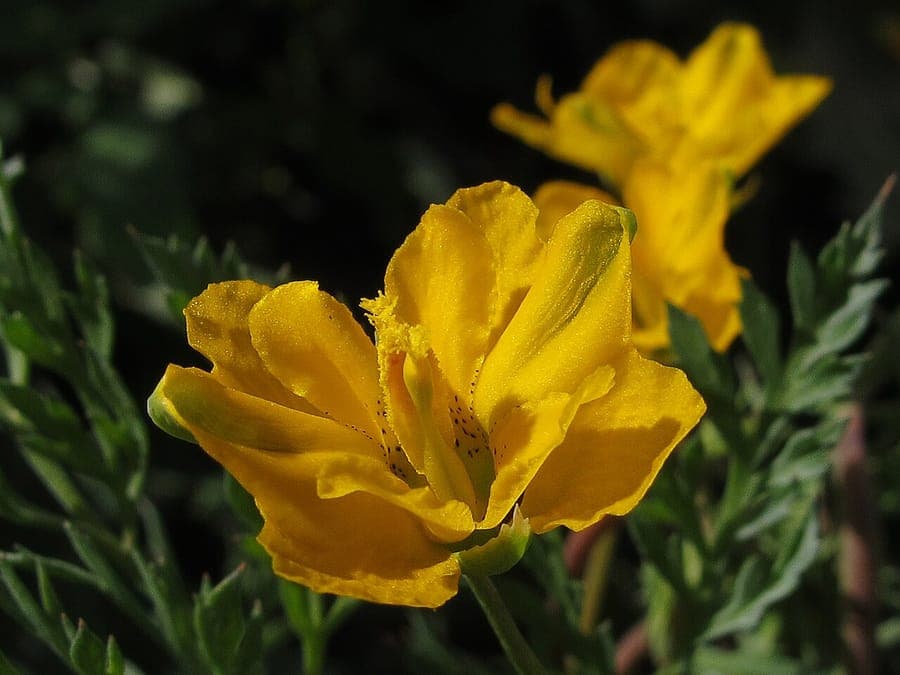
jacilluch / CC BY-SA 2.0, via Wikimedia Commons
Hypecoum pendulum: complete guide
Hypecoum pendulum
¿Quieres ver Hypecoum pendulum: complete guide en tu jardín?
1 minuto, sin tarjeta de crédito
Overview
Hypecoum pendulum, commonly known as pendent hypecoum or nodding hypecoum, is a delicate annual plant from the Papaveraceae family native to Mediterranean and Central Asian regions. This charming plant is celebrated for its nodding yellow flowers and intricate, finely-divided foliage that brings an ethereal quality to any Mediterranean garden design.
Appearance and Bloom
Hypecoum pendulum typically reaches 20-40 cm in height with a sprawling growth habit. The most distinctive feature is its nodding yellow flowers that appear in successive clusters from May through July. The name "pendulum" perfectly describes the downward-facing flowers that hang gracefully from thin stems.
The foliage is exceptionally fine and intricately dissected, creating a feathery, light appearance that distinguishes it from coarser Mediterranean plants. The flower structure is unique within the poppy family, featuring four petals of different sizes arranged asymmetrically - a botanical curiosity that adds to its appeal.
Ideal Location
This plant flourishes in full sun positions requiring at least 6-8 hours of direct sunlight daily. Unlike some Mediterranean plants, Hypecoum pendulum doesn't suffer from intense sun exposure and actually produces better blooms under bright conditions. South-facing beds and warm microclimates are ideal.
The plant is frost-tender and suited only to warmer zones (8-10). In cooler climates, treat it as a spring-sown annual or grow in containers that can be moved to protection in winter. Shield from cold winds, especially during autumn and spring.
Soil Requirements
Excellent drainage is absolutely critical. Heavy clay soils must be amended with sand, gravel, and organic matter incorporated to 30 cm depth. Hypecoum pendulum prefers neutral to slightly acidic soil (pH 6.0-7.0). Interestingly, poor, lean soil is actually preferable to rich soil, as excessive nutrients often promote leafy growth at the expense of flowering.
For container cultivation, use a specialized cactus or Mediterranean potting mix that ensures rapid drainage. Avoid standard garden soil or peat-based composts which retain too much moisture.
Watering
Once established, Hypecoum pendulum is remarkably drought-tolerant. Water young plants regularly until roots establish (4-6 weeks), then reduce frequency significantly. Mature plants can tolerate extended dry periods without supplemental water.
During summer growth and flowering, water deeply but infrequently, allowing soil to dry between waterings. Overwatering is the primary killer of this species, particularly in heavier soils. Containers may need slightly more frequent watering than in-ground plants.
Diseño gratis
¿Quieres ver Hypecoum pendulum: complete guide en tu jardín? Crea un diseño gratis ahora.
Pruning
Hypecoum pendulum requires minimal pruning. Deadheading spent flowers maintains neat appearance and can encourage additional blooms, though it's not essential. Remove any dead or damaged foliage in spring.
The plant naturally grows in a compact mound and requires no formal training or shaping. Since it's an annual in most climates, end-of-season cleanup involves simply removing spent plants. Let some flowers mature to set seed for self-sowing next season.
Maintenance Calendar
March-April: Sow seed directly in garden (benefits from winter chilling). April-May: Seedlings emerge and grow rapidly. May-July: Peak flowering period - maintain watering for young plants. August: Allow flowers to mature and set seed. September-October: Seed dispersal. November-February: Winter dormancy period (no watering needed).
Winter Hardiness
Hypecoum pendulum is not winter-hardy in cold climates. It's a true annual that only survives winter in zones 8-10. In colder regions (USDA zones 5-7), sow seed directly in spring after frost danger passes. The plant relies on self-seeding in mild climates or annual replanting in cold regions.
Protect young plants from frost with mulch in marginal zones. Container specimens can be moved to unheated frames or conservatories for winter protection. South-facing positions near light-colored walls provide beneficial reflected warmth.
Companion Plants
Hypecoum pendulum pairs beautifully with other drought-tolerant Mediterranean plants:
- Echinacea (coneflower) for vertical accent
- Lavandula (lavender) for structural contrast
- Sedum (stonecrop) for foliage texture
- Limonium (statice) for delicate filler
- Dianthus (pinks) for complementary colors
- Salvia (sage) for deeper tones
Plant at similar densities in gravel or Mediterranean scree gardens for maximum impact.
Conclusion
Hypecoum pendulum represents refined elegance in Mediterranean garden design. Its nodding flowers and feathery foliage bring movement and sophistication to dry, sunny locations. Though annual in cooler climates, it will reliably self-seed in appropriate Mediterranean zones.
Nurseries specializing in Mediterranean plants and seed suppliers offer Hypecoum pendulum in spring. Explore this botanical gem at gardenworld.app for complete Mediterranean garden designs. gardenworld.app transforms your Mediterranean vision into reality with expert plant recommendations and comprehensive garden plans.
¿Quieres ver Hypecoum pendulum: complete guide en tu jardín? Crea un diseño gratis ahora.
Sube una foto, elige un estilo y obtén un diseño fotorrealista con lista de plantas en menos de un minuto.
Más de 10.000 jardines diseñados
Sin tarjeta de crédito


Plantas similares
Papaver gorodkovii: complete guide
Papaver gorodkovii
Papaver gorodkovii, the arctic poppy, thrives from Alaska to Russia's Far East. Discover how to grow this rare, extremely cold-hardy rock garden treasure.
Papaver setiferum: complete guide
Papaver setiferum
Papaver setiferum is a hardy giant Caucasian poppy with fiery red blooms. Discover siting, soil, deadheading and winter hardiness.
Pale Poppy: complete guide
Papaver alboroseum
Discover pale poppy (Papaver alboroseum) - rare alpine poppy with white-pink flowers. Precious beauty from Kamchatka. Cultivation in alpine and rock gardens.