
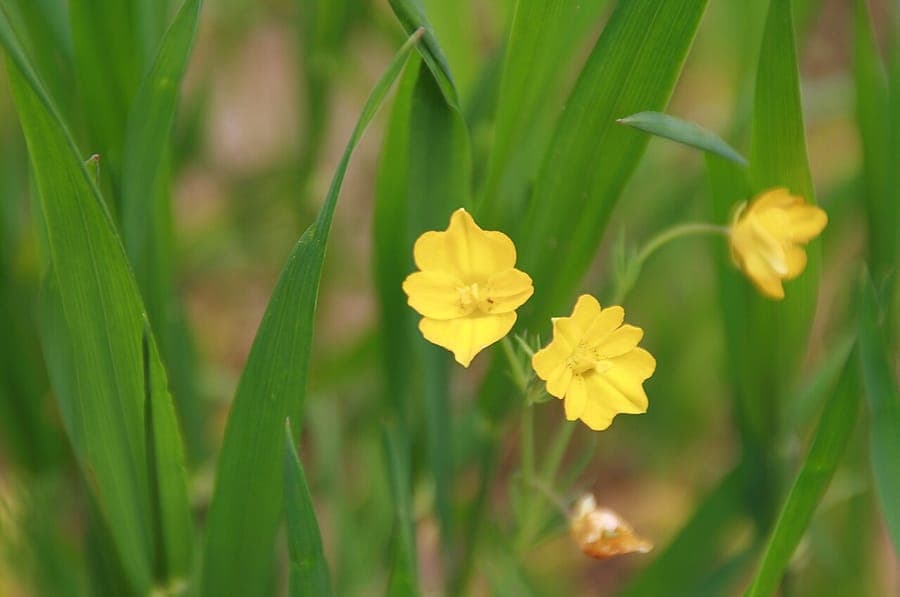
Miguel Ángel García. from Ólvega., España / CC BY 2.0, via Wikimedia Commons
Hypecoum imberbe: complete guide
Hypecoum imberbe
¿Quieres ver Hypecoum imberbe: complete guide en tu jardín?
1 minuto, sin tarjeta de crédito
Overview
Hypecoum imberbe, also known as Sicklefruit hypecoum or Cumin à grandes fleurs in French, is a delicate annual plant from the Mediterranean region. This plant belongs to the Papaveraceae family (poppy-like plants) and is related to more familiar crops such as poppies and opium poppies. The plant's name refers to the characteristic sickle- or arch-shaped fruits that develop after flowering.
Hypecoum imberbe is a unique plant for dry, sunny locations in the garden. Although not as well-known as many other Mediterranean flowers, it deserves more attention for its delicate beauty and easy cultivation. The plant grows naturally in Mediterranean regions from Portugal to Iraq, in dry, rocky habitats.
This is a perfect plant for gardeners looking for something different from the usual annuals.
Appearance and Bloom
Hypecoum imberbe is a low-growing, sprawling annual plant that typically reaches only 15 to 30 centimeters in height. The plant has an open, branching growth form and does not form a dense mass. The leaves are very fine, feathery-divided, giving the plant a very delicate, almost fern-like appearance. The leaf color is greenish-gray-blue.
The flowers are small but very characteristic. They appear from April to June and continue appearing for months in warm weather. Each flower has four petals and is about 1 centimeter wide, in a soft yellow to lemon yellow. The flowers are not spectacularly large, but their delicate appearance and fine texture make them visually interesting.
After flowering, the characteristic sickle-shaped fruits develop - curved seed pods that are 2-3 centimeters long. These fruits are actually very decorative and add an extra layer of interest to the plant.
Ideal Location
Hypecoum imberbe requires full sun and dry conditions. Sow seeds or plant young plants in a spot where they receive at least six to eight hours of direct sunlight daily. The more sun, the better.
The plant does not tolerate shaded locations well and will bloom poorly or not at all in partial shade.
Hypecoum imberbe is perfect for front borders, rock gardens, scree gardens, or in container planting on sunny patios.
Soil
Hypecoum imberbe grows best on very dry, well-drained, poor soils. The plant actually prefers dry conditions much better than wet ones. In very rich soils, the plant grows more foliage and fewer flowers.
In regular garden soil, it can be wise to add approximately 30-40% coarse sand or gravel to improve drainage. The pH can be neutral to alkaline, around 7-8, although the plant can also grow in acidic soils.
The plant actually grows best on scree or very poor ground.
Diseño gratis
¿Quieres ver Hypecoum imberbe: complete guide en tu jardín? Crea un diseño gratis ahora.
Watering
Hypecoum imberbe tolerates drought very well. In fact, too much water is often harmful. Water sparingly - only when the soil is very dry and the plant shows some wilting symptoms. This can be once a week or once every two weeks during the growing period, possibly more in hot weather.
After emergence, you can water when seed soil feels dry, but after that, once closed, only water in very dry periods.
Ensure water never stagnates around the plant.
Pruning
Hypecoum imberbe requires no pruning in the classical sense. Dead or damaged plant parts can be carefully removed, but this is not strictly necessary. The plant is naturally open in growth form.
If you want to save seeds, you can leave spent flower stems standing until the seed ripens (August-September).
Maintenance Calendar
February-March: Sow seed directly in ground on sunny, dry spot. April-June: Plant grows and blooms. Water sparingly. July-August: Further blooming. Seed begins to ripen. September-October: Seed ripens. Collect seed if desired. Plant dies naturally. November-January: Plant is dead. Clean up.
Winter Hardiness
Hypecoum imberbe is an annual plant and dies naturally in fall, usually in October or November. The plant cannot tolerate frost. In warm climates, however, it can over-winter as a short-lived biennial.
Resow new seed each year in early spring (February-March).
Companion Plants
Hypecoum imberbe combines nicely with other dry, sunny Mediterranean flowers:
- Other poor-soil flowers such as Papaver rhoeas (wild poppies)
- Dry herb plants such as Thymus
- Gray artemisia species
- Low-growing Dianthus
- Lavandula (lavender) for contrast
Conclusion
Hypecoum imberbe is a beautiful plant for gardeners who have dry, sunny places and are looking for something unusual. With its delicate, fern-like foliage and fine yellow flowers, it brings elegance and texture to shallow corners of the garden. The plant is easy to grow from seed, inexpensive, and very suitable for replacement planting each year. Sow seeds in early spring and enjoy this Mediterranean treasure during spring and summer.
Buy Hypecoum imberbe seed from seed suppliers or Intratuin.
¿Quieres ver Hypecoum imberbe: complete guide en tu jardín? Crea un diseño gratis ahora.
Sube una foto, elige un estilo y obtén un diseño fotorrealista con lista de plantas en menos de un minuto.
Más de 10.000 jardines diseñados
Sin tarjeta de crédito


Plantas similares
Papaver gorodkovii: complete guide
Papaver gorodkovii
Papaver gorodkovii, the arctic poppy, thrives from Alaska to Russia's Far East. Discover how to grow this rare, extremely cold-hardy rock garden treasure.
Papaver setiferum: complete guide
Papaver setiferum
Papaver setiferum is a hardy giant Caucasian poppy with fiery red blooms. Discover siting, soil, deadheading and winter hardiness.
Pale Poppy: complete guide
Papaver alboroseum
Discover pale poppy (Papaver alboroseum) - rare alpine poppy with white-pink flowers. Precious beauty from Kamchatka. Cultivation in alpine and rock gardens.