
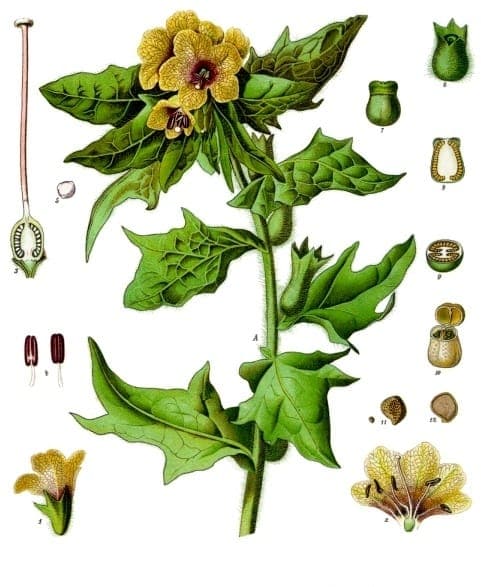
Franz Eugen Köhler, Köhler's Medizinal-Pflanzen / Public domain, via Wikimedia Commons
Henbane: complete guide
Hyoscyamus niger
¿Quieres ver Henbane: complete guide en tu jardín?
1 minuto, sin tarjeta de crédito
Overview
Hyoscyamus niger, commonly known as henbane or black henbane, is a fascinating member of the Solanaceae family. Native to Eurasia and North Africa, this plant thrives in temperate climates along roadsides, disturbed ground, and wastelands. Historically significant for its use in traditional medicine and folklore, henbane is a highly toxic plant containing potent alkaloids. For modern gardeners interested in unusual plants and botanical history, henbane offers a captivating, educational addition to the garden.
Designing a garden that showcases botanical curiosities? Visit gardenworld.app to create a personalized garden design that incorporates unique plants like henbane in safe, visually appealing ways. With proper planning, this plant becomes both an educational and striking garden element.
Appearance & bloom
Henbane appears as an annual or biennial herb reaching 30-90 cm in height. The plant develops a characteristic form: compact at the base, becoming increasingly branched and open toward the top. Leaves are large, coarsely toothed, and densely covered with coarse hairs that give them a rough texture.
The flowers are among henbane's most distinctive features, appearing from June to September in yellow marked with purple or brown veins. The blooms have an intriguing funnel or tube shape with prominent visible stamens. Flowers are approximately 20-25 mm in diameter, arranged loosely in the leaf axils forming open flower spikes.
Ideal location
Henbane thrives in sunny locations receiving at least 6 hours of direct sunlight daily. The plant tolerates partial shade reasonably well but produces richer blooms in full sun. It prefers dry to moderately moist locations. An open, well-lit spot away from dense plant clusters works best.
Soil
Henbane is not particular about soil composition and grows on most substrates. It prefers neutral to slightly alkaline soils with a pH between 6.0 and 7.5. The plant does well on poor soils and has minimal fertilization requirements.
Diseño gratis
¿Quieres ver Henbane: complete guide en tu jardín? Crea un diseño gratis ahora.
Watering
Henbane is drought-sensitive and requires regular watering, especially during growing seasons (April to October). Water when the top layer of soil feels dry. Avoid waterlogging, which can lead to root rot. In years with adequate rainfall, supplemental irrigation may not be necessary.
Pruning & maintenance
Henbane requires minimal pruning. To limit growth, pinch off the top when the plant reaches approximately 15-20 cm in height, stimulating bushier, more branched growth. Remove dead or damaged leaves as needed.
Maintenance calendar
- April-May: Sow seeds directly in place for flowering from June to September
- June-September: Flowering period; enjoy the yellow blooms marked with purple veins
- October-November: Plant dies back; may self-seed for next season
- Year-round: Monitor for pests, though the plant's toxic properties generally protect it from serious problems
Winter hardiness
Hyoscyamus niger has moderate cold hardiness, primarily growing in temperate zones (USDA zones 6-10). In northern Europe, it functions as an annual or biennial. The first year produces a leaf rosette; the second year flowers develop. The plant tolerates light frosts but is seriously damaged by prolonged freezing.
Companion plants
Grow henbane alongside other botanical curiosities: sage, oregano, mugwort, or other fragrant plants from the nightshade family. Avoid positioning it directly near vegetables from the same family due to possible cross-pollination concerns.
Final thoughts
Hyoscyamus niger is no ordinary garden plant, but it fascinates those with historical, botanical, and ethnobotanical interests. With its characteristic yellow flowers marked by purple veins, hairy foliage, and intriguing history, henbane offers a unique glimpse into Eurasian botanical heritage. With proper precautions (wash hands after contact) and strategic garden placement, this plant can be safely enjoyed. Discover more plants for your garden on gardenworld.app and ensure your outdoor space is both secure and enchanting.
¿Quieres ver Henbane: complete guide en tu jardín? Crea un diseño gratis ahora.
Sube una foto, elige un estilo y obtén un diseño fotorrealista con lista de plantas en menos de un minuto.
Más de 10.000 jardines diseñados
Sin tarjeta de crédito


Plantas similares
Solanum dolichosepalum: complete guide
Solanum dolichosepalum
Discover Solanum dolichosepalum, an Andean nightshade with striking long sepals. Growing tips, hardiness, and companion planting for your patio.
Solanum ripense: complete guide
Solanum ripense
Discover Solanum ripense, a moisture-loving Andean nightshade for pond edges and conservatories. Growing tips, hardiness, and companions.
Solanum tomentosum: complete guide
Solanum tomentosum
Discover Solanum tomentosum, a thorny South African nightshade with felted leaves. Growing tips, hardiness, and companion planting ideas.