
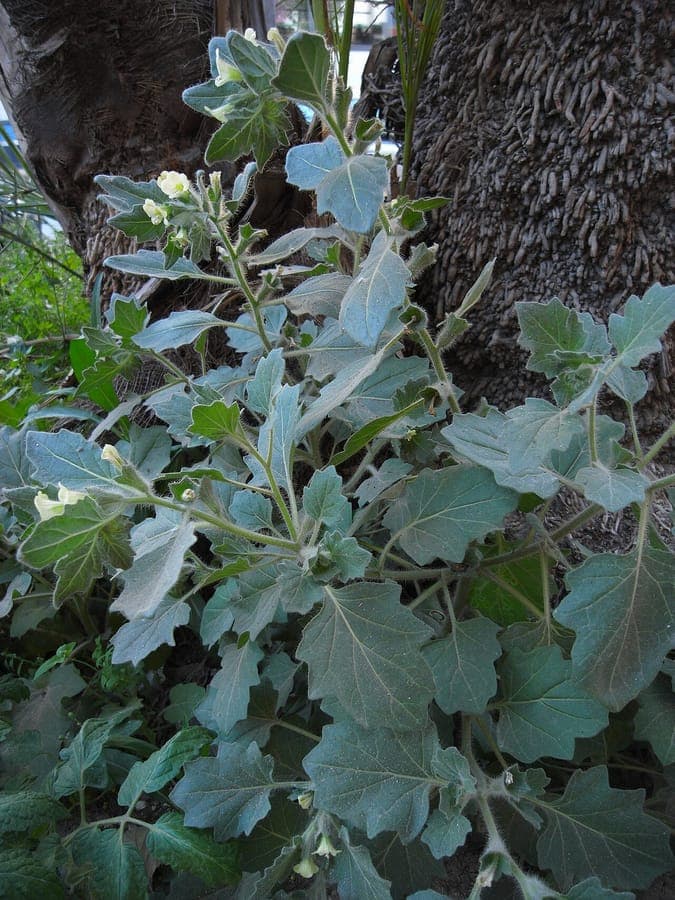
Denis Barthel / CC BY-SA 3.0, via Wikimedia Commons
White henbane: complete guide
Hyoscyamus albus
¿Quieres ver White henbane: complete guide en tu jardín?
1 minuto, sin tarjeta de crédito
Overview
Hyoscyamus albus, commonly known as White henbane, is an annual or biennial herb from the nightshade family (Solanaceae) naturally occurring from North Africa through the Middle East to the Arabian Peninsula. This plant is worldwide recognized as particularly toxic and is used in botanical and pharmacological research.
Disclaimer: This article is intended for educational purposes and researchers. White henbane contains potentially toxic alkaloids (hyoscyamine, scopolamine) that pose serious health risks. Not for consumption or home experimentation.
Appearance and flowering period
Hyoscyamus albus grows as an irregularly branched herb with gray-green, hairy foliage measuring 5-15 cm in length. The leaves are oblong-ovate with irregular teeth along the margin. In April-May small white flowers with purple veins and dark purple anthers appear. Each flower measures approximately 1.5-2 cm and grows in loose clusters.
After flowering characteristic fruit capsules form (1-1.5 cm), covered with a network of veins. These capsules contain numerous tiny seeds that can remain viable for many years (15+ years under certain conditions).
Ideal location
White henbane grows in full sun on dry, rocky locations. The plant tolerates poor soils well and grows on sand, gravel, and rocky terrain. It's drought-tolerant and performs better in climates with warm, dry summers than in wet climates.
For research purposes it's cultivated in controlled greenhouse conditions with limited watering. It thrives in pots with fast-draining soil (70% sand/gravel, 30% peat).
Soil and drainage
White henbane demands well-draining, nutrient-poor soil. pH: 6.5-8.0 (neutral to slightly alkaline). The plant tolerates moderately saline soils. For research samples: use potting soil with 50% sand and 50% peat with added broken tile for extra drainage.
In full ground avoid heavy clay soils; the plant dies from waterlogging.
Watering and growth
White henbane is extremely drought-tolerant. Once roots establish (after 3-4 weeks from sowing), the plant can survive weeks without water. In research greenhouses: water moderately, only when soil feels dry to 2 cm depth.
Growth rate is moderate: from sowing to adult plant (4-6 months). Sowing March-April, flowering July-August, fruit-setting September-October.
Diseño gratis
¿Quieres ver White henbane: complete guide en tu jardín? Crea un diseño gratis ahora.
Precautions and toxicity
ALERT: Hyoscyamus albus contains potentially toxic tropane alkaloids, notably hyoscyamine (0.1-0.6%) and scopolamine (0.03-0.3%). These alkaloids work anticholinergic and can cause serious intoxication when ingested:
- Tremor, tachycardia, hyperthermia
- Hallucinations, psychosis, delirium
- Mydriasis (dilated pupils)
- Urinary retention, loss of sweating
- Coma, respiratory depression in severe cases
WARNING: don't touch any plant parts without gloves. Seeds and leaves are both toxic. Always thoroughly wash hands after contact. Keep children and pets away.
Maintenance and pruning
Minimal maintenance. Spent flowers can be removed to prevent seed setting (unless seeds are needed for research). The plant grows naturally chaotic; neat pruning isn't necessary.
At full seed-setting, mature capsules can be snipped and dried in paper bags for storage (dark, dry, cool).
Research greenhouse maintenance calendar
March: seed sowing in potting soil, warm (18-22°C), keep moist until germination
April-May: repot seedlings when first true leaves visible
June-July: careful watering (keep dry), no feeding
August-October: careful watering, snip mature capsules
Preventing dispersal
In areas outside the natural range: Hyoscyamus albus is potentially invasive and can naturalize. Strict hygiene: seeds must be safely stored or destroyed. Don't compost plant material; dispose via household or specialist waste.
Historical use and toxicology
White henbane was historically used in traditional Middle Eastern medicine, typically as external poultice for pain. Greek physician Dioschorides described it as a sleep-inducing agent. Modern research shows alkaloids are highly toxic for consumption.
Research value
Hyoscyamus albus is used in toxicological research on anticholinergic effects and on tropane alkaloid biosynthesis. Various pharmacological studies use alkaloid extracts for receptor studies.
Legal status
In most countries, Hyoscyamus albus isn't completely banned for cultivation or possession (varies by country), but sale of extracted alkaloids is strictly regulated or prohibited. Consumption or preparation of intoxicative mixtures is illegal in virtually all countries.
Conclusion
White henbane is a botanically fascinating plant with rich historical and pharmacological significance, but simultaneously very toxic and dangerous. This article serves educational purposes. For researchers: strict adherence to safety procedures is essential. For those interested in gardens: choose safer garden plants on gardenworld.app instead of toxic wild species.
¿Quieres ver White henbane: complete guide en tu jardín? Crea un diseño gratis ahora.
Sube una foto, elige un estilo y obtén un diseño fotorrealista con lista de plantas en menos de un minuto.
Más de 10.000 jardines diseñados
Sin tarjeta de crédito


Plantas similares
Henbane: complete guide
Hyoscyamus niger
Discover all about Hyoscyamus niger (henbane): a curious plant with distinctive flowers, growth habits, and special care needs. Learn about growing this unique specimen.
Thorn-apple: complete guide
Datura stramonium
Complete growing guide for Thorn-apple (Datura stramonium): care, hardiness, ideal soil and planting tips. Perfect for bold summer garden designs on gardenworld.app.
Solanum nigrum: complete guide
Solanum nigrum
Solanum nigrum, black nightshade, is a widespread annual herb with small white flowers and dark berries. Learn identification and safety precautions.