
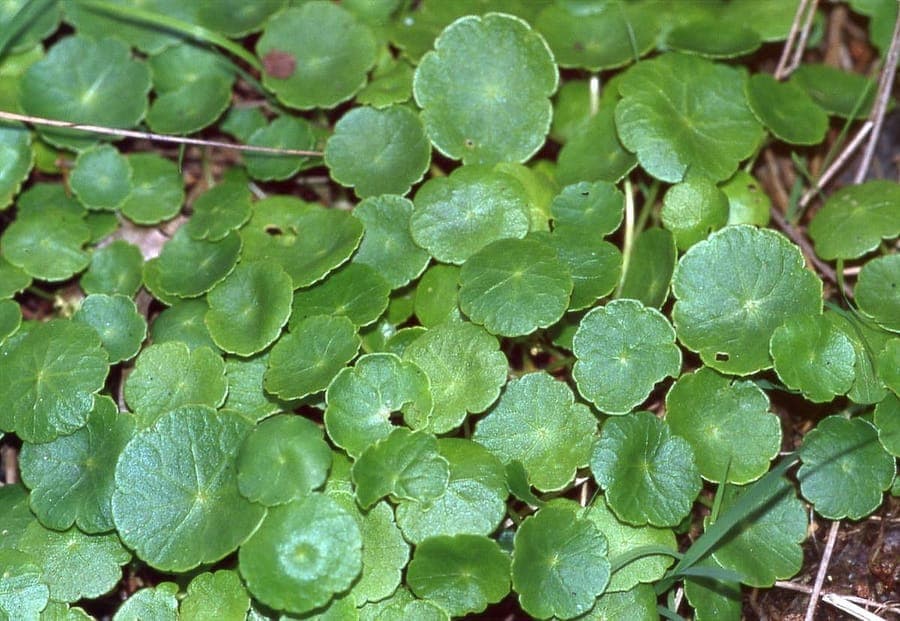
Wikimedia Commons / CC BY-SA 3.0, via Wikimedia Commons
Marsh pennywort: complete guide
Hydrocotyle vulgaris
¿Quieres ver Marsh pennywort: complete guide en tu jardín?
1 minuto, sin tarjeta de crédito
Overview
Hydrocotyle vulgaris, better known as Marsh pennywort or Common waterpennywort, is a native European water plant that thrives along the margins of still waters, in marshes, and along slow-flowing rivers. This plant from the Araliaceae family is naturally distributed from the Azores to the Mediterranean region and grows throughout the Netherlands, Belgium, and northwestern France.
At gardenworld.app, we love Marsh pennywort in natural water features because it's ecologically valuable, grows low and creeping, and perfectly suits sustainable garden water projects. It's non-invasive and essential for local aquatic ecosystems.
Appearance and flowering period
Hydrocotyle vulgaris grows as a low, creeping plant with extremely small, round, bright green leaves measuring just 0.5-2 cm in diameter. The leaves grow alternately along thin, limp stems, giving the plant an elegant, almost delicate appearance. During the growing season, the plant can creep several meters along the shore.
Flowers appear from May to July and are extremely small - barely 1-2 mm - with 5 white or light pink petals. They're difficult to see without magnification but form miniature fruits (diakarpels) that ripen in August. These inconspicuous flowers are vital for small insects and aquatic organisms.
Ideal location
Marsh pennywort thrives optimally in wet locations along water: water banks, ditch margins, wet ground, and the splash zones of ponds. The plant grows both in full sun (faster growth) and in partial shade (more compact). For garden ponds, place it in the marginal zone where water and land meet - precisely its favorite niche.
In wetland designs for gardenworld.app, we use Marsh pennywort as ground cover in overwetted areas, where its creeping growth purifies water and prevents erosion.
Water and soil
Hydrocotyle vulgaris thrives in both freshwater marshes and slightly brackish waters. pH range: 5.5-7.5. The plant is undemanding regarding soils: sand, loam, peat, and mud-rich ground are all suitable. Important: soil must remain permanently moist to wet.
In garden ponds, it digs in along the shore where water and wet ground meet. Stagnant water without strong flow is better than rushing currents.
Watering and growth
As a marginal plant, Marsh pennywort needs permanent moisture. At full growth, it spreads continuously along the shore - not rapid growth but steady, creeping expansion. From May to October it grows gradually; in winter the aboveground vegetation recedes but roots survive in wet soil.
Means: ensure water and shore zone always stay wet, even in dry summers. Drought stress causes the plant to retreat.
Diseño gratis
¿Quieres ver Marsh pennywort: complete guide en tu jardín? Crea un diseño gratis ahora.
Maintenance and pruning
Maintenance is minimal. Remove dead leaves, pick up broken stems - that's essentially it. The plant grows slowly enough that weekly pruning isn't needed. During full growing seasons (May-September) you can do monthly inspections; if it takes over too much shore, you can carefully trim branches.
Important: never remove all growth - the plant will recover more slowly. Limit yourself to removing about 1/3 of growth at a time.
Maintenance calendar
May: first inspection, check growth
June-August: monthly maintenance, remove dead leaves
September: final pruning before aboveground growth recedes
October-April: minimal maintenance, monitor shore moisture
Winter hardiness
Marsh pennywort is completely winter-hardy in all Dutch, Belgian, and French climate zones. USDA zone 5 and higher. The aboveground vegetation recedes in October-November, but roots easily survive frosts to -20°C or lower, as long as soil stays moist (not frozen).
In very severe winters with prolonged drought (frozen ground + no precipitation), dehydration can occur, but this is extremely rare in natural wetlands.
Companions and associations
Marsh pennywort feels at home with other native marginal plants. Combine it with:
- Speedwell (Veronica beccabunga)
- Water spiralwort (Hydrocotyle ranunculoides - as long as it doesn't become invasive)
- Kingcup (Caltha palustris)
- Yellow flag iris (Iris pseudacorus)
The combination of these plants creates an authentic European marsh edge.
Ecosystem contribution
Marsh pennywort is ecologically valuable: it provides food for aquatic insect larvae, purifies water through root filtration, and protects shores from erosion. At gardenworld.app, we recommend it for anyone wanting to create a true wetland biotope.
Prevention of invasiveness
Good news: Hydrocotyle vulgaris is non-invasive. It spreads, but very slowly and predictably. In closed garden systems it causes no problems. In open natural areas, it actually forms part of the natural ecosystem.
Conclusion
Marsh pennywort is the perfect choice for those designing a sustainable, ecologically responsible water feature. With minimal maintenance, full native status, and rustic charm, it offers everything you need. Design your natural marsh on gardenworld.app with this valuable native plant.
¿Quieres ver Marsh pennywort: complete guide en tu jardín? Crea un diseño gratis ahora.
Sube una foto, elige un estilo y obtén un diseño fotorrealista con lista de plantas en menos de un minuto.
Más de 10.000 jardines diseñados
Sin tarjeta de crédito


Plantas similares
European frog's-bit: complete guide
Hydrocharis morsus-ranae
Everything about European frog's-bit (Hydrocharis morsus-ranae): care, cultivation in garden ponds, blooming periods. Tips for integrating this floating water plant into aquatic ecosystems.
Floating pennywort: complete guide
Hydrocotyle ranunculoides
Everything about Floating pennywort (Hydrocotyle ranunculoides): care in aquariums and ponds. Growth tips, optimal conditions and integration into aquatic landscapes.
Cowflock: complete guide
Caltha palustris
Discover everything about Caltha palustris: ideal growing conditions, care tips, and how to use this spring-blooming perennial in wet garden areas.