
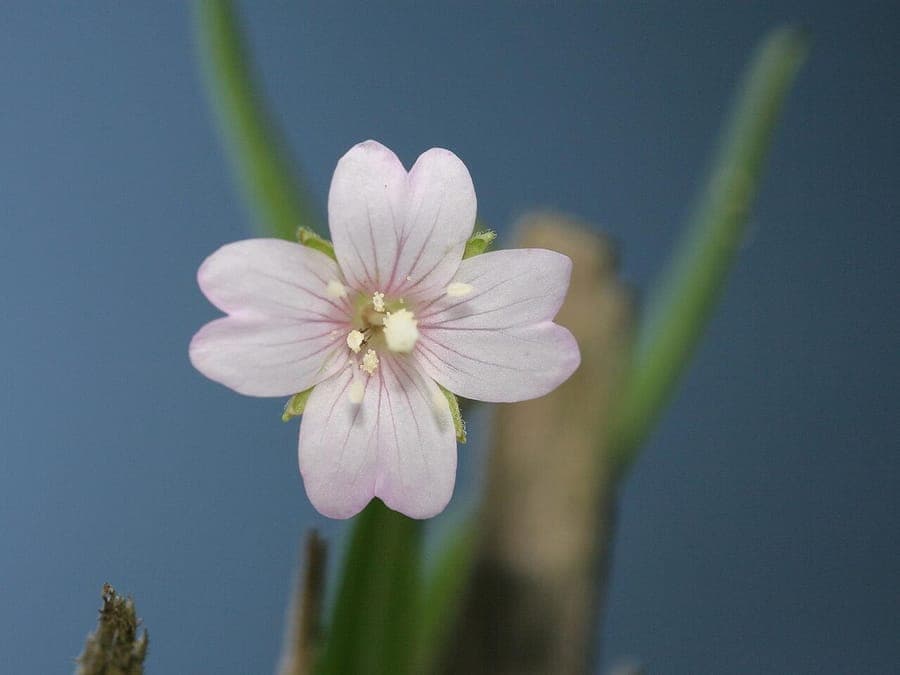
Kristian Peters -- Fabelfroh 08:57, 17 August 2007 (UTC) / CC BY-SA 3.0, via Wikimedia Commons
Marsh willowherb: complete guide
Epilobium palustre
¿Quieres ver Marsh willowherb: complete guide en tu jardín?
1 minuto, sin tarjeta de crédito
Overview
Marsh willowherb (Epilobium palustre) is an elegant, delicate plant perfectly adapted to wet, boggy conditions. This Northern Hemisphere native grows 30-60 cm tall and produces fragile pink to purple-red flowers from July through September. The common name reflects both its preferred habitat (marshes) and its characteristic seed heads resembling willow catkins.
This is a plant for gardeners with naturally wet areas or who want to create biodiversity-rich water features. Marsh willowherb is not merely ornamental - it plays a vital ecological role in wetland habitats. With gardenworld.app, design a water garden featuring native wetland plants that become thriving ecosystems for dragonflies and waterfowl.
Appearance & Bloom
The stems are slender and distinctly reddish-tinged, creating elegant contrast against reedbed and other marginal vegetation. Leaves are narrow, lance-shaped, approximately 2-4 cm long. Flowers are small but abundant: four petals in pink or purple, sometimes nearly white, with yellow stamens at the center.
Reproduction occurs via tiny seeds in elongated seed pods (siliqua), making the plant naturally prolific in moist environments. This seed dispersal strategy ensures marsh willowherb's success in wetlands.
Ideal Location
Marsh willowherb thrives in full sun to partial shade - more light encourages greater flower production. Position the plant at pond margins, in wet ditches, or areas that receive regular moisture. The plant tolerates water level fluctuations well.
Diseño gratis
¿Quieres ver Marsh willowherb: complete guide en tu jardín? Crea un diseño gratis ahora.
Soil & Nutrition
This species is made for wet, nutrient-poor to moderately rich soils. Heavy clay with silt is ideal. pH ranges from acidic (5.5) to neutral (7.0). Nutrients typically come from soil sediment and leaf decomposition.
Watering & Moisture Requirements
Constant moisture is paramount. In nature, marsh willowherb lives permanently in or very near water. Ensure soil never fully dries out. Ideal in wetlands where water table remains 5-10 cm below surface consistently. Regular irrigation is essential in standard garden soil.
Pruning & Maintenance
Marsh willowherb requires minimal care. Remove dead stems after winter (March-April). Deadhead seed pods before ripening to limit self-seeding if unwanted. The plant is remarkably self-sufficient.
Maintenance Calendar
- March-April: Remove previous season's stems
- April-May: Growth begins; consider division if overcrowded
- July-September: Flowering period; seed production
- October-November: Seed pods mature
- November-February: Dormancy
Winter Hardiness
Epilobium palustre is extremely hardy to USDA zone 3 (-35°C). Perfectly adapted to temperate and boreal climates.
Companion Plants
Marsh willowherb pairs beautifully with:
- Marsh fern (Thelypteris palustris) for texture contrast
- Marsh pea (Lathyrus palustris) for deeper purple tones
- Brooklime (Veronica beccabunga) as low-growing accent
- Water parsnip (Sium latifolium) for architectural foliage
Conclusion
Marsh willowherb is a valuable addition to wetland gardens and bog ecosystems. This graceful plant demands little yet gives much to both ecology and garden atmosphere. At gardenworld.app, we help design water gardens where native species like epilobium flourish.
¿Quieres ver Marsh willowherb: complete guide en tu jardín? Crea un diseño gratis ahora.
Sube una foto, elige un estilo y obtén un diseño fotorrealista con lista de plantas en menos de un minuto.
Más de 10.000 jardines diseñados
Sin tarjeta de crédito


Plantas similares
Pale willowherb: complete guide
Epilobium roseum
Pale willowherb (Epilobium roseum): delicate wildflower for moist habitats. Growing advice, care tips, and water garden combinations.
Purple loosestrife: complete guide
Lythrum salicaria
Discover Lythrum salicaria, a vigorous waterside plant with dramatic purple-pink flowers. Essential for water gardens, marsh edges, and landscape design on gardenworld.app.
Iris sibirica: complete guide
Iris sibirica
Discover elegant Iris sibirica with fine blue flowers. Perfect for moist soils, 60-80cm tall. Excellent in groups and as a cut flower.