
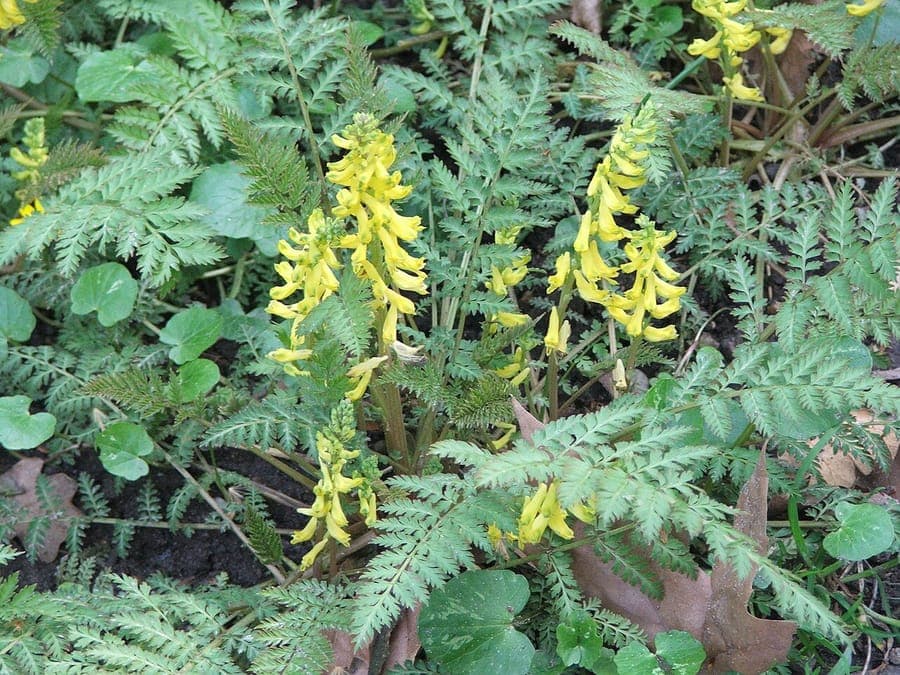
Pipi / Public domain, via Wikimedia Commons
Corydalis cheilanthifolia: complete guide
Corydalis cheilanthifolia
¿Quieres ver Corydalis cheilanthifolia: complete guide en tu jardín?
1 minuto, sin tarjeta de crédito
Overview
Corydalis cheilanthifolia, also known as fern-leaf corydalis or fern-leaved larch-spur, is a delicate herbaceous plant from the mountainous regions of China. This refined plant is celebrated for its fine, fern-like foliage and soft yellow flowers. Corydalis cheilanthifolia is an ideal shade-lover providing years of architectural foliage and blooms.
Appearance and Bloom
Corydalis cheilanthifolia grows into a low, herbaceous plant approximately 30-45 cm tall. The foliage is extremely finely divided, almost fern-like in structure, distinguishing this species from larger corydalis types. The leaves are intricately cut, creating interesting shadow patterns in sunlight. The flowers are soft yellow to cream, appearing in vertical racemose clusters from March to June. The blooming period may extend through summer in cooler climates.
Ideal Location
Corydalis cheilanthifolia is a true shade-lover and thrives in half-shade to full shade. The plant tolerates full sun in cooler climates but prefers protection from hot afternoon sun. Ideal under trees, shrubs, or alongside shaded walls. Perfect for woodland-edge plantings or under large specimen plants.
Soil
Corydalis cheilanthifolia prefers well-draining, nutrient-rich soil with abundant organic matter. Sandy loam amended with compost or peat moss works ideally. Heavy clay should be avoided; improve with gravel and organic material. Soil pH can be neutral to slightly acidic. This plant thrives better in richer soils than poor ones.
Diseño gratis
¿Quieres ver Corydalis cheilanthifolia: complete guide en tu jardín? Crea un diseño gratis ahora.
Watering
Corydalis cheilanthifolia prefers consistently moist soil during the growing season but tolerates some drought once established. In shade, consistent moisture is essential. Avoid summer drought stress that can cause premature dormancy. Prevent waterlogging which causes root rot. Less water is needed in winter.
Pruning
Pruning is generally unnecessary for Corydalis cheilanthifolia. Remove faded flowers to encourage continued blooming and neater appearance. Damaged or unsightly foliage may be removed. Allowing the plant to grow naturally usually yields the best effect.
Maintenance Calendar
January-March: Plant new specimens, add compost. April-June: Enjoy blooms, ensure regular watering. July-August: Monitor soil moisture, provide afternoon shade in heat. September-October: Enjoy persistent foliage, reduce watering. November-December: Dormancy period, minimal maintenance.
Winter Hardiness
Corydalis cheilanthifolia is hardy to approximately -10degC, though behavior varies. In temperate climates, the plant overwinters in the soil and re-emerges in spring. In very cold regions, a protective layer of leaves or mulch may be beneficial. The plant dies down to complete dormancy in winter, which is typical.
Companion Plants
Excellent companions for Corydalis cheilanthifolia:
- Ferns (for texture and nature echoing)
- Heuchera (for foliage-color contrast)
- Ivy (for under-planting)
- Low hellebores (for winter interest)
- Erytronium (for spring blooms)
Closing
Corydalis cheilanthifolia is a delightful shade plant with fine architectural foliage and soft yellow flowers. This refined plant deserves a place in every shade planting or woodland edge. Plant in groups for best effect.
Garden centers stock specialist varieties. Create your own shade planting design using gardenworld.app/en!
¿Quieres ver Corydalis cheilanthifolia: complete guide en tu jardín? Crea un diseño gratis ahora.
Sube una foto, elige un estilo y obtén un diseño fotorrealista con lista de plantas en menos de un minuto.
Más de 10.000 jardines diseñados
Sin tarjeta de crédito


Plantas similares
Papaver gorodkovii: complete guide
Papaver gorodkovii
Papaver gorodkovii, the arctic poppy, thrives from Alaska to Russia's Far East. Discover how to grow this rare, extremely cold-hardy rock garden treasure.
Papaver setiferum: complete guide
Papaver setiferum
Papaver setiferum is a hardy giant Caucasian poppy with fiery red blooms. Discover siting, soil, deadheading and winter hardiness.
Pale Poppy: complete guide
Papaver alboroseum
Discover pale poppy (Papaver alboroseum) - rare alpine poppy with white-pink flowers. Precious beauty from Kamchatka. Cultivation in alpine and rock gardens.