
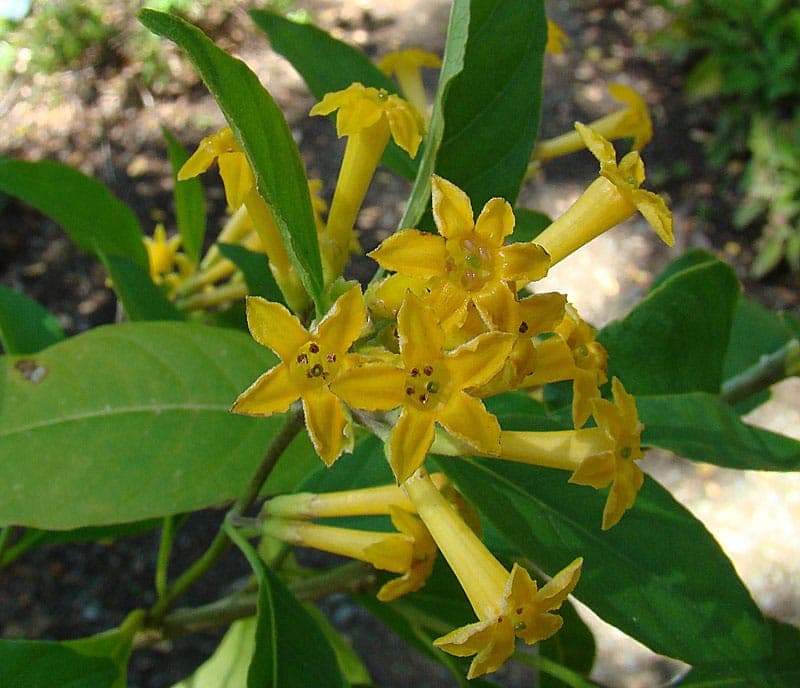
Dick Culbert from Gibsons, B.C., Canada / CC BY 2.0, via Wikimedia Commons
Cestrum parqui: complete guide
Cestrum parqui
¿Quieres ver Cestrum parqui: complete guide en tu jardín?
1 minuto, sin tarjeta de crédito
Overview
Cestrum parqui, popularly known as Chilean night-blooming jasmine or green cestrum, is a semi-woody climbing plant from South America that enriches gardens with distinctive green flowers and intense evening fragrance. This Solanaceae species grows vigorously to 2-3 meters and produces from June to October countless small, greenish blooms that release pleasant aroma especially in evening and night hours. In the Netherlands, the plant grows best in warm, sheltered outdoor locations or better in containers that move indoors during winter. The fragrance is highly valued and makes the plant unique in its subtlety and evening performance.
Appearance and bloom
Chilean night-blooming jasmine is an elegant growing shrub-climber with narrow, lanceolate leaves remaining green into autumn. Flowers are small, approximately 1 centimeter across, with greenish coloring making them subtle. Flower spikes appear at branch tips. After blooming, black berries develop ornamentally. The plant has pleasant fragrance especially in evening and early morning hours. This unique aroma attracts various night insects and leads to interesting ecological garden behavior patterns.
Ideal location
Choose a warm, sunny position against a wall or screen in southwest-facing direction. In the Netherlands, Cestrum parqui grows better against heat-reflecting surfaces. Protection from cold winds is essential. In northern regions, grow the plant in containers and bring inside for winter. Semi-shade is tolerated but flowering becomes less abundant. A protected south-facing wall is ideal for optimal warmth and light exposure.
Soil
Nutrient-rich, well-draining potting soil is ideal for both container and ground planting. Mix compost through garden soil for better water retention and nutrients. Add sand or gravel if drainage is problematic. pH values from neutral to slightly acidic are optimal. Heavy clay soils can be used if amended with compost. For container plants, high-quality potting mix is essential for success.
Watering
Keep soil regularly moist during the growing season, but not waterlogged. Once established, the plant is fairly drought tolerant, though regular moisture promotes growth. In containers, water more frequently, especially in summer. Water much less in winter when the plant is dormant. Stagnation must be absolutely avoided. Check regularly that soil is moist but not wet.
Diseño gratis
¿Quieres ver Cestrum parqui: complete guide en tu jardín? Crea un diseño gratis ahora.
Pruning
Pruning after flowering helps keep the plant bushy and compact. Remove leggy branches in spring before growth begins. In containers, prune regularly to maintain neat shape. Dead parts can be removed anytime. The plant tolerates firm pruning and regrows quickly. After severe frost damage, damaged branches can be removed.
Maintenance calendar
Spring: Plant carefully after frost danger passes. Provide growth fertilizer. Check for pests. Summer: Water regularly, enjoy fragrance in evenings. Flowers appear June to October. Autumn: Reduce fertilizer in September. Move container plants indoors for winter. Winter: Protect outdoor plants or move potted specimens to shelter. Minimize watering.
Winter hardiness
Cestrum parqui is not fully winter hardy in the Netherlands. In southwest, very sheltered gardens in warmer regions, the plant might overwinter outside if temperatures don't drop below -5 degrees. In most of the Netherlands, container cultivation with relocation to shelter is recommended. Light freezing can cause leaf drop but the plant can regenerate from the base. In colder winters, above-ground parts usually die but regrow from the roots.
Companion plants
Cestrum parqui combines with: Warmth-tolerant plants like Santolina in grey-green tones Clematis varieties for color contrast Jasmine sambac for supplementary evening fragrance Cromosylis for structure and form Fuchsia in containers for mobile color Bougainvillea in warm locations
Intratuin and Gamma occasionally offer young cestrum plants. Specialized nurseries maintain stock. Gardenworld.app advises on warm-loving plant schemes in your region. Gardenworld.app helps position container plants strategically for seasonal rotation.
Closing
Chilean night-blooming jasmine is a unique choice for gardeners wanting something special, especially when evening fragrances and subtle colors are appreciated. Perfect for container cultivation in the Netherlands or for very sheltered warm gardens. The fragrance makes growing this plant worthwhile despite somewhat higher demands.
¿Quieres ver Cestrum parqui: complete guide en tu jardín? Crea un diseño gratis ahora.
Sube una foto, elige un estilo y obtén un diseño fotorrealista con lista de plantas en menos de un minuto.
Más de 10.000 jardines diseñados
Sin tarjeta de crédito


Plantas similares
Solanum dolichosepalum: complete guide
Solanum dolichosepalum
Discover Solanum dolichosepalum, an Andean nightshade with striking long sepals. Growing tips, hardiness, and companion planting for your patio.
Solanum ripense: complete guide
Solanum ripense
Discover Solanum ripense, a moisture-loving Andean nightshade for pond edges and conservatories. Growing tips, hardiness, and companions.
Solanum tomentosum: complete guide
Solanum tomentosum
Discover Solanum tomentosum, a thorny South African nightshade with felted leaves. Growing tips, hardiness, and companion planting ideas.