
Bruce Marlin / CC BY 3.0, via Wikimedia Commons
Japanese hornbeam: complete guide
Carpinus japonica
¿Quieres ver Japanese hornbeam: complete guide en tu jardín?
1 minuto, sin tarjeta de crédito
Overview
Japanese hornbeam (Carpinus japonica) is an elegant deciduous tree from the Betulaceae family, native to Japan. This robust tree grows to 10-15 meters and forms an elegant, dense crown. With fine foliage and striking fruit clusters, it is a popular choice for garden landscapes in temperate zones. Excellent for pruning and trained specimens.
Appearance & Bloom
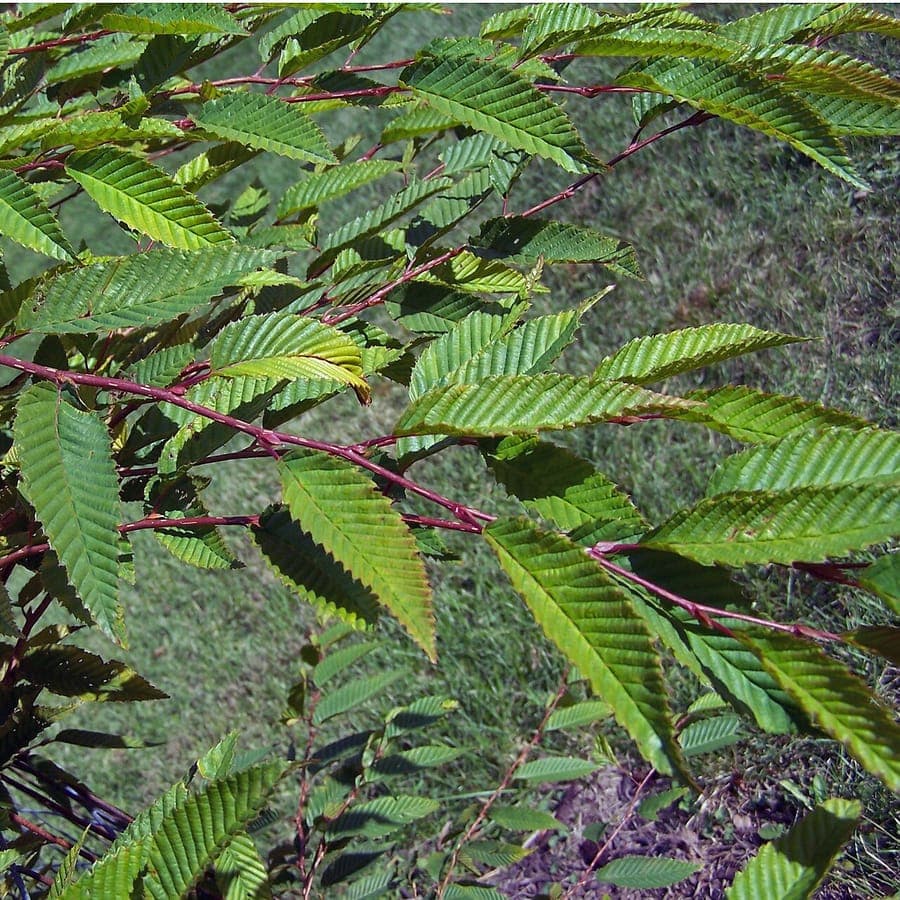
Japanese hornbeam reaches 10-15 meters tall with a rounded to flattened crown. Leaves are oval to elliptic, finely toothed, green in summer and yellow-orange in autumn. Fruits are striking hooked clusters with winged nutlets, greyish-green, very decorative. Bloom period: spring with inconspicuous flowers, fruits visible summer-autumn.
Ideal Location
Thrives in full sun to part-shade. Prefers sheltered locations against strong winds. Suitable for garden landscapes, private parks, and tree collections. Ideal as a central specimen or trained tree. Can be used for espaliered or columnar forms. Grows well in temperate zones 5-7.
Soil
Grows in humus-rich, well-draining loamy-clay soil. pH preference neutral to slightly acidic (6-7.5). Rich soils promote growth, but plant tolerates moderate nutrient-poor soils. Good drainage essential; no waterlogging tolerance. Incorporate organic material at planting.
Diseño gratis
¿Quieres ver Japanese hornbeam: complete guide en tu jardín? Crea un diseño gratis ahora.
Watering
Moderate water needed. After planting, water regularly for first season until deeper roots establish. Once established, water only during drought. Add annual mulch to maintain soil moisture. Mature trees very drought-tolerant.
Pruning
Pruning possible but careful; this tree species should maintain natural form. In early years apply light pruning. Later, remove only dead/crossing branches. Avoid heavy pruning. Pruning work best done in dormant season (late winter).
Maintenance Calendar
Spring: Inspect for winter damage, perform light pruning. Summer: Monitor watering in drought, check for insect pests. Autumn: Observe leaf fall, add mulch. Winter: No care; tree dormant. Annually add mulch.
Winter Hardiness
Frost-hardy to -15C. Winter hardy zones 5-8. Tree enters dormancy in winter. Heavy snow can damage stressed branches. Protect young trees in very severe winters.
Companion Plants
Combine with underplantings: Azalea, Acer palmatum (Japanese maple), Rhododendron. Larger trees (Quercus, Pinus) provide shade. Groundcovers like Helleborus, Hosta add variety. Japanese landscape style: choose other Japanese species.
Closing
Japanese hornbeam is a refined choice for gardeners who love subtle structure and beauty. Perfect for small to medium gardens. For advice on trained trees and oriental landscapes, visit gardenworld.app/en or consult specialists.
¿Quieres ver Japanese hornbeam: complete guide en tu jardín? Crea un diseño gratis ahora.
Sube una foto, elige un estilo y obtén un diseño fotorrealista con lista de plantas en menos de un minuto.
Más de 10.000 jardines diseñados
Sin tarjeta de crédito


Plantas similares
Heart-leaf birch: complete guide
Betula cordifolia
Heart-leaf birch is an attractive North American birch tree for large gardens. Discover growth, white papery bark and winter hardiness.
Tropical hornbeam: complete guide
Carpinus tropicalis
Everything about Carpinus tropicalis, the tropical hornbeam from Central America. Growing tips, location, care, and garden use explained.
Japanese Alder (Alnus firma): complete guide
Alnus firma
Learn everything about Japanese Alder in our complete guide. Discover care, growth, and applications for larger gardens.