
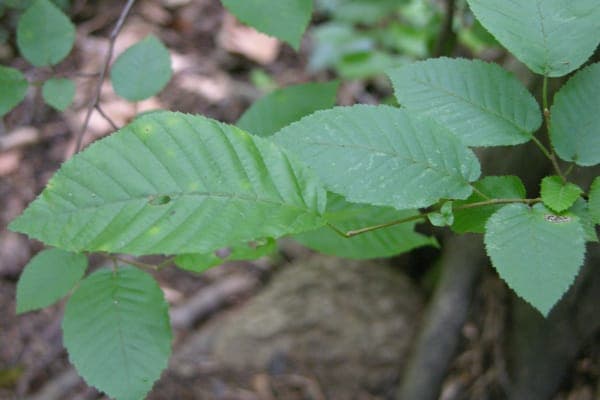
Photo by and (c)2005 Derek Ramsey (Ram-Man) / CC BY-SA 2.5, via Wikimedia Commons
Carpinus caroliniana: complete guide
Carpinus caroliniana
¿Quieres ver Carpinus caroliniana: complete guide en tu jardín?
1 minuto, sin tarjeta de crédito
Overview
Carpinus caroliniana, commonly known as American Hornbeam or Musclewood, is a prominent North American deciduous tree from the Betulaceae family (birch family). This native tree grows throughout eastern North America from Ontario to South Carolina. The tree stands out for its characteristic muscular, fluted trunk structure and fine, graceful foliage in spring with magnificent fall colors.
Appearance & Bloom Cycle
American Hornbeam reaches heights of 6 to 10 meters (sometimes up to 15 m) with a spread of 5 to 8 meters. The tree grows slowly and forms an attractive, umbrella-shaped crown. The trunk has a characteristic fluted, muscular texture (hence the name 'musclewood'). The leaves are finely crafted (10 to 15 cm long), bright green in summer and change to magnificent orange to red tones in fall. The flowering period is April to May, with inconspicuous green flowers.
Ideal Location
This tree grows best in semi-shade to full sun in protected locations. American Hornbeam prefers moderate moisture and is less suitable for very dry or very windy locations. Plant it as a specimen tree, in wooded situations, or as part of mixed tree-hedge structures. The tree performs well against garden walls and in the shelter of larger trees.
Soil Requirements
The tree prefers to grow in moist to moderately dry, well-draining soils with abundant organic matter. pH can be neutral to slightly acidic (6.0 to 7.0). Heavy clay soils can lead to waterlogging in wet periods. Improve soil at planting with compost and deep root shaft. The tree typically accepts garden soils well.
Watering
Watering is especially important in the first growing season (6 months). Water regularly during dry weather, to 50mm per week. Once established (after 2-3 years), supplemental watering is usually not needed except during extreme drought periods. Mulching around the tree helps retain moisture. Preventing planting season water deficit promotes root development.
Diseño gratis
¿Quieres ver Carpinus caroliniana: complete guide en tu jardín? Crea un diseño gratis ahora.
Pruning
American Hornbeam requires minimal pruning. Remove dead or diseased branches in late winter (February to March). Shape the tree if needed in youth. The natural growth habit is usually attractive and requires no drastic pruning. Avoid heavy pruning that leaves large wounds.
Maintenance Calendar
March: Planting season begins; plant bare-root trees now.
April-May: Leaf formation and flowering; water regularly.
June-August: Summer growth; ensure consistent moisture.
September-October: Fall colors develop; reduce watering.
November-February: Leaf fall; winter rest; no maintenance needed.
Winter Hardiness
American Hornbeam is hardy to USDA zones 3-4 (-35 to -25°C). The tree tolerates severe winters well. In very windy locations, some shelter can help, especially in youth. Native to eastern North America, so excellent for temperate climates.
Companion Plants
This tree works well in combination with other North American tree species. Combine with American Ash (Fraxinus americana) or White Oak (Quercus alba). Understory growth works well with violets, lilac, and other shade-tolerant shrubs. The tree attracts birds and provides seed for many animal species.
Closing
Carpinus caroliniana is an excellent choice for medium-sized gardens with interest in North American flora. With its elegant growth, fine foliage, and magnificent fall colors, this tree offers year-round beauty. Seek specimens from nurseries specializing in North American species. Visit gardenworld.app for more designs with native trees. At specialized garden centers you'll often find young material. This is a tree with character.
¿Quieres ver Carpinus caroliniana: complete guide en tu jardín? Crea un diseño gratis ahora.
Sube una foto, elige un estilo y obtén un diseño fotorrealista con lista de plantas en menos de un minuto.
Más de 10.000 jardines diseñados
Sin tarjeta de crédito


Plantas similares
Heart-leaf birch: complete guide
Betula cordifolia
Heart-leaf birch is an attractive North American birch tree for large gardens. Discover growth, white papery bark and winter hardiness.
Tropical hornbeam: complete guide
Carpinus tropicalis
Everything about Carpinus tropicalis, the tropical hornbeam from Central America. Growing tips, location, care, and garden use explained.
Japanese Alder (Alnus firma): complete guide
Alnus firma
Learn everything about Japanese Alder in our complete guide. Discover care, growth, and applications for larger gardens.