
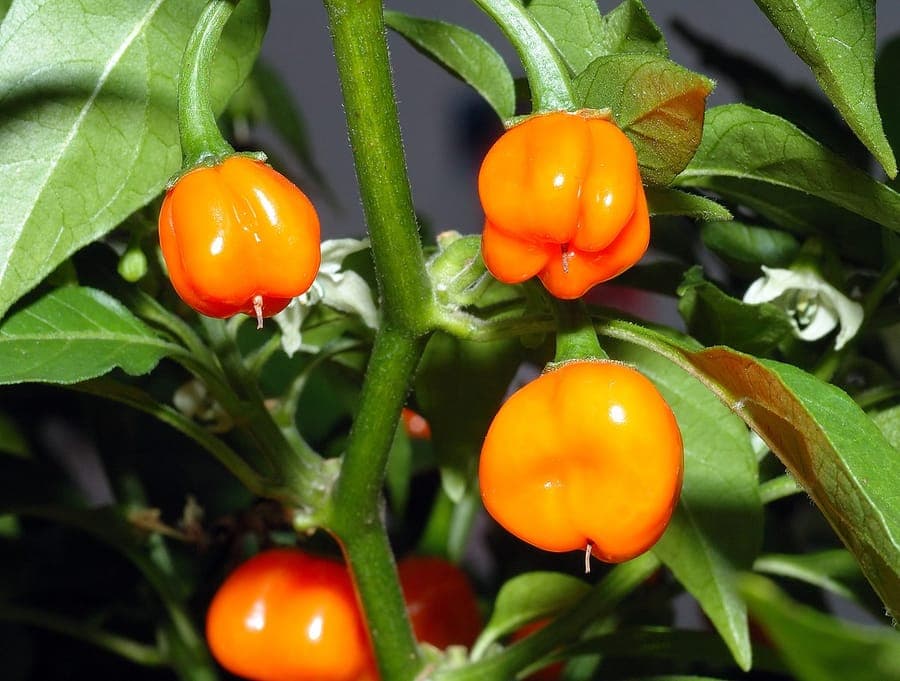
André Karwath aka Aka / CC BY-SA 2.5, via Wikimedia Commons
Capsicum chinense: complete guide
Capsicum chinense
¿Quieres ver Capsicum chinense: complete guide en tu jardín?
1 minuto, sin tarjeta de crédito
Overview
Capsicum chinense, commonly known as habanero pepper or Chinese pepper, is a tropical fruiting plant originating from South America. This spicy specimen belongs to the Solanaceae family and is cultivated worldwide for its unique fruity taste and intense heat. With its compact growth, abundant fruit-bearing, and heated flavor, it proves popular among spice enthusiasts.
The plant remains relatively compact compared to other Capsicum species, though it expands under optimal conditions. Fruits vary in color from green to orange, red, yellow, and even white depending on variety. The taste is characteristically peppery-fruity - far more intense than Jalapenos. This is no plant for cautious palates, but for those appreciating genuine heat.
Appearance & bloom
Capsicum chinense forms a compact, bushy plant typically reaching 60 to 90 centimeters under good maintenance. The leaves are green, elliptical, and smooth, attached to stems. The stems are strong, upright, and well-branched, resulting in numerous flowers and fruits.
Flowers are small, white to light-purple colored, and appear throughout the growing season. They quickly transform into small green fruits that change color during ripening. Ripe fruits typically reach 4-6 centimeters length with elongated-round shape. The skin is thin and smooth with noticeable gloss when ripe.
Production potential excels - one plant can produce over a hundred fruits under ideal conditions.
Ideal location
Capsicum chinense thrives best in fully sunny locations receiving at least eight hours direct sunlight daily. Full sun promotes compact growth, uniform ripening, and maximum flavor intensity. The plant is heat-loving - in cold conditions it grows slowly or remains stagnant.
The plant can be grown in garden beds, containers, or even under glass. Provide shelter against strong wind, which can damage young plants. In cooler temperate climates, consider container growing in movable pots that can be brought indoors for overwintering.
Soil
Capsicum chinense prefers well-draining, nutrient-rich soil with pH around 6.0 to 7.0. Heavy clay soils can cause problems - improve with sand and organic matter. Prepare soil beds by working 5 to 10 centimeters of ripe compost beforehand.
The plant has substantial nutrient requirements. Rich, well-structured soil promotes better growth and fruit production. For container cultivation, use nutrient-rich potting soil specially formulated for vegetables. Ensure good drainage to prevent root rot.
Diseño gratis
¿Quieres ver Capsicum chinense: complete guide en tu jardín? Crea un diseño gratis ahora.
Watering
Capsicum chinense requires regular, thorough watering, especially during growth and fruiting periods. Water moderately and deeply - ensure top 2-3 centimeters feel dry before next watering. Once established, the plant tolerates limited drought, but optimal watering yields better fruits.
In very hot periods, daily watering may prove necessary. Always water at soil level - avoid spraying over leaves, which can cause disease. Morning watering proves optimal. Stagnant water remains intolerable - ensure good drainage.
Pruning
Light pruning can improve growth. When plant reaches 20-30 centimeters, pinch top to encourage bushy growth. This results in more branches and more fruit. Remove crossing branches touching each other. Later in season, remove only dead or diseased branches.
Excessive pruning can disrupt flowering, so prefer conservative approach. Allow plant to maintain natural form while intervening minimally.
Maintenance calendar
Spring: plant seedlings after last frost date. Summer (June-August): water regularly, apply fertilizer every 3-4 weeks, monitor for pests. Autumn (September-October): continue harvesting, reduce feeding. Winter: in cold climates, plant dies at first frost - or move indoors.
Feeding: apply balanced fertilizer weekly or biweekly once blooming and fruiting begin.
Winter hardiness
Capsicum chinense is not winter-hardy in temperate climates. It is a tropical plant that dies at first frost. In very warm regions it can overwinter outdoors. In Dutch climate, treat as annual or bring indoors for overwintering.
For next-season growing, the plant can overwinter indoors in a warm location, though this remains unpredictable. Seedling cultivation typically proves easier.
Companion plants
Capsicum chinense can be grown with other heat-loving plants. Combine with Tomatoes for complementary care. Mix with Cauliflower for visual interest. Plant Basil nearby - the aromatic scent guards against pests.
Avoid: planting directly next to Fennel (which can hinder growth) or in shady corners where light shortage limits growth.
Closing thoughts
Capsicum chinense represents the ultimate choice for pepper enthusiasts desiring authentic tropical taste. With proper care, warmth, and feeding, this plant offers abundant fruity, intensely spicy peppers. Whether eating fresh, drying for powder, or processing into sauces, the pleasure remains unmatched.
Find seedlings or seeds at garden centers carrying vegetable selections. Specialty retailers often stock extensive varieties. For inspiration and recipes, visit gardenworld.app. With this pepper plant, you will create authentic flavor experience.
¿Quieres ver Capsicum chinense: complete guide en tu jardín? Crea un diseño gratis ahora.
Sube una foto, elige un estilo y obtén un diseño fotorrealista con lista de plantas en menos de un minuto.
Más de 10.000 jardines diseñados
Sin tarjeta de crédito


Plantas similares
Solanum dolichosepalum: complete guide
Solanum dolichosepalum
Discover Solanum dolichosepalum, an Andean nightshade with striking long sepals. Growing tips, hardiness, and companion planting for your patio.
Solanum ripense: complete guide
Solanum ripense
Discover Solanum ripense, a moisture-loving Andean nightshade for pond edges and conservatories. Growing tips, hardiness, and companions.
Solanum tomentosum: complete guide
Solanum tomentosum
Discover Solanum tomentosum, a thorny South African nightshade with felted leaves. Growing tips, hardiness, and companion planting ideas.