
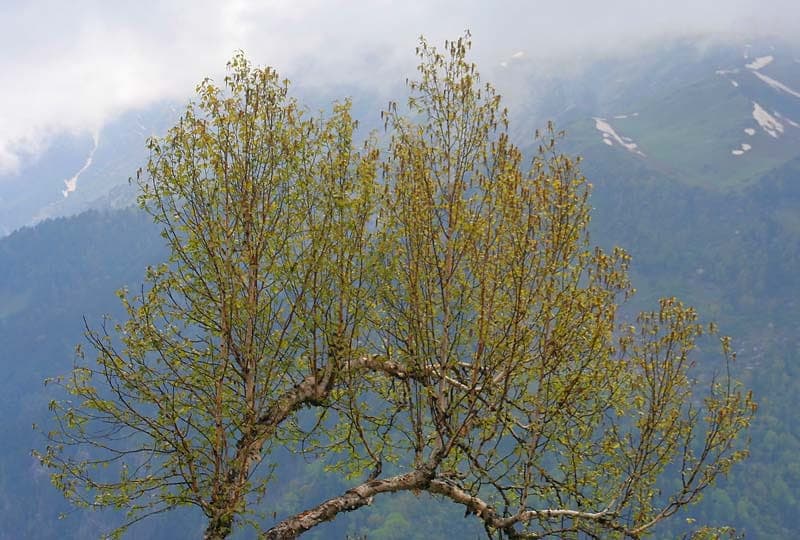
J.M.Garg / CC BY-SA 3.0, via Wikimedia Commons
Betula utilis: complete guide to the Himalayan silver birch
Betula utilis
¿Quieres ver Betula utilis: complete guide to the Himalayan silver birch en tu jardín?
1 minuto, sin tarjeta de crédito
Overview
Betula utilis, the Himalayan silver birch or Indian paper birch, is an elegant deciduous tree native to the mountain regions of the Himalaya, China, and Central Asia. This striking specimen is prized for its characteristic papery white bark that creates dramatic visual contrast against green foliage.
The tree thrives at elevations exceeding 3000 metres in its native habitat, demonstrating exceptional cold and altitude tolerance. This makes Betula utilis ideal for Northern European gardens and exposed upland locations.
Appearance and bloom
Betula utilis develops into an elegant tree reaching 15 to 20 metres in height with an upright crown form. Male catkins (flower structures) appear during April-May, creating charming spring interest. These delicate danglers contribute to the seasonal spectacle.
Birches produce small, winged seeds. The most distinctive feature is undoubtedly the bark: papery white, sometimes tinged yellow or red, creating stunning visual contrast against summer foliage and dark branching structure.
Ideal location
Betula utilis performs best in full sun to partial shade. The tree tolerates shade reasonably well. Provide adequate space for the mature canopy; roots might otherwise cause problems in paved areas.
The tree is wind-resistant and suitable for exposure on elevated garden sites. In warmer climates, partial shade prevents summer leaf scorch.
Soil
Betula utilis is adaptable regarding soil type. The tree thrives in virtually all soils except heavy waterlogged clay. Preference favors slightly acidic to neutral soil (pH 5.5-7).
Loosen soil and incorporate organic matter for improved establishment. Young trees grow faster with amended soils. Once established, the tree becomes remarkably tolerant.
Diseño gratis
¿Quieres ver Betula utilis: complete guide to the Himalayan silver birch en tu jardín? Crea un diseño gratis ahora.
Watering
Betula utilis prefers moist soil without waterlogging. Water regularly during the first growing season, particularly during dry spells. Established trees are relatively drought-tolerant.
Water young specimens during extended dry periods. This birch loves moisture in its native state, thriving in forested environments. Excellent drainage is essential.
Pruning
Betula utilis requires minimal pruning. Remove dead, damaged, or crossing branches in late autumn (September-October). Never prune in early spring as the tree bleeds heavily.
Early formative pruning creates superior crown structure later. Once established, this tree grows elegantly without heavy intervention.
Maintenance calendar
May-June: Catkin display July-August: Active growth, monitor moisture September-October: Fall cleanup, autumn colour November-March: Winter dormancy, possible late autumn pruning April: Preparation for growing season
Winter hardiness
Betula utilis is exceptionally cold-hardy, tolerating temperatures to -20 degrees Celsius comfortably. This makes it ideal for all Dutch gardens and many northerly regions.
No winter protection needed, even when young. Simply let this tree grow; it delivers years of reliable performance.
Companion plants
Betula utilis combines beautifully with:
- Shade-loving understorey vegetation
- Woodland perennials
- Shrubs such as rhododendron
- Early spring bulbs beneath the canopy
- Pollen-providing plants for bees
Closing
Betula utilis brings elegance and seasonal structure to any garden landscape. With distinctive white bark, delicate spring catkins, and reliable growth, this tree delivers years of beauty. Perfect for larger gardens or parks seeking an impressive vertical element.
Available from tree nurseries and garden centres.
Discover more garden inspiration on gardenworld.app/en
Discover more garden inspiration on gardenworld.app/en
¿Quieres ver Betula utilis: complete guide to the Himalayan silver birch en tu jardín? Crea un diseño gratis ahora.
Sube una foto, elige un estilo y obtén un diseño fotorrealista con lista de plantas en menos de un minuto.
Más de 10.000 jardines diseñados
Sin tarjeta de crédito


Plantas similares
Heart-leaf birch: complete guide
Betula cordifolia
Heart-leaf birch is an attractive North American birch tree for large gardens. Discover growth, white papery bark and winter hardiness.
Tropical hornbeam: complete guide
Carpinus tropicalis
Everything about Carpinus tropicalis, the tropical hornbeam from Central America. Growing tips, location, care, and garden use explained.
Japanese Alder (Alnus firma): complete guide
Alnus firma
Learn everything about Japanese Alder in our complete guide. Discover care, growth, and applications for larger gardens.