
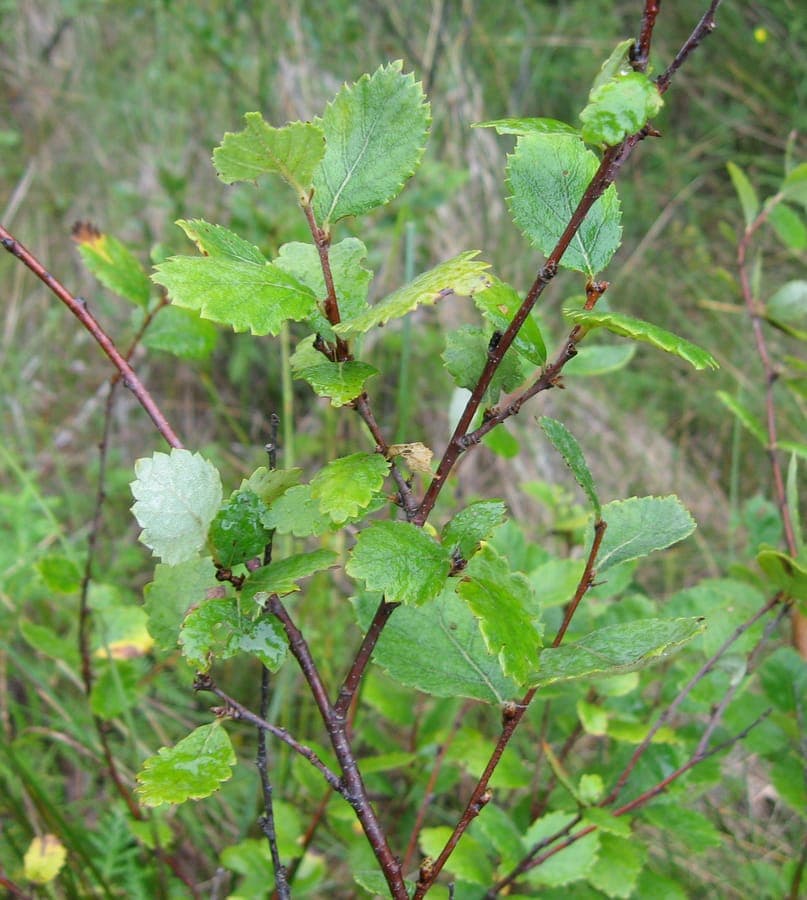
Mason Brock (Masebrock) / Public domain, via Wikimedia Commons
Betula pumila: complete guide
Betula pumila
¿Quieres ver Betula pumila: complete guide en tu jardín?
1 minuto, sin tarjeta de crédito
Overview
Betula pumila, also known as American dwarf birch, Arctic dwarf birch, bog birch, or low birch, is a native North American shrub from the Betulaceae family. This species grows naturally across a vast area of North America, from Alaska and Canada through the lower states of the United States, thriving in moist habitats such as wetlands, wet grounds, and along water margins.
Betula pumila is a perfect choice for gardeners seeking native plants with seasonal interest. The elegant twigs, silvery-grey bark in winter, and golden autumn color make this shrub interesting throughout all seasons.
Appearance and growth
Betula pumila grows as a low to medium shrub, usually 1 to 3 meters tall, though in ideal conditions it can reach 4 meters. The roots often spread laterally, and the plant typically forms a broad crown.
The branches are elegant and slender, initially red-brown to orange-brown, maturing to grey-brown or nearly black in winter. These dark branches provide important winter interest in the garden.
The leaves are small, approximately 1 to 3 centimeters long, oval to egg-shaped, with distinctly coarsely toothed margins. In spring, leaves emerge as bright green, maturing to dark green in summer, and transforming to gold and orange in autumn - a spectacular seasonal color change.
In spring, characteristic birch catkins (hanging flower clusters) appear, adding subtle elegance. Female catkins mature into small, scale-like seed cones that are dispersed by birds and wind.
Ideal location
Betula pumila grows naturally in moist wetland and wet ground habitats. In gardens, position this shrub in a location with moist to wet soil and abundant sunlight.
The plant thrives in locations receiving minimum 4-6 hours of direct daily sunlight. Partial shade is also tolerated, though autumn color may be less spectacular.
Avoid dry, sunny locations where the plant might experience stress. A location near water features, in low-lying garden areas, or in artificially constructed wetland panels is ideal.
Soil type
Betula pumila requires moist to very wet soils for optimal growth. Unlike many birch species, this plant is not suitable for dry soils.
The plant grows best on acidic soils (pH 5.0-6.5). On neutral to alkaline soils, the plant can yellow (iron deficiency). Add acidic peat or sulfate to lower the pH if needed.
The plant is highly tolerant of nutrient-poor soils, but grows somewhat better on nutrient-rich, moist soils containing substantial organic matter.
Diseño gratis
¿Quieres ver Betula pumila: complete guide en tu jardín? Crea un diseño gratis ahora.
Watering
Betula pumila requires consistently moist growing conditions. This is probably the most critical aspect of growing this plant.
The plant is designed for wet habitats and cannot tolerate prolonged drought. Water regularly, especially during dry spells. The soil should feel like a wet sponge, not waterlogged but also not dry.
In containers, you must be extra cautious and check water needs daily.
Maintenance and pruning
Betula pumila requires minimal pruning. The plant grows as a beautiful shrub with little intervention.
Remove dead branches in late spring (March-April). You can apply gentle shaping pruning to maintain form, but always retain the plant's natural character.
Avoid heavy pruning wounds, as birch species can suffer from them.
Maintenance calendar
January-February: Enjoy winter interest; minimal maintenance needed.
March-April: Remove dead branches; check soil moisture.
May-June: Catkins appear; water regularly.
July-August: Summer growth; maintain moisture during dry spells.
September-October: Autumn color; no special care needed.
November-December: Plant enters dormancy; minimal care.
Winter hardiness
Betula pumila is fully winter hardy in North America and much of Europe (USDA hardiness zones 2-7, equivalent to much of northern Europe).
The plant can tolerate extremely cold winters. Ice and snow can break branches, but the plant will recover in spring.
Companion plants
Betula pumila combines well with other moisture-loving plants:
- Other native Betula species
- Salix species (willows)
- Ilex verticillata (American holly)
- Clethra alnifolia (sweet pepper bush)
- Wetland plants such as Iris and Carex
Closing
Betula pumila is an excellent choice for gardeners seeking a native, moisture-loving shrub with seasonal interest. With its elegant branches, golden autumn color, and winter interest, this birch shrub offers year-round beauty.
Provide moist soil, acidic substrates, and regular watering, and Betula pumila will reward you with years of enjoyment. Ideal for wet gardens and marshy growing conditions. Visit gardenworld.app for more advice on native plants and moisture-loving gardens.
¿Quieres ver Betula pumila: complete guide en tu jardín? Crea un diseño gratis ahora.
Sube una foto, elige un estilo y obtén un diseño fotorrealista con lista de plantas en menos de un minuto.
Más de 10.000 jardines diseñados
Sin tarjeta de crédito


Plantas similares
Heart-leaf birch: complete guide
Betula cordifolia
Heart-leaf birch is an attractive North American birch tree for large gardens. Discover growth, white papery bark and winter hardiness.
Tropical hornbeam: complete guide
Carpinus tropicalis
Everything about Carpinus tropicalis, the tropical hornbeam from Central America. Growing tips, location, care, and garden use explained.
Japanese Alder (Alnus firma): complete guide
Alnus firma
Learn everything about Japanese Alder in our complete guide. Discover care, growth, and applications for larger gardens.