
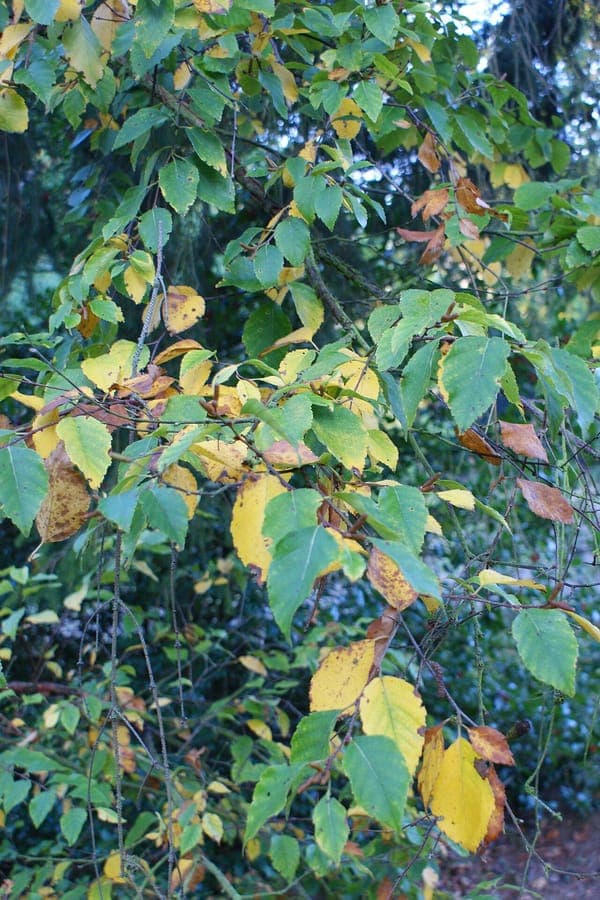
Kenraiz / CC BY-SA 3.0, via Wikimedia Commons
Betula dahurica: complete guide
Betula dahurica
¿Quieres ver Betula dahurica: complete guide en tu jardín?
1 minuto, sin tarjeta de crédito
Overview
Betula dahurica, known as Asian black birch, is an elegant, ornamental tree originating from East Asia (China, Korea, Russia). This tree is valued by landscapers for its ornamental qualities, winter hardiness, and tolerance for a variety of growing conditions. Dark, peeling bark, compact crown form, and small leaves make Betula dahurica a fascinating aesthetic addition to woodland edges, parkland, and specimen gardens.
Appearance and bloom cycle
Betula dahurica grows as a medium-sized tree (12-25 meters) with elegant, striking, glossy black-brown bark that peels in thin flakes. Bark is smoother than many birch species. Leaves are small, oblong-diamond-shaped, 2-4 cm long, with sharp points and serrated margins. Foliage is bright green in summer, golden-yellow in autumn. Male catkins (flower clusters) appear early in spring (March-April) before leaf emergence, providing early season interest.
Ideal location
Betula dahurica thrives in full sun to partial shade. Plant this tree in open, breezy locations where air circulation reduces moisture problems. Provide protection from harsh afternoon sun in very hot, dry regions. Ideal are woodland edges, parkland, and waterside locations where ample room for crown growth is available.
Soil requirements
Betula dahurica is not particularly demanding regarding soil composition. The tree grows on sandy, loamy, and heavy soils, provided drainage is adequate. Preference pH between 6.0 and 7.5 (slightly acidic to neutral). Young trees benefit from initial mulching to keep soil moisture stable. For containers mix 60% garden soil, 30% bark mulch, 10% sand for drainage.
Watering
Betula dahurica is moderately moisture-demanding. Water frequently in first growing season (April-August) until established. After establishment, water only in extreme drought (more than 6 weeks without precipitation). Regular mulch (5-7 cm) helps maintain stable soil moisture. Mature trees are highly drought-tolerant; young trees benefit from supplemental watering during dry periods.
Diseño gratis
¿Quieres ver Betula dahurica: complete guide en tu jardín? Crea un diseño gratis ahora.
Pruning
Betula dahurica requires minimal pruning after establishment. Remove only dead, diseased, or inward-growing branches during winter season (November-February). Prefer natural form; no hard pruning needed. For stem development, you may remove lower branches in second year to create clean stems.
Maintenance calendar
May: plant trees in full growth; water abundantly. June-September: maintain moisture levels, avoid unnecessary feeding. October-November: enjoy autumn colors; remove dead branches. December-January: rest period; monitor for ice damage. February-March: check for winter damage; prune if necessary.
Winter hardiness
Betula dahurica is winter-hardy to USDA zone 4 (-30 degrees Celsius). This tree grows well in temperate zones with normal winters. In very windy areas protect against frost scald. In warm regions (warmer than USDA 8) the tree sometimes struggles due to high summer temperatures.
Companion plants
Betula dahurica pairs beautifully with other woodland edge plants such as Cornus alba, Sambucus nigra, and various willows. For underplanting use shade-tolerant plants like Vinca, Hedera, and Euonymus. Groupings of Betula dahurica create ornamental woodland effects.
Closing remarks
Betula dahurica is an elegant, winter-hardy tree for modern landscape design. Its characteristic dark bark, compact form, and golden autumn colors make it a fascinating addition to woodland edges, parks, and private gardens. Care for establishment and maintain moisture levels in first year. Seeking a winter-hardy, low-maintenance birch species? Betula dahurica is an excellent choice. Discover more about woodland edge design on gardenworld.app. Plant Betula dahurica in your next woodland edge scene on gardenworld.app.
¿Quieres ver Betula dahurica: complete guide en tu jardín? Crea un diseño gratis ahora.
Sube una foto, elige un estilo y obtén un diseño fotorrealista con lista de plantas en menos de un minuto.
Más de 10.000 jardines diseñados
Sin tarjeta de crédito


Plantas similares
Heart-leaf birch: complete guide
Betula cordifolia
Heart-leaf birch is an attractive North American birch tree for large gardens. Discover growth, white papery bark and winter hardiness.
Tropical hornbeam: complete guide
Carpinus tropicalis
Everything about Carpinus tropicalis, the tropical hornbeam from Central America. Growing tips, location, care, and garden use explained.
Japanese Alder (Alnus firma): complete guide
Alnus firma
Learn everything about Japanese Alder in our complete guide. Discover care, growth, and applications for larger gardens.