
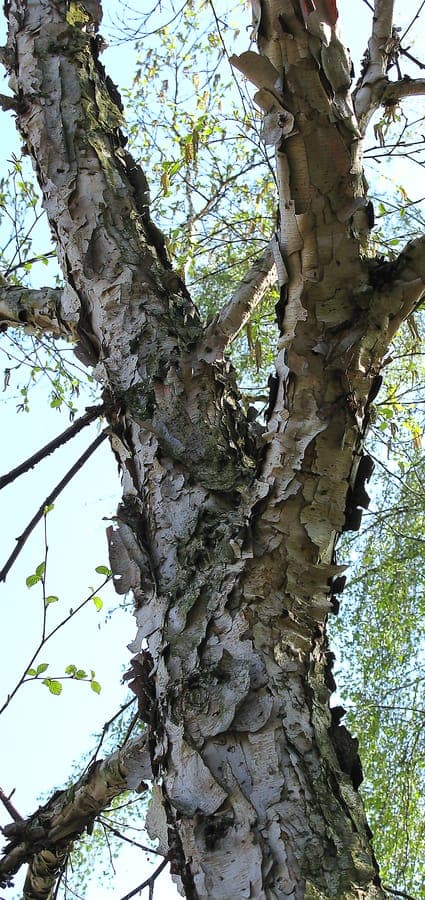
User:Mathiasrex Maciej Szczepańczyk / CC BY 3.0, via Wikimedia Commons
Betula costata: complete guide
Betula costata
¿Quieres ver Betula costata: complete guide en tu jardín?
1 minuto, sin tarjeta de crédito
Overview
Betula costata, known as Korean birch or Rib birch, is an elegant tree from Korea, Russia, and northern China. This tree is prized for its striking ribbed bark structure creating vertical grooves, which sets it apart from other birches. Reaching 10-20 meters in height, it's a medium to large ornamental tree well-suited for standard gardens.
Korean birch offers years of botanical interest with its unique bark structure and elegant foliage. This is an ideal tree for gardeners seeking to introduce botanical texture and contrast and looking for year-round seasonal interest.
Appearance and Growth
Betula costata grows as an upright, columnar tree with a slender silhouette occupying minimal space. Leaves are small, arranged in two alternating rows, yellow-green in summer and brighter yellow in autumn, offering beautiful seasonal changes.
The decorative bark is the true attraction: it displays fine, vertical rib patterns on a whitish surface, giving the tree a unique and recognizable structure. This texture remains visible year-round, adding winter interest, especially when other trees are bare. The tree grows at moderate speed and reaches its full potential after 15-20 years.
Ideal Location
Korean birch grows best in full sun. Provide at least 5-6 hours of direct sunlight daily. The tree also tolerates light partial shade but grows fuller and healthier in full sun. The crown becomes thinner in shade.
Select a location somewhat protected from strong winds, though the tree is reasonably wind-resistant. The tree thrives in standard garden settings without extremes. Plant in a location where you can view the bark structure well, perhaps near a seating area where you spend considerable time.
Soil
Betula costata has moderate soil requirements. Standard to well-draining garden soil is adequate. The tree thrives on acidic to neutral soils and also tolerates slightly acidic conditions. This is not a tree for limestone-rich soils.
Ensure the soil is not waterlogged. Add organic matter at planting if the soil is poor. This improves both moisture retention and nutrient availability.
Diseño gratis
¿Quieres ver Betula costata: complete guide en tu jardín? Crea un diseño gratis ahora.
Watering
During the first growing season, water regularly until the tree is well-established. Thereafter, natural rainfall usually suffices in temperate climates.
During dry summers, supplemental water helps, especially for young trees in their first five years. Avoid constantly wet feet in winter. Ensure good drainage on the site.
Pruning
Betula costata usually requires little pruning for health, but you may remove weak or crossing branches. This promotes a clean silhouette. Best pruning occurs in late winter or early spring when the tree is dormant.
Maintenance Calendar
Spring: Monitor growth, prune weak branches. Renew mulch around tree. Summer: Water during dry periods, minimal special care. Enjoy new foliage growth. Autumn: Check for diseases and pests. Avoid pruning as tree enters dormancy. Winter: Minimal care, tree is very hardy. Bark structure highly visible during winter months.
Winter Hardiness
Betula costata is winter hardy to approximately -20 to -25 degrees Celsius. This makes it an excellent choice for temperate and colder European climates. The tree thrives even in Scandinavia and northern regions. This is a highly reliable tree for cold winters.
Companion Plants
Korean birch combines beautifully with other trees and shrubs offering winter interest. Ideal companions are contrasting deciduous trees, conifers, and winter bloomers that stand out against the bark structure. Dark green evergreens emphasize the light bark color.
Closing Thoughts
Betula costata offers years of unique visual interest. This medium-sized tree is perfect for standard gardens seeking structure and texture. Consult local tree nurseries for planting advice for your region.
On gardenworld.app you can discover this elegant tree and see how it perfectly fits your garden plan.
On gardenworld.app you can also generate your own garden design featuring this tree and visualize how it integrates perfectly into your landscape proposal and seasonal plan.
¿Quieres ver Betula costata: complete guide en tu jardín? Crea un diseño gratis ahora.
Sube una foto, elige un estilo y obtén un diseño fotorrealista con lista de plantas en menos de un minuto.
Más de 10.000 jardines diseñados
Sin tarjeta de crédito


Plantas similares
Heart-leaf birch: complete guide
Betula cordifolia
Heart-leaf birch is an attractive North American birch tree for large gardens. Discover growth, white papery bark and winter hardiness.
Tropical hornbeam: complete guide
Carpinus tropicalis
Everything about Carpinus tropicalis, the tropical hornbeam from Central America. Growing tips, location, care, and garden use explained.
Japanese Alder (Alnus firma): complete guide
Alnus firma
Learn everything about Japanese Alder in our complete guide. Discover care, growth, and applications for larger gardens.