
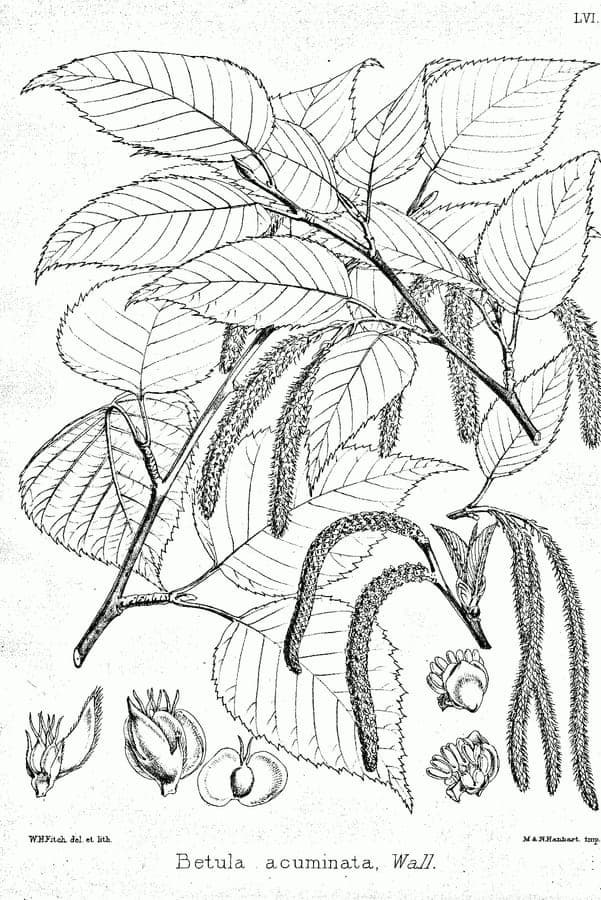
Wikimedia Commons / Public domain, via Wikimedia Commons
Betula alnoides: complete guide
Betula alnoides
¿Quieres ver Betula alnoides: complete guide en tu jardín?
1 minuto, sin tarjeta de crédito
Overview
Betula alnoides, known as Indian birch or Naga birch, is an impressive tree from mountain regions of the Himalayas, China, and Southeast Asia. This tree is prized for its graceful form and decorative bark structure with striking rib patterns. Reaching 15-25 meters in height, it's a monumental tree requiring ample space and therefore only suitable for large gardens and park landscapes.
Indian birch offers years of visual interest with its characteristic bark patterns and elegant foliage that displays beautiful autumn color. This is an ideal tree for gardeners with sufficient space, suitable growing conditions, and climate to support its growth. The tree also creates valuable shade and structural elements in the landscape.
Appearance and Growth
Betula alnoides grows as a slender, upright tree with an open crown structure allowing much light penetration. Leaves are small and alternate, resembling alder foliage, which explains the scientific name "alnoides". Fall color transitions from green to yellow to brownish tones, providing additional seasonal interest.
The true attraction, however, is the bark: it displays elegant patterns of thin, whitish lines against a greyish background, especially striking in winter. This decorative bark remains visible year-round, providing continuous visual appeal, particularly during bare winter months. The tree grows at moderate speed and reaches its full potential after 20-30 years.
Ideal Location
Indian birch grows best in full sun to partial shade. Provide at least 4-6 hours of direct sunlight daily. The tree tolerates more shade, though it will grow less robustly and form a less dense crown.
Select a location somewhat protected from strong winds, though the tree is reasonably wind-resistant due to its upright growth. Avoid pure urban climates with excessive pollution. In large parks and landscape gardens, this tree forms a spectacular specimen.
Soil
Betula alnoides has moderate soil requirements. Standard, well-draining garden soil is adequate. The tree grows well on acidic soils but also tolerates neutral to slightly acidic conditions. This is not a tree for limestone-rich soils.
Ensure well-draining soil to prevent root rot, which is critical for this tree. Add organic matter at planting to support establishment. Mulch around the tree helps retain moisture during growth.
Diseño gratis
¿Quieres ver Betula alnoides: complete guide en tu jardín? Crea un diseño gratis ahora.
Watering
During the first 1-2 years, water regularly until the tree is well-established and its deep root system develops. Thereafter, reduce watering and natural rainfall usually suffices.
During dry summers, supplemental water helps, especially for young trees in their first five years. Avoid waterlogged soil in winter, which is far worse than drought. Ensure good drainage around the tree.
Pruning
Betula alnoides usually requires little pruning for health and natural beauty. However, you may remove weak or crossing branches to promote an open crown structure. This improves air circulation and reduces disease pressure. Best pruning occurs in late winter or early spring when the tree is dormant.
Maintenance Calendar
Spring: Inspect for winter weather damage. Prune if needed. Renew mulch. Summer: Water during dry periods, monitor pest pressure. Ensure good ventilation around tree. Autumn: Collect fallen leaves if desired. Prepare tree for winter season. Avoid pruning (tree enters dormancy). Winter: Minimal care, protect young trees from frost with protection if needed.
Winter Hardiness
Betula alnoides is winter hardy to approximately -10 to -15 degrees Celsius. In milder climates without severe frosts, this tree survives without protection. In colder regions, exercise caution and plant only in sheltered locations or against walls. The tree grows best in zones where minimum temperatures don't fall below -15C.
Companion Plants
Indian birch combines well with other shade-tolerant plants in its understory. Ideal combinations are ferns, hostas, and shade-tolerant groundcovers that complement the open crown pattern. Avoid dense plantings that compete for water.
Closing Thoughts
Betula alnoides offers years of beauty and visual interest for those with ample space. This monumental tree is perfect for large private gardens or public parks. Consult local tree nurseries for expert advice on planting, location, and years of maintenance.
On gardenworld.app you can discover this tree in larger gardens and see how it perfectly fits your landscape plan.
On gardenworld.app you can also generate your own garden design featuring this impressive tree and visualize how it manifests in your landscape over different growth periods.
¿Quieres ver Betula alnoides: complete guide en tu jardín? Crea un diseño gratis ahora.
Sube una foto, elige un estilo y obtén un diseño fotorrealista con lista de plantas en menos de un minuto.
Más de 10.000 jardines diseñados
Sin tarjeta de crédito


Plantas similares
Heart-leaf birch: complete guide
Betula cordifolia
Heart-leaf birch is an attractive North American birch tree for large gardens. Discover growth, white papery bark and winter hardiness.
Tropical hornbeam: complete guide
Carpinus tropicalis
Everything about Carpinus tropicalis, the tropical hornbeam from Central America. Growing tips, location, care, and garden use explained.
Japanese Alder (Alnus firma): complete guide
Alnus firma
Learn everything about Japanese Alder in our complete guide. Discover care, growth, and applications for larger gardens.