
Wikimedia Commons / Public domain, via Wikimedia Commons
Alnus nitida: complete guide
Alnus nitida
¿Quieres ver Alnus nitida: complete guide en tu jardín?
1 minuto, sin tarjeta de crédito
Overview
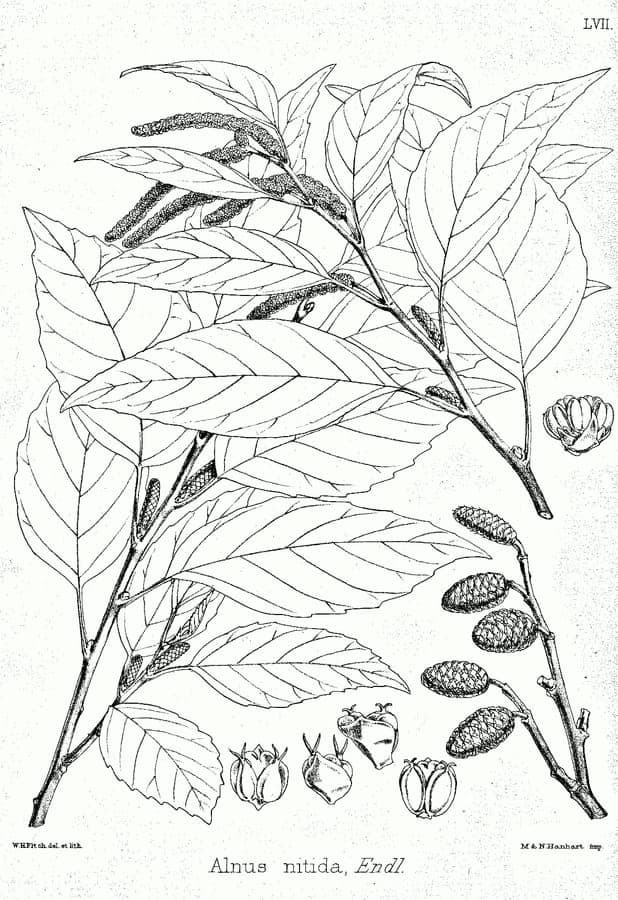
The West Himalayan alder (Alnus nitida) is an elegant deciduous tree from the Betulaceae family, native to mountain regions of Pakistan, Nepal, and the western Himalaya (1000 to 2500 metres elevation). This fast-growing tree typically reaches 12 to 18 metres tall and is valuable for both landscape use and ecological restoration. The tree is known for its nitrogen-fixing ability (via Frankia symbiosis), enriching soil quality significantly. The smooth grey bark and elegant foliage make it an attractive choice for larger gardens and parks.
Appearance and bloom
The West Himalayan alder displays an upright, elegantly branched form with smooth, grey bark providing striking contrast against dark green foliage. The leaves are glossy green, ovate-pointed, approximately 5 to 12 centimetres long with fine serration. Male catkins emerge in early spring (March-April) hanging elegantly from branches. Female catkins transform after pollination into small, woody cones attracting birds and wildlife. The tree offers good autumn colour with golden tones before leaf fall.
Ideal location
The West Himalayan alder thrives in full sun to partial shade in cool to temperate climates. The tree grows optimally along waterways, streams, and pond margins where adequate moisture levels are available. This tree is perfect for larger landscapes, parks, and as windscreen planting. The tree can also be used in natural woodland plantings and erosion control along slopes. Provide adequate space for full mature growth without restriction.
Soil
The West Himalayan alder requires consistently moist, well-draining soil. The tree grows best in acidic to neutral soil with pH between 5.5 and 7.0. A mixture of garden soil with organic matter (compost, leaf mould) proves ideal. The tree is tolerant of nutrient-poor soils thanks to its nitrogen-fixing ability. In very wet conditions, drainage must be improved; in very dry conditions, mulching helps. Well-established trees tolerate drought better than younger specimens.
Watering
The West Himalayan alder appreciates consistent moisture levels, especially during the growing season (May to September). Water young trees weekly during their first two growing seasons until well established. Mature trees need less supplemental water but appreciate regular watering during dry periods. Ensure good drainage to prevent waterlogging around roots and trunk. Mulching helps limit moisture loss and maintain stable soil temperature.
Diseño gratis
¿Quieres ver Alnus nitida: complete guide en tu jardín? Crea un diseño gratis ahora.
Pruning
The West Himalayan alder requires minimal pruning once established. Remove only dead branches or damaged wood in late winter (February-March). Formative pruning can be done on young trees by removing competing central stems, promoting stronger form. Heavy pruning should be avoided as it disrupts natural form. Growing trees can be left to develop naturally without direct intervention.
Maintenance calendar
May to June: Water regularly, check branch attachment on young trees. July to August: Monitor continuously for drought stress, support mulching. September to October: Gradually reduce water use. November to April: Minimal maintenance, prune dead wood in late winter. Provide supplemental water during very dry periods.
Winter hardiness
The West Himalayan alder is extremely winter hardy, adapted to cold Himalayan mountain winters. The tree tolerates temperatures to -15 degrees Celsius or colder without damage. Snow and long cold winters are normal in its natural range. Young trees may need extra protection against extreme frosts in their first winter. Ensure full dormancy is achieved before hard frost arrives. This tree grows best in temperate climate zones 6 to 8.
Companion plants
The West Himalayan alder combines well with other riparian trees such as various willow and elm species. In larger gardens, pair with Himalayan laurels, rhododendrons, and azaleas for shaded support. Underplanting with moisture-loving ground covers and fern species creates a layered, natural woodland effect. The tree feeds butterfly and bird populations significantly.
Final advice
The West Himalayan alder is a distinctive choice for gardeners with adequate space for a medium-sized tree in waterside conditions. This tree offers years of landscape interest with minimal maintenance once established. Available from tree nurseries across Europe. Discover more trees and plantings on gardenworld.app and design your larger garden landscape today. This Himalayan tree brings elegance and ecological value to your property!
¿Quieres ver Alnus nitida: complete guide en tu jardín? Crea un diseño gratis ahora.
Sube una foto, elige un estilo y obtén un diseño fotorrealista con lista de plantas en menos de un minuto.
Más de 10.000 jardines diseñados
Sin tarjeta de crédito


Plantas similares
Heart-leaf birch: complete guide
Betula cordifolia
Heart-leaf birch is an attractive North American birch tree for large gardens. Discover growth, white papery bark and winter hardiness.
Tropical hornbeam: complete guide
Carpinus tropicalis
Everything about Carpinus tropicalis, the tropical hornbeam from Central America. Growing tips, location, care, and garden use explained.
Japanese Alder (Alnus firma): complete guide
Alnus firma
Learn everything about Japanese Alder in our complete guide. Discover care, growth, and applications for larger gardens.