
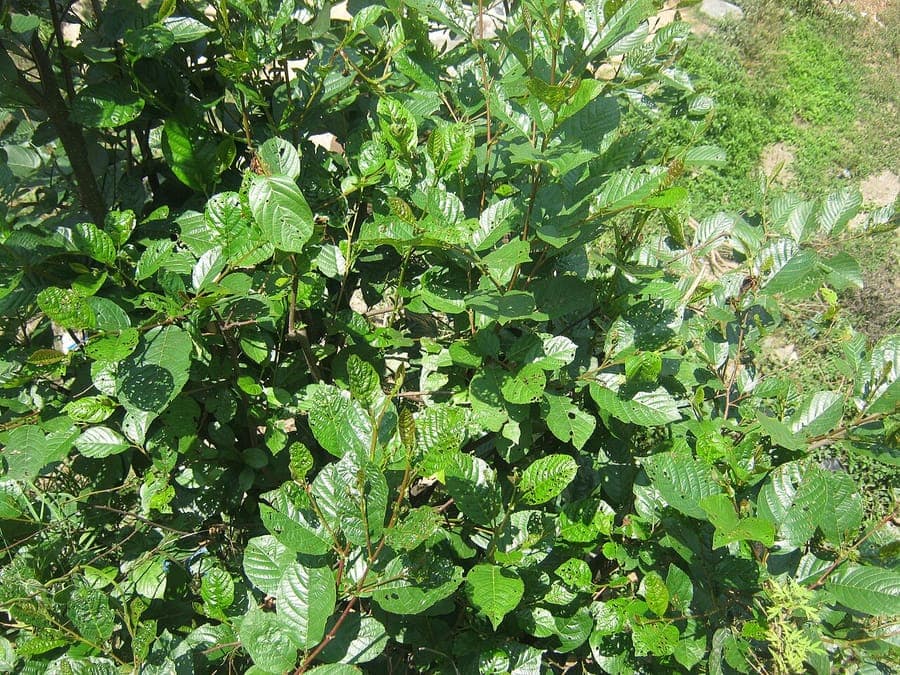
Krish Dulal / CC BY-SA 3.0, via Wikimedia Commons
Himalayan Alder: complete guide
Alnus nepalensis
¿Quieres ver Himalayan Alder: complete guide en tu jardín?
1 minuto, sin tarjeta de crédito
Overview
Himalayan Alder (Alnus nepalensis) is an impressive tree native to the Himalayan region, ranging from Nepal to China and Myanmar. This tree is renowned for its rapid growth, its ability to fix nitrogen from the atmosphere (improving soil), and its pronounced preference for moist soils. For those seeking large, fast-growing trees that simultaneously improve soil, this is an excellent choice.
What makes this alder particularly valuable is its speed of growth. Under favorable conditions, it grows meters annually. For erosion control along rivers and streams, it's ideal. The root system stabilizes banks while the tree adds nutrients via nitrogen fixation. This makes it ecologically valuable for landscape restoration.
Appearance and Foliage
Himalayan Alder grows into a large, slender tree reaching 15 to 25 meters tall, sometimes exceeding these heights under optimal conditions. The trunk is relatively narrow and smooth, gray to brownish. The crown is ovate to pyramidal, fairly compact and well-formed.
The leaves are oval, approximately 8 to 15 centimeters long, strongly ribbed, bright green, and nearly evergreen (retaining foliage late into autumn). The leaves display a two-tiered venation pattern, making them characteristic. Fall color is inconspicuous - leaves drop green or yellow-green.
Male flower catkins appear in late winter (January through March, depending on climate). Females form small cone-like structures containing seeds. These seeds disperse via wind and water.
Ideal Location
Himalayan Alder grows best in full sun to partial shade. Position it where it receives four to six hours of direct sunlight daily. It tolerates more shade than many other trees.
The key requirement is moisture. Plant near water - beside a stream, in a wet depression, or where water lingers. This is not a tree for dry locations. It excels on sloping banks where underground water reserves exist.
Soil
Himalayan Alder is undemanding regarding soil, provided it remains moist. Clayey, loamy soils are excellent. Both acidic and neutral soils suit it. The pH range is approximately 4.5 to 8.
It also grows well on poor, depleted soils due to its nitrogen-fixing ability. The tree forms root nodules hosting bacteria that fix atmospheric nitrogen. This nitrogen gradually enters the soil, benefiting surrounding plants.
Diseño gratis
¿Quieres ver Himalayan Alder: complete guide en tu jardín? Crea un diseño gratis ahora.
Watering
Once established, Himalayan Alder tolerates normal to dry periods reasonably well, though it prefers consistently moist soil. During the first growing season, water regularly to encourage deep root development.
During very dry summers, occasional watering helps. However, the tree thrives far better with regularly moist soil. Water is its preference, not a necessity.
Pruning
Pruning is rarely necessary. The tree grows naturally attractive and compact. Only damaged branches warrant removal. If narrower form is desired, low pruning promotes branching, though this is unnecessary.
Old, excessive branches can be removed in winter for improved air circulation.
Maintenance Calendar
March: Inspect for winter damage. Growing season begins.
April-May: Flowering. Male catkins are prominent.
June-September: Growth. Seed dispersal for erosion control. Ensure adequate moisture.
October-November: Autumn dormancy begins. Seed dissemination continues.
December-February: Winter rest. Minimal activity. Pruning can occur.
Winter Hardiness
Himalayan Alder is moderately cold hardy, not extremely so. It tolerates temperatures to approximately -10 to -12 degrees Celsius, sometimes slightly lower in protected circumstances. In USDA zones 6 through 9, it thrives.
In very cold regions (zone 5 and colder), it may suffer during extreme winters. Young plant material is more tender than mature trees.
Companion Plants
Along waterways, plant Himalayan Alder with other moisture-loving trees. Willows, birches, and ashes create beautiful combinations. At ground level, establish moisture-loving groundcovers.
On higher ground, it combines well with other erosion-control trees.
Closing
Himalayan Alder is wonderful for those practicing landscape restoration or simply seeking a fast-growing tree for moist locations. Through nitrogen fixation, it improves soil while growing rapidly. For bank stabilization and erosion control, it's a premier choice. Source young trees from nurseries or online suppliers. Visit gardenworld.app for design guidance regarding scale and placement. Plant beside water and enjoy how this Himalayan Alder grows rapidly while simultaneously restoring your landscape.
¿Quieres ver Himalayan Alder: complete guide en tu jardín? Crea un diseño gratis ahora.
Sube una foto, elige un estilo y obtén un diseño fotorrealista con lista de plantas en menos de un minuto.
Más de 10.000 jardines diseñados
Sin tarjeta de crédito


Plantas similares
Heart-leaf birch: complete guide
Betula cordifolia
Heart-leaf birch is an attractive North American birch tree for large gardens. Discover growth, white papery bark and winter hardiness.
Tropical hornbeam: complete guide
Carpinus tropicalis
Everything about Carpinus tropicalis, the tropical hornbeam from Central America. Growing tips, location, care, and garden use explained.
Japanese Alder (Alnus firma): complete guide
Alnus firma
Learn everything about Japanese Alder in our complete guide. Discover care, growth, and applications for larger gardens.