
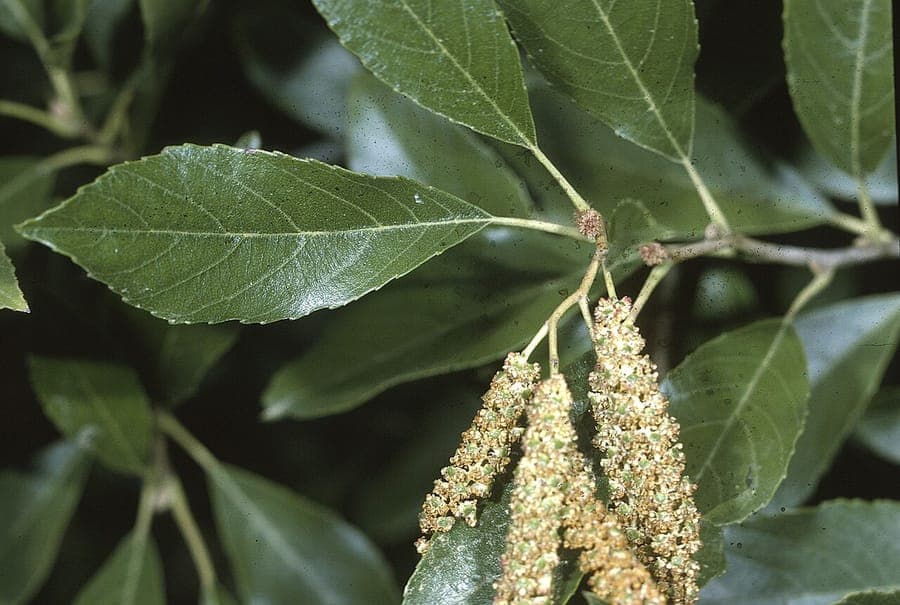
Robert H. Mohlenbrock. USDA NRCS. 1995. Northeast wetland flora: Field office guide to plant species. Northeast National Technical Center, Chester, PA. Courtesy of USDA NRCS Wetland Science Institute. / Public domain, via Wikimedia Commons
Alnus maritima: complete guide
Alnus maritima
¿Quieres ver Alnus maritima: complete guide en tu jardín?
1 minuto, sin tarjeta de crédito
Overview
Alnus maritima, commonly called seaside alder or brook alder, is a native American shrub from a very limited natural range in the southeastern United States. This underrated plant deserves far more attention from gardeners seeking robust, native species with remarkable characteristics.
Though occurring in the wild exclusively along waterways in Delaware, Maryland, Georgia, and Oklahoma, this plant thrives in gardens. The seaside alder belongs to the Betulaceae family, the same family as birches and other alders.
Appearance and blooming cycle
Alnus maritima is a graceful shrub or small tree reaching 4-6 meters tall. Growth is regular and compact, making this plant suitable for many garden situations. Leaves are small to medium, finely branched, and display pleasant green color throughout the growing season.
The flowering pattern of this plant is particularly interesting. Unlike many plant types, flower buds appear in fall and open only in early spring. Male catkins emerge first, followed by female flowers. This sequence is subtle yet charming.
Fruits are small, woody catkins that persist very long on the plant, providing winter structure.
Ideal location
Seaside alder grows best in full sun, though it tolerates partial shade. Provide at least 4-6 hours of direct sunlight daily. This plant is highly adaptive and works well even in shadier garden corners.
The plant feels at home in wet environments - along water, in low-lying areas with natural water drainage, or even in lightly compacted soil. This makes it ideal for landscapers with wet sites.
Soil requirements
Alnus maritima grows in a broad range of soil types but prefers moist to wet soils. pH 5 to 7 is acceptable. The plant can even tolerate acidic soils.
Unlike many crops, this plant needs less fertilizer because it's nitrogen-fixing through root nodules. This makes it an eco-friendly choice.
Diseño gratis
¿Quieres ver Alnus maritima: complete guide en tu jardín? Crea un diseño gratis ahora.
Watering
This is a plant that tolerates and even prefers moist soils. Ensure soil never dries out, especially during the first growing year. Once established, the plant tolerates drought periods better, but grows best when soil remains moderately moist.
In very dry periods provide regular watering until roots penetrate deeply. Container-grown plants need more frequent watering.
Pruning and shaping
Seaside alder needs minimal pruning and naturally forms an attractive, compact shape. Remove dead branches and any damaged growth. The plant can be lightly pruned in spring to encourage formation.
Heavy pruning is not recommended and can disturb natural growth patterns.
Maintenance calendar
Spring: Young leaves emerge. Flowering pattern begins. Check moisture needs.
Summer: Leaves grow fully out. Maintenance-free period. Water in dry periods.
Fall: Flower buds appear at branch tips. Leaves turn light yellow. Planting possible.
Winter: Male catkins open. Ornamental value of female catkins. Minimal care.
Winter hardiness
Alnus maritima is highly winter-hardy and tolerates temperatures down to -15°C. This makes it suitable for temperate to cool climates. The plant is unsuitable for tropical or very warm regions.
Companion plants
Seaside alder pairs well with:
- Other native American shrubs
- Swamp oak
- Sumac
- Viburnum species
- Native grasses along waterlines
Avoid pairing with dry-growing companions.
Closing
Alnus maritima is a fascinating plant for gardens with wet soils. With its native status, ecological benefits, and subtle ornamental value, it's an excellent choice for environmentally-conscious gardeners. Despite its limited natural occurrence, it grows well in many gardens.
Want to learn more about native plants? Visit gardenworld.app for more information about native plant collections. Discover other structures and formation possibilities!
Searching for a seaside alder? Specialized nurseries carry native species. Consult gardenworld.app for more information!
¿Quieres ver Alnus maritima: complete guide en tu jardín? Crea un diseño gratis ahora.
Sube una foto, elige un estilo y obtén un diseño fotorrealista con lista de plantas en menos de un minuto.
Más de 10.000 jardines diseñados
Sin tarjeta de crédito


Plantas similares
Heart-leaf birch: complete guide
Betula cordifolia
Heart-leaf birch is an attractive North American birch tree for large gardens. Discover growth, white papery bark and winter hardiness.
Tropical hornbeam: complete guide
Carpinus tropicalis
Everything about Carpinus tropicalis, the tropical hornbeam from Central America. Growing tips, location, care, and garden use explained.
Japanese Alder (Alnus firma): complete guide
Alnus firma
Learn everything about Japanese Alder in our complete guide. Discover care, growth, and applications for larger gardens.