
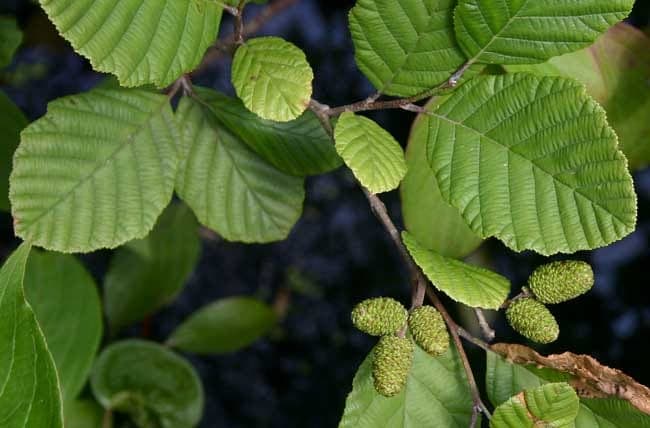
Quadell / CC BY-SA 3.0, via Wikimedia Commons
Manchurian Alder (Alnus hirsuta): complete guide
Alnus hirsuta
¿Quieres ver Manchurian Alder (Alnus hirsuta): complete guide en tu jardín?
1 minuto, sin tarjeta de crédito
Overview
Alnus hirsuta, commonly known as Manchurian alder or Siberian alder, is an outstanding deciduous tree from southeastern Siberia, Japan and Manchuria. This tree is distinguished by extreme hardiness (to -30 degC) and its ability to fix nitrogen. The name 'hirsuta' refers to the hairy twigs. This is the ideal tree for cold climates where others fail.
Appearance and Growth
Manchurian alder reaches 15 to 20 metres with an upright, columnar form. Twigs are distinctly hairy, making identification straightforward. Leaves are 5 to 10 centimetres long, ovate to obovate, with rough surface texture. In early spring, the tree bears male catkins that are remarkably yellow. The tree grows moderately fast - 40 to 60 centimetres annually. Bark is smooth and dark grey, becoming furrowed as the tree ages.
Ideal Location
Plant this tree in full sun to light shade. It tolerates marginal shade better than many trees. In extremely cold regions, open locations prevent soft frost events creating damaging ice deposits. This tree thrives along waterside and in slightly moist depressions.
Soil
Manchurian alder thrives in moist, well-draining soil. It tolerates acidic soils well (pH 5.0 to 6.5) and can grow in neutral soil. This is a nitrogen-fixing tree, so it enriches poor soils. For optimal growth, add organic matter and ensure good drainage.
Diseño gratis
¿Quieres ver Manchurian Alder (Alnus hirsuta): complete guide en tu jardín? Crea un diseño gratis ahora.
Watering
During growing season, water regularly, especially in dry spells. This tree prefers moist (not waterlogged) soils. Once established, it tolerates drier periods better, though it remains moisture-loving. In winter, provide minimal water.
Pruning
Manchurian alder tolerates pruning well. Remove dead, diseased or weak-growing branches. Shape the tree to maintain attractive form. Heavy pruning can be done during dormancy (December to February).
Maintenance Calendar
March: Check growth start, remove dead wood. April-May: Blooming appears, full growth. June-August: Summer maintenance pruning. September-October: Season wind-down. November-February: Winter dormancy, heavy pruning if necessary.
Winter Hardiness
This is the pinnacle of hardiness: Alnus hirsuta tolerates temperatures to -30 degC without any damage. This makes it ideal for northern Netherlands, Poland, Scandinavia and eastern Europe. Even extreme winters like 2010-2012 cause no harm. Young trees may suffer frost-burn in first year but recover quickly.
Companion Plants
Use Manchurian alder in mixed woodlands, hedgerows and forest restoration projects in cold regions. Combine with other hardy deciduous trees like birch and willow. The tree can be used as a specimen in large gardens. Underplanting thrives thanks to nitrogen fixation.
Closing
Alnus hirsuta is essential for very cold climate gardens. With extreme hardiness and practical advantages (nitrogen-fixing, rapid growth), this is a tree that works where others fail. Visit gardenworld.app for more cold-climate tree recommendations.
¿Quieres ver Manchurian Alder (Alnus hirsuta): complete guide en tu jardín? Crea un diseño gratis ahora.
Sube una foto, elige un estilo y obtén un diseño fotorrealista con lista de plantas en menos de un minuto.
Más de 10.000 jardines diseñados
Sin tarjeta de crédito


Plantas similares
Heart-leaf birch: complete guide
Betula cordifolia
Heart-leaf birch is an attractive North American birch tree for large gardens. Discover growth, white papery bark and winter hardiness.
Tropical hornbeam: complete guide
Carpinus tropicalis
Everything about Carpinus tropicalis, the tropical hornbeam from Central America. Growing tips, location, care, and garden use explained.
Japanese Alder (Alnus firma): complete guide
Alnus firma
Learn everything about Japanese Alder in our complete guide. Discover care, growth, and applications for larger gardens.