

Small tree for small front garden: which species fit
By the GardenWorld editorial team, updated on
Want to see this in your garden?
Full design in HD: €7.99
A small tree in a small front garden: possible and how
A tree in your front garden feels luxurious, but many homes have only 2 to 4 meters of available space between pavement and house. A large oak or beech simply will not fit. Yet you can achieve that tree feeling with carefully chosen smaller species. The trick is selecting trees that are not only small in height, but also in root system, so that paving and foundation remain safe.
Which trees fit in such tight space? We look at species that grow 5 to 8 meters high at maturity, offer decorative value (blossom, autumn colour, interesting bark), and whose roots do not aggressively spread toward the foundation. Four top choices deserve consideration: ornamental apple (Malus), Amelanchier (serviceberry), Prunus serrula (ornamental cherry), and Cornus kousa (dogwood). Not sure which size and shape suits your front garden best? On gardenworld.app you can see that first in a preview of your own garden.
Ornamental apple (Malus): blossom and autumn bird food
The ornamental apple is a small tree you can direct both ways. Cultivars such as 'Evereste', 'Golden Hornet' or 'Red Sentinel' reach only 5 to 7 meters high and equally wide. They grow at moderate pace and you can prune easily. The main feature is blossom: pink or white, abundant in April-May. After flowering come small red or yellow-red apples that hang on the tree until December. Birds love them, so the tree serves as bird food well into winter.
Ornamental apple roots do not grow deep vertically, but rather shallow and horizontally. This makes them less dangerous for the foundation. However, avoid planting it in a brick joint directly against the wall. Place it at least 1.5 metres from the house. Soil must drain well; ornamental apples dislike waterlogging. In wet ground they rot or develop fungal disease.
Pruning an ornamental apple is easiest during dormancy, December through February. Only remove dead branches and excess crown branches. Summer pruning also works; you get a neater shape. Feeding is barely needed; some leaf litter around the trunk suffices.
Amelanchier (serviceberry): versatile and low-maintenance
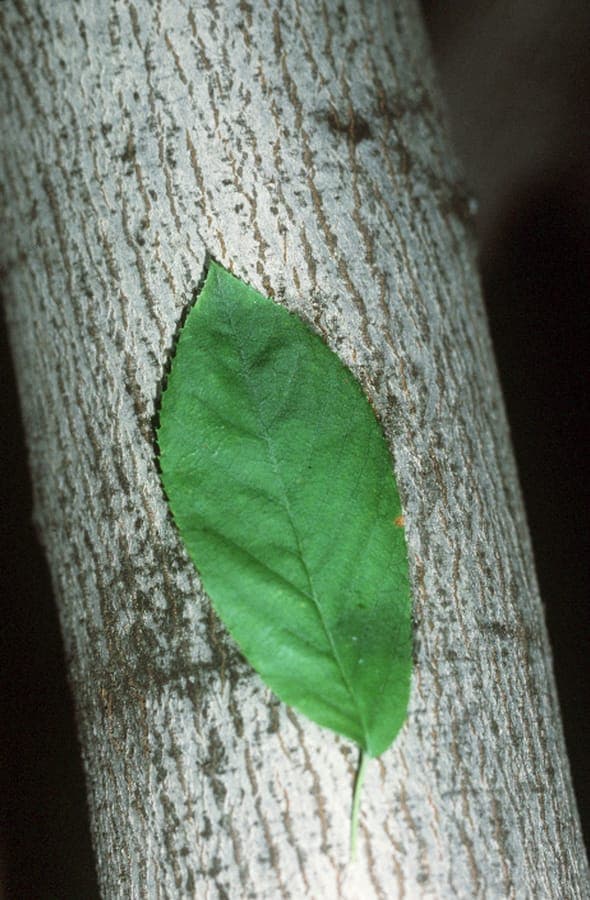
Amelanchier, in Northern Europe particularly known as serviceberry, is actually a North American shrub that can grow into a small tree. The cultivar 'Lamarckii' reaches 6 to 8 meters high and offers full service: in April silvery-white blossom, in June small black berries (edible, quite tasty), and red to orange autumn colour. The trunk becomes fairly thick and takes on a lovely grey tone.
Amelanchier roots are fibrous and shallow; they do not sink deep. Perfect for a small front garden. They tolerate fairly moist soil, even somewhat wet periods. Dry, sandy soil also works; Amelanchier is flexible. Full sun produces most beautiful growth, but part shade also works.
Pruning is barely necessary. You can let it grow freely, or for a neater tree, remove lower branches and tidy the crown. This is best done after flowering, in June. Remove crossing branches and diseased parts. These trees are very healthy; pests and diseases are rare. An absolute recommendation for those who do not want to constantly prune.
Prunus serrula: ornamental cherry with mirror-like bark
Prunus serrula is an Asian ornamental cherry, prized among enthusiasts especially for its striking bark. The trunk gleams dark brown to reddish-brown, like lacquer; it is almost surreal. In April single white blossoms appear. The trees reach 6 to 8 meters high and have an elegant spreading form.
This tree does demand space and sunny location. In part shade performance suffers. Roots go deep but not aggressively; they tend downward rather than sideways. Place it carefully, minimum 1.5 metres from the house. Groundwater level must not be too high; in wet winters problems can occur. Be careful with watering during the growing season.
Pruning should be minimal. Remove only dead branches and crossing ones. The form grows naturally beautiful. In wet heavy soil Prunus serrula sometimes suffers dieback; well-draining soil is essential. For those who appreciate subtle beauty and give space, a top choice.
Cornus kousa: dogwood with summer bloom and autumn glory
Cornus kousa (Japanese dogwood) is less well known, but impressive. This tree blooms June-July with large creamy bracts that look like flowers. After bloom come red globular fruits. Autumn brings deep purple foliage. At maturity it reaches 5 to 7 meters high, elegantly branched.
Roots are superficial and finely branched; actually no risk for foundations. Cornus kousa tolerates slightly more shade than Prunus, but full sun is better for colour. It is tough and healthy; few pests bother it. Normal soil moisture works fine. Pruning almost not needed; it grows elegantly on its own.
One caveat: Cornus kousa is less often in stock at ordinary garden centres in the Netherlands and Belgium than the other choices. Order it in good time from a specialized tree nursery.
Free preview
Create your own garden design
Distance to house: the safety rule
This is crucial: always place the tree at least 1.5 metres from the house. Why? First, the trunk can become quite thick. A tree 7 metres tall can reach a stem diameter of 30 to 40 centimetres. You need that space for maintenance, binding replacement, and branch removal.
Second, roots generally grow sideways. In sandy soil they remain shallow. In clay or loam they can go deeper and even seek out cracks in foundations. A distance of 1.5 metres dramatically reduces that risk. In heavy clay, even 2 metres is recommended.
Also ensure that drainage pipes and gas lines do not run under the tree. Roots seek water, so if a leaking line is there, they will grow toward it. Ask the previous owner where the utilities run, or have the ground checked with a cable and pipe locator.
Roots and paving: what you should know
Shallow roots of small trees can heave paving. This is reality. Ornamental apples and Amelanchier have fairly shallow roots; after 15 to 20 years pavers can be pushed up. This is not catastrophic; you can relay pavers or add soil underneath.
Deeper-rooted trees like Prunus serrula have this less. However: trees in small spaces often have limited root depth because soil space is narrow. If you lay paving right against the tree, roots will certainly contact it. Ensure minimum 30 to 50 centimetres space between tree and pavers. Better still: add a strip of ground cover or mulch. That feels warmer too.
If you absolutely do not want to see shallow roots, you can install a plastic root barrier. This directs roots deeper. However: this also limits moisture movement outward. For small front-garden trees usually not necessary.
Step by step: choosing and planting a small tree
Step 1: Check location and space
Measure distance from front door to house. Is it at least 3 metres wide? Also measure how much sun that spot gets: at least 4 to 6 hours direct sunlight is ideal. Check where gas, water and drainage run.
Step 2: Examine the soil
Dig a hole 30 centimetres deep. Does the soil feel clay-like, sandy, or loamy? Clay soil needs better drainage (mix sand). Sandy soil benefits from compost.
Step 3: Choose the right species
Do you want to prune every 3 years (ornamental apple) or prefer low maintenance (Amelanchier, Cornus)? Full sun or part shade? Birds eating berries? This determines your choice.
Step 4: Buy and plant tree
Purchase a tree with root ball at least 3 to 4 years old, minimum 1.5 metres tall. Plant in autumn (October-November) or spring (March-April). Planting hole 1.5 times as wide as root ball, equally deep. Loosen root ball wrapping. Stake against wind.
Step 5: Water and mulch
First two years water regularly (20 to 30 litres per week in dry periods). Create a circle of ground cover or wood chips around tree, 5 centimetres thick. This keeps soil moist and cool.
Step 6: Start maintenance pruning
After two years you can gently begin pruning. Remove dead branches. Never remove more than 20 percent of branch weight per year.
Frequently asked questions
Can a tree grow in a pot on the front garden?
Yes, absolutely. Place it in a large pot, minimum 60 centimetres diameter and depth. Use quality potting soil with drainage. Water more regularly than ground-planted trees. After 5 to 10 years the pot becomes too small; you must repot or go larger. A potted tree grows more slowly, so it fits perfectly in a tight space.
How long until a tree reaches full size?
Ornamental apple: 10 to 15 years to maturity. Amelanchier: 12 to 18 years. Prunus serrula: 12 to 20 years, depends on growing conditions. It goes slowly, so patience is needed. Still, after 5 to 7 years a nice silhouette is visible.
What if the tree later becomes too large?
Cutting back a mature tree is possible, but less recommended. Once mature, pruning weakens rather than strengthens. Better: plan ahead and consciously choose the right size. Or dig it out and transplant to larger space.
Are small trees also beneficial for birds and insects?
Yes, certainly. Spring blossom attracts bees. Berries (in Amelanchier, Prunus) provide bird food. Small trees often stand in warm, sunny spot, ideal for butterflies and other insects. Especially ornamental apple and Amelanchier are excellent bee plants.
See it in your own garden first
Want to see how a small tree looks in your front garden before planting? Upload a photo of your garden to gardenworld.app. View a design with a choice of small trees for free. The high-resolution image with plant list and spacing guide costs just 7.99 euros, one time, no subscription. You know for certain your choice fits, both visually and practically.
Create your own garden design
Upload a photo, pick a style, and get a photorealistic design with plant list in under a minute.
Full design in HD: €7.99


Related articles
PlantingPlanting fruit trees in your garden
From apple to cherry: learn which fruit trees suit your garden and how to plant and care for them successfully.
 Planting
How to prune Amelanchier (juneberry): complete guide
Amelanchier grows quickly. Learn to prune regularly for healthy form, abundant spring flowers, and summer fruit.
 Planting
Hedge planting: species and spacing guide
Which hedging plant suits your garden? Compare popular species, planting distances and maintenance tips for a thick hedge.