
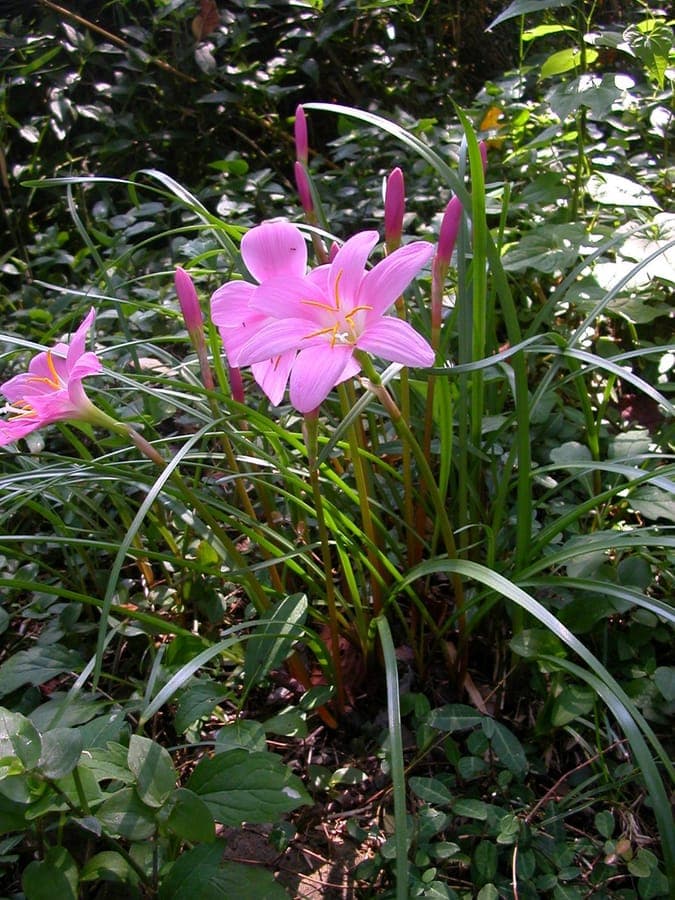
self / CC BY-SA 3.0, via Wikimedia Commons
Zephyranthes carinata: complete guide
Zephyranthes carinata
Want to see Zephyranthes carinata: complete guide in your garden?
1 minute, no credit card
Overview
Zephyranthes carinata, also known as red rain lily or corazon de Maria, is an elegant bulbous plant from the Amaryllidaceae family. This plant is native to tropical forests from Mexico to Colombia, where it grows in moisture-sensitive mountain areas. The plant is renowned for its intriguing blooming behavior - flowers appear fairly quickly after heavy rainfall, giving it the common name "rain lily". As a garden plant, this is a fascinating accent for container gardening, greenhouse cultivation, and in warm climates also for ground planting.
Appearance and Bloom
Zephyranthes carinata forms small, cylindrical leaves that emerge from the ground in loose groups. The leaves are strap-shaped and glossy green. The flowers appear on slender, upright stems and are deep red to pink in color, with six petals forming an elegant, funnel-shaped bloom. Each flower typically lasts only one day, but the plant produces successive flowers during the blooming period. Blooming is triggered by temperature and moisture changes, especially when dry periods are followed by heavy rainfall.
Ideal Location
Red rain lily grows best in a location with bright indirect light to partial shade. Direct full sun can lead to fading of the red flower color, though some morning sun is usually fine. In warm areas, some afternoon shade may be beneficial. The plant prefers warmth, around 20-28 degrees Celsius during the day and not much colder than 10 degrees at night.
Soil
Zephyranthes carinata prefers well-draining, nutrient-rich soil. Use a mix of garden soil with fine sand and organic matter for optimal growth. A neutral to slightly acidic pH (around 6.0-7.0) is ideal. The plant is very tolerant of nutrient-poor soils but grows better with regular feeding.
Free design
Want to see Zephyranthes carinata: complete guide in your garden? Make a free design now.
Watering
This is where Zephyranthes carinata is unique - the plant prefers a wet-dry cycle. During the growing season, keep the soil regularly moist but not waterlogged. Allow the soil to dry out reasonably between waterings. During winter dormancy or dry seasons, it can be much drier. When you create moister conditions after drought, blooming is triggered.
Pruning
Zephyranthes carinata requires minimal pruning. Remove spent flowers by pulling them off. Remove yellowed or dead leaves. After blooming, you can cut back the leaf stems if they look unkempt.
Maintenance Calendar
Spring: Begin regular watering after winter dormancy ends. Add fertilizer every two weeks. Summer: Provide regular watering. Misting often helps trigger blooming. Autumn: Gradually reduce fertilizer. Gradually reduce watering. Winter: Keep slightly moister but allow it to remain reasonably dry.
Winter Hardiness
Zephyranthes carinata is not hardy in temperate climates. In areas where frost occurs, the plant must be brought indoors or grown in a greenhouse. In warm climates (zone 9 and warmer), it can remain outdoors with winter protection.
Companion Plants
In containers, Zephyranthes carinata combines well with other heat-loving plants. Pair it with other Zephyranthes species for a group of red blooms, or combine it with foliage plants for contrast. In greenhouses, it works well with other tropical bulbs.
Closing
Zephyranthes carinata is a fascinating plant for those wanting to discover the secret of bloom triggering. With its intriguing blooming behavior, elegant red flowers, and easy care, it offers years of interesting blooms. Available from tropical plant nurseries and online suppliers, or visit gardenworld.app for more plant advice.
Want to see Zephyranthes carinata: complete guide in your garden? Make a free design now.
Upload a photo, pick a style, and get a photorealistic design with plant list in under a minute.
No credit card required


Similar plants
Douglas' Onion: complete guide
Allium douglasii
Douglas' onion is a compact ornamental allium with purple flowers, perfect for rock gardens and sunny borders. Learn care, siting and hardiness.
Oblique onion: complete guide
Allium obliquum
The oblique onion is a hardy ornamental allium with chartreuse flower heads and blue-green foliage. Location, soil and care explained.
False hooded garlic: complete guide
Allium pseudocalyptratum
Discover false hooded garlic (Allium pseudocalyptratum): a rare ornamental onion from Lebanon for rock gardens and alpine troughs.