
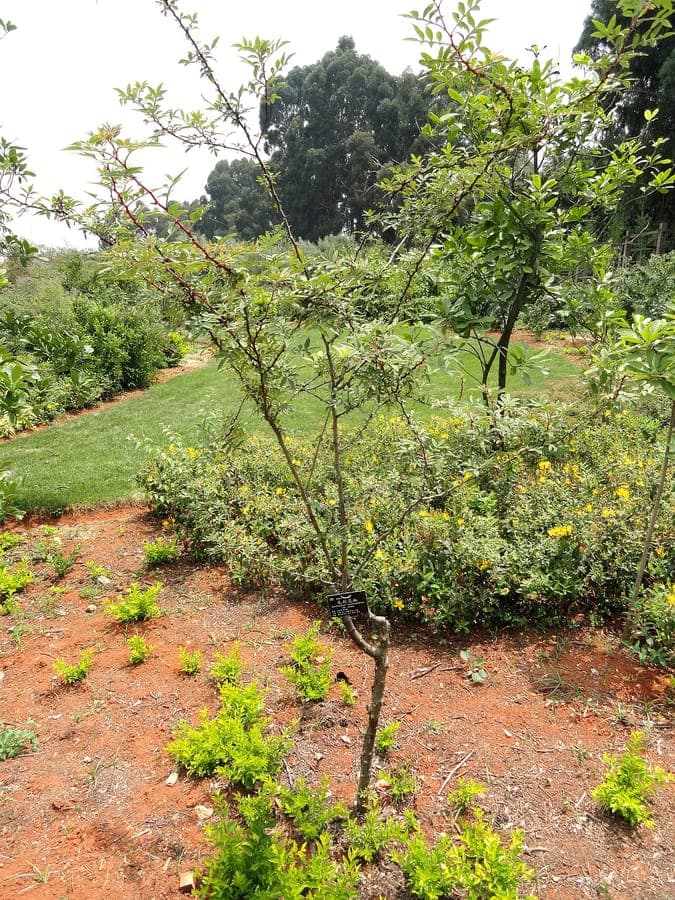
Daderot / Public domain, via Wikimedia Commons
Zanthoxylum acanthopodium: complete guide
Zanthoxylum acanthopodium
Want to see Zanthoxylum acanthopodium: complete guide in your garden?
1 minute, no credit card
Overview
Zanthoxylum acanthopodium, commonly known as Japanese pepper or Andaliman, is a fascinating ornamental shrub in the Rutaceae family. Native to the Himalayan regions and southwestern China, this plant brings an unexpectedly exotic touch to your garden. With its striking spiny stems and aromatic foliage, it becomes an eye-catching focal point in any front garden. The plant thrives best in climates with mild winters and protected summer locations.
Japanese pepper is renowned for its citrusy, slightly spicy aroma. Many garden enthusiasts choose this plant for its architectural form and year-round garden interest.
Appearance and Bloom
Japanese pepper grows into an upright shrub reaching approximately 2-3 meters in height. The stems are covered with sharp thorns, giving the plant a distinctive, armed appearance. The leaves are compound and green, creating a refined texture throughout.
The flowers are small and inconspicuous, appearing in clusters early in the growing season. The resulting fruits are far more interesting: small, round seed capsules with notable decorative value. These mature in late summer or early autumn.
Ideal Location
Choose a position with abundant sunlight, ideally six to eight hours daily. The plant prefers protection against strong winds that can damage tender foliage. In very warm regions, afternoon shade can be beneficial.
Position this plant in the center of your garden to maximize its architectural form. It works excellently as a specimen plant or combined with other Mediterranean species. Ensure adequate distance from pathways due to the spines.
Soil
Zanthoxylum acanthopodium favors well-draining, nutrient-rich soil. A mixture of garden soil, compost, and perlite yields excellent results. The pH should be slightly acidic to neutral (pH 6.0-7.0).
Ensure good drainage, as waterlogging can damage roots. In heavy clay soils, it is recommended to raise the planting area and incorporate sandy material. Apply compost annually around the root collar.
Free design
Want to see Zanthoxylum acanthopodium: complete guide in your garden? Make a free design now.
Watering
Establishment phase: water regularly until the plant is well-established (first growing season). Subsequently, this plant is moderately drought-tolerant but benefits from consistent watering during dry periods.
During the growing season (spring-summer), keep the soil moist but not waterlogged. Significantly reduce watering in autumn and winter. Watch for excessive moisture; increased leaf drop may indicate wet feet.
Container plants: water until soil feels moist and drain when the top centimeter feels dry.
Pruning
Zanthoxylum acanthopodium responds well to gentle pruning. Remove dead or damaged branches in early spring before the growing season begins. Light formative pruning creates a neater silhouette and promotes denser foliage.
Avoid aggressive pruning as the plant grows slowly. Handle stems carefully when possible due to sharp thorns; always wear gloves. After frost damage, some branches may die; these can be carefully removed in late spring.
Maintenance Calendar
Spring: Check for winter damage. Begin gentle pruning. Apply fertilizer.
Summer: Water regularly during dry periods. Promptly remove dead leaves or branches.
Autumn: Gradually reduce watering. Monitor for pests and diseases.
Winter: Minimal care required. In very cold regions, protect with straw or burlap.
Winter Hardiness
Zanthoxylum acanthopodium is only moderately winter-hardy. In climates with frost below -10C, the plant requires protection. Plant in warm, sheltered locations or overwinter in a greenhouse in very cold areas.
Heavy snow can break branches; remove snow carefully. In temperate zones, it thrives best in warm, south-facing gardens.
Companion Plants
Combine Zanthoxylum acanthopodium with other temperature-tolerant Mediterranean plants such as lavender, rosemary, or gray-foliaged shrubs for a cohesive garden design. Its architectural form works beautifully alongside soft-flowering plants.
Avoid companion plants with dark foliage; this plant benefits from contrast.
Conclusion
Japanese pepper adds elegance and botanical interest to any front garden. With the right climate and placement, this unique ornamental shrub will provide years of enjoyment. Look for seedlings and young plants at major garden centers that regularly stock exotic specimens.
Design your front garden now with gardenworld.app - upload your home photos and discover how Zanthoxylum acanthopodium fits perfectly into your personal garden plan. With gardenworld.app, create your unique front garden step by step.
Want to see Zanthoxylum acanthopodium: complete guide in your garden? Make a free design now.
Upload a photo, pick a style, and get a photorealistic design with plant list in under a minute.
No credit card required


Similar plants
Thamnosma montana: complete guide
Thamnosma montana
Everything about Thamnosma montana, the aromatic turpentine broom from the Mojave Desert. Location, soil, care and companion planting explained.
Narrow-leaved fringed rue: complete guide
Ruta angustifolia
Everything about Ruta angustifolia: location, soil, watering, pruning and winter care for this Mediterranean subshrub.
Mountain rue: complete guide
Ruta montana
A complete guide to Ruta montana: best location, soil, watering, pruning and overwintering of this aromatic Mediterranean subshrub.