
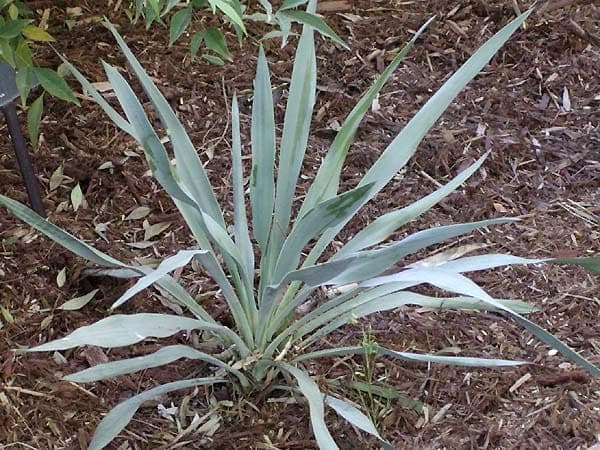
Wikimedia Commons / CC BY-SA 3.0, via Wikimedia Commons
Yucca pallida: complete guide
Yucca pallida
Want to see Yucca pallida: complete guide in your garden?
1 minute, no credit card
Overview
Yucca pallida, commonly known as twistleaf yucca or pale leaf yucca, is a remarkable and rare yucca species found exclusively in east-central Texas. This small to medium-sized specimen differs from its relatives through its unique twisted or spiraled foliage pattern, giving it an instantly recognizable appearance. With its compact growth habit and graceful flower displays, it is a standout choice for xeriscape gardens, desert landscapes, and modern design projects seeking something truly distinctive.
Appearance and Bloom
Yucca pallida grows as a compact shrub with a naturally rounded silhouette. Leaves are pale to blue-green and display the characteristic twisted or spiraling pattern that gives the plant its common name. This unusual structural feature provides visual interest throughout the year, even when the plant is not flowering. In winter through early spring, dramatic flower spikes emerge bearing creamy-white to pale yellow blooms that stand majestically above the foliage. After flowering, attractive seed pods develop, adding seasonal interest.
Ideal Location
Twistleaf yucca flourishes in full sun to light shade. Minimum five to six hours of daily sunlight is ideal. Its compact form makes it well-suited for borders, containers, or as an accent in smaller gardens. The twisted foliage is best appreciated at close range, so positioning near walkways or viewing areas is recommended. Avoid deep shade, which reduces vigor and eliminates flowering potential. Morning sun with afternoon dapple is acceptable in very hot regions.
Soil
Like all yucca species, pallida requires exceptionally well-draining soil. Sandy, gravelly, or rocky substrate is preferred. In clay-heavy soils, generous gravel or perlite amendment is essential. A slightly acidic to neutral pH (6.0-7.5) is ideal. The plant requires minimal nutrition and performs better in lean, sparse soils. Compost or peat can be used sparingly but are not essential. Excellent drainage is absolutely critical for disease prevention and root health.
Watering
Twistleaf yucca is highly drought-tolerant once established. During the first growing season, water moderately to help establishment. Thereafter, it requires minimal irrigation. In regions with adequate rainfall, supplemental watering may be completely unnecessary. Water only when soil has dried thoroughly. Overwatering is fatal and causes root rot. In hot dry periods, light supplemental watering is acceptable but less is generally better with this species.
Free design
Want to see Yucca pallida: complete guide in your garden? Make a free design now.
Pruning
Pruning is nearly unnecessary for this compact-growing yucca. Remove only dead leaves at the plant base or damaged foliage. The natural twisted form is most attractive when left unpruned. Spent flower spikes can be removed for neatness, though they produce attractive seed pods worth keeping. Wear gloves for any maintenance; leaf margins may be sharp.
Maintenance Calendar
Winter-Spring (Dec-Mar): Observe flowering and optionally remove spent spikes. Spring: Remove any winter damage. Summer: Minimal care; no water needed in rainy regions. Fall: Drainage check before cold season. Winter: Zero maintenance in most years.
Winter Hardiness
Yucca pallida is hardy to USDA zone 8b-9a (-10 to -5 degrees Celsius). In its native Texas range, it tolerates normal winters without protection. In colder zones, plant on raised, well-drained sites. Heavy snow can cause damage; carefully remove accumulation. In zone 7, it may survive in very protected south-facing microclimates with excellent drainage. Mulch is not recommended as it promotes moisture retention.
Companion Plants
Twistleaf yucca combines beautifully with other desert natives and drought-tolerant plants. Lavender, oregano, santolina, and Mediterranean herbs make excellent companions. Agaves create dramatic form contrast. Ornamental grasses add textural interest. Consider color combinations: pale green-blue yucca against purple salvias or golden ratibida creates striking visual impact. Slender sedum varieties and alpine succulents fill empty spaces.
Closing Thoughts
Yucca pallida is a hidden gem for gardeners seeking something beyond standard yucca selections. The twisted foliage provides an artistic quality that elevates modern garden design. Perfect for arid regions, water-conscious gardeners, and anyone valuing unique texture. Young plants are available from specialty growers online. Use Gardenworld.app to position this special Texas native perfectly in your garden with photorealistic design visualization.
Visit Gardenworld.app for more inspiration on desert plants and xeriscape design!
Want to see Yucca pallida: complete guide in your garden? Make a free design now.
Upload a photo, pick a style, and get a photorealistic design with plant list in under a minute.
No credit card required


Similar plants
Narrow-leaved dracaena: complete guide
Dracaena angustifolia
Everything about Dracaena angustifolia - the narrow-leaved dracaena: location, care, overwintering and use as a houseplant or patio plant.
Chaparral yucca: complete guide to Hesperoyucca whipplei
Hesperoyucca whipplei
Hesperoyucca whipplei (Our Lord's candle) is a dramatic rosette-forming plant from California that produces a towering flower spike, ideal for dry and gravel gardens.
False lily-of-the-valley: complete guide
Maianthemum dilatatum
Everything about Maianthemum dilatatum, the false lily-of-the-valley. Care, shade location, propagation and garden combinations for this popular shade ground cover.