
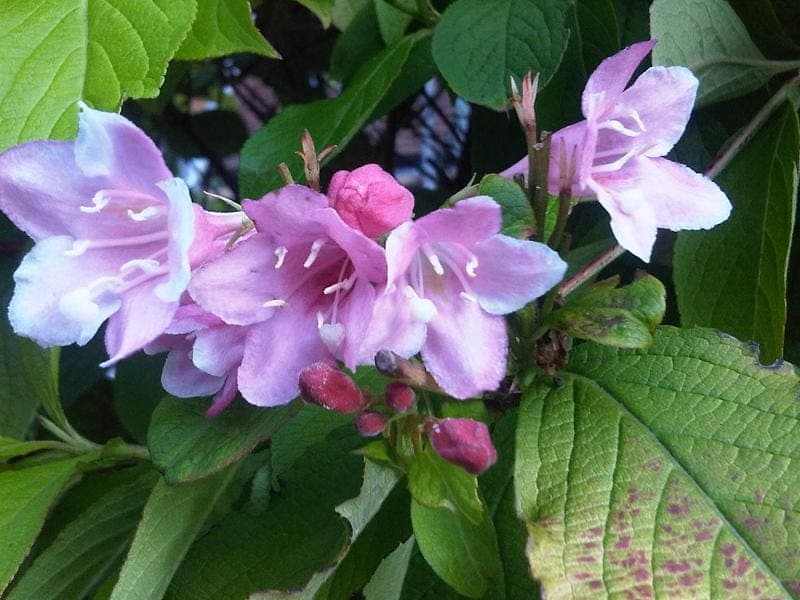
Emőke Dénes / CC BY-SA 4.0, via Wikimedia Commons
Weigela florida: complete guide
Weigela florida
Want to see Weigela florida: complete guide in your garden?
1 minute, no credit card
Overview
Weigela florida is a deciduous shrub that brings bold colour and structure to gardens across temperate zones. Native to parts of China, Japan, Korea, and eastern Russia, it's adapted well to UK and North American climates, thriving in USDA zones 5 to 8. It typically reaches 1.5 to 2 meters in height and spread, forming a dense, arching mound that works well as a specimen, hedge, or backdrop in mixed borders. Its popularity lies in its long blooming season, minimal care needs, and appeal to pollinators.
On gardenworld.app, you can design a border layout where Weigela florida shines at the mid-layer, framed by perennials and ornamental grasses for full seasonal impact.
Appearance & bloom cycle
The standout feature of Weigela florida is its tubular, trumpet-shaped flowers that bloom in clusters along the stems. These appear from late May through June, sometimes with a lighter rebloom in late summer if deadheaded and pruned correctly. Flower colours range from soft white and pale pink to deep magenta and bicolor forms with white interiors. Some cultivars, like 'Midnight Wine' or 'Java Red', also boast dark burgundy foliage that contrasts beautifully with the blooms.
Leaves are oval to lance-shaped, 5–8 cm long, and arranged oppositely on the stems. They're typically medium to dark green but vary by cultivar. In autumn, the foliage turns yellow before dropping, leaving an interesting twig structure visible in winter.
Ideal location
For the best flowering, plant Weigela florida in full sun – at least 6 hours of direct sunlight daily. It tolerates partial shade, but blooming will be reduced and growth more open. A sheltered, south- or west-facing spot against a wall or fence maximizes warmth and flower production. Give each shrub at least 1.2 meters of space from neighbours to allow for proper air circulation and natural shaping.
Soil requirements
Weigela is adaptable but prefers well-drained, loamy to sandy loam soil with moderate fertility. It thrives in soil with a pH between 5.5 and 7.0 – slightly acidic to neutral. Avoid heavy clay or constantly soggy areas, as these promote root rot. When planting, amend the hole with compost or well-rotted manure to boost establishment. Mulch annually with organic matter to retain moisture and suppress weeds.
Watering
During the first growing season, water weekly, especially in dry spells. Once established, Weigela is moderately drought-tolerant but benefits from deep watering every 10–14 days during prolonged droughts. Avoid overhead watering to prevent fungal issues. Use rainwater when possible, as the plant can be sensitive to high lime content in tap water.
Free design
Want to see Weigela florida: complete guide in your garden? Make a free design now.
Pruning
Prune Weigela right after the main flowering flush ends, ideally by late June. This timing ensures you don't cut off next year's flower buds, which form on old wood. Remove up to one-third of the oldest stems at ground level to encourage vigorous new growth. Thin out crowded or crossing branches to improve airflow. For shape, lightly trim outer stems, but avoid heavy shearing, which reduces bloom potential.
Maintenance calendar
- Jan–Feb: Inspect for dieback or winter damage. Remove any dead wood.
- Mar: Apply a layer of compost or balanced fertilizer. Clear debris around the base.
- Apr: Monitor for aphids or powdery mildew. Water if soil is dry.
- May–Jun: Peak bloom. Avoid pruning. Water during dry periods.
- Jul: Prune immediately after flowering. Lightly shape if needed.
- Aug–Sep: Reduce watering. Do not fertilize – this can trigger late growth vulnerable to frost.
- Oct: Leaves drop. Leave leaf litter as mulch or rake and compost.
- Nov–Dec: Mulch the root zone with bark or compost in colder zones. Protect young plants in exposed sites.
Winter hardiness
Weigela florida is hardy in USDA zones 5–8 (-20°C to -10°C). In zone 5, young or exposed plants may suffer tip dieback in harsh winters, but they regrow vigorously in spring. Mature shrubs rarely need protection, though a layer of mulch helps insulate roots. No need to cover unless in containers, which are more frost-prone.
Companion plants
Pair Weigela with upright perennials like salvia, veronica, or ornamental grasses for contrast. Low-growers like catmint, sedum, or coreopsis make excellent front-border companions. Behind it, plant shrubs like spirea or dwarf hydrangea for layered depth. Weigela also looks great near roses or buddleia, both in form and function, since they attract similar pollinators. With gardenworld.app, you can visualize these combinations in a custom garden plan that maximizes bloom time and texture.
Closing
Weigela florida is a reliable, eye-catching shrub that earns its place in any garden. With minimal upkeep, consistent sun, and proper pruning, it rewards you with years of vibrant blooms and graceful form. Whether planted solo or in groups, it's a proven performer in both cottage and modern landscapes. You can find healthy specimens at garden centres like those from local independents or larger chains – just look for compact, bushy plants with no signs of disease.
Want to see Weigela florida: complete guide in your garden? Make a free design now.
Upload a photo, pick a style, and get a photorealistic design with plant list in under a minute.
No credit card required


Similar plants
Yellow honeysuckle (Lonicera tragophylla): complete guide
Lonicera tragophylla
Meet yellow honeysuckle (Lonicera tragophylla): a Chinese climber with large golden flowers that thrives in partial shade.
Lonicera korolkowii: complete guide
Lonicera korolkowii Stapf
Discover blueleaf honeysuckle, a vigorous shrub with beautiful flowers. Guide on growing, shaping and why this Asian climbing plant is perfect for gardens.
Lonicera oblongifolia: complete guide
Lonicera oblongifolia Hook.
Discover swamp fly honeysuckle, a North American woodland plant. Guide on growing, caring and why this native species is valuable for gardens.