
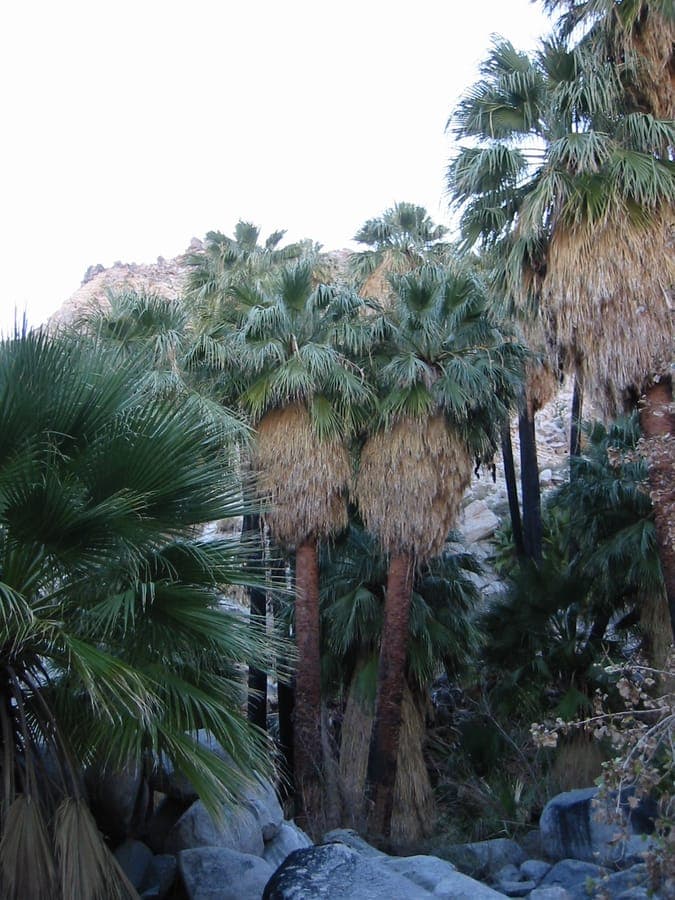
Wikimedia Commons / CC BY-SA 1.0, via Wikimedia Commons
California fan palm: complete guide
Washingtonia filifera
Want to see California fan palm: complete guide in your garden?
1 minute, no credit card
Overview
The Washingtonia filifera, commonly known as the California fan palm or desert palm, is a remarkable tree native to the desert regions of southern California, Arizona, and Mexico. This impressive palm can live for decades, creating a stunning focal point in any garden or landscape.
The plant is renowned for its enormous fan-shaped fronds that can grow over a meter in diameter. In its native habitat, the Mojave Desert, the California fan palm achieves impressive heights and presence that distinguish it from many other palms. Though originally from North America, it is now cultivated worldwide, particularly in Mediterranean and subtropical regions.
Appearance and Bloom
The Washingtonia filifera has a characteristic tree form with a straight trunk that can reach 20 meters or more in height. The trunk is covered with dead leaf material, which provides a natural protective layer. The large fan-shaped fronds are bright to silver-green in color and hang gracefully from the crown.
The flowers appear in long, drooping clusters between the fronds. They are small, creamy white to yellow in color, and typically bloom in spring. Following the flowers, small dark purple fruits develop, each roughly the size of a pea.
This is a tree that provides pleasure for many years. Due to its striking appearance and growth habit, it attracts considerable attention from passersby and visitors.
Ideal Location
The California fan palm demands sunshine. This tree thrives best in locations with full sun exposure, requiring at least 6-8 hours of direct sunlight daily. Ensure the tree is positioned in a warm spot, especially in temperate climates.
The tree can withstand both strong winds and intense heat. It is actually better suited to open spaces and large gardens. Avoid dense shade or partial shade, as this results in poor growth and weak fronds.
In Europe, the California fan palm can flourish in Mediterranean climates (USDA zones 8b-11). It also works in more temperate zones but grows slower and requires more frost protection.
Soil
The Washingtonia filifera is not particularly fussy about soil type, as long as drainage is excellent. The palm tree thrives best in well-draining, sandy or loamy soil. A pH between 6.0 and 8.0 is ideal.
Essential to success is ensuring water does not collect around the roots. Heavy clay soil must be improved by adding sand or compost. Plant it in a raised position or use containers for better water control.
Once established, this palm is extremely drought tolerant. This is because its roots can reach deep to search for water in desert conditions.
Watering
During the growing season (spring and summer), the California fan palm requires regular water. Water thoroughly and allow the soil to dry slightly between waterings. This prevents root rot.
Once well established (after 2-3 years), this palm can tolerate extended periods of drought. In winter months, you can reduce watering. In Mediterranean regions, rainwater is often sufficient.
Young, newly planted specimens require more attention. Regular, consistent moisture helps establishment. Never water excessively, and always ensure good drainage.
Free design
Want to see California fan palm: complete guide in your garden? Make a free design now.
Pruning
Pruning is straightforward with the Washingtonia filifera. Remove dead, yellow, or brown fronds to keep the tree looking healthy and neat. This also improves air circulation around the foliage.
Remove old flower clusters after blooming to direct energy toward new growth. Brown leaf bases and dead stems can be carefully removed.
Be cautious about pruning green, healthy fronds. This weakens the tree unnecessarily. Preserve the tree's natural form and shape.
Maintenance Calendar
Spring (March-May): Begin regular watering. Gradually transition from winter to summer care. Check for pests. Apply balanced fertilizer.
Summer (June-August): Continue regular watering. Ensure adequate air circulation. Monitor for diseases.
Fall (September-October): Reduce watering frequency. Apply a final feeding. Prepare the tree for winter.
Winter (November-February): Minimal watering. Protect from frost in cold regions. Wait until spring for major cleanups.
Winter Hardiness
The Washingtonia filifera is frost sensitive. In areas where temperatures drop below -5 to -10 degrees Celsius, the tree requires protection. Young trees are more vulnerable than mature specimens.
In Europe, the tree can overwinter without protection in most Mediterranean locations. In more northern regions, you can wrap the top of the tree with fleece or burlap.
In very cold winters (below -15 degrees Celsius), above-ground parts may suffer frost damage. Fortunately, this tree can regrow from its roots.
Companion Plants
The California fan palm pairs well with other heat-loving plants. Underplant it with drought-tolerant groundcovers such as silver leaf salvia, rosemary, or ornamental grasses. These combinations create visual interest while respecting the palm's water needs.
Avoid planting shade-requiring species near this sun-loving tree. Think of Mediterranean-style landscaping with lavender, santolina, and agapanthus. Your garden will become a beautiful desert oasis.
On gardenworld.app, you can find design inspiration and detailed planting combinations featuring the California fan palm.
Closing
The California fan palm is one of the most impressive palms you can grow in temperate to warm climates. With proper care in the first years and suitable placement, this tree becomes a long-lived centerpiece of your garden.
Whether you live in a Mediterranean climate or a warmer temperate zone, the Washingtonia filifera is worth considering for its bold form, low maintenance needs, and year-round visual impact.
Discover more plant care guides and garden design tips on gardenworld.app to create your perfect outdoor space.
Want to see California fan palm: complete guide in your garden? Make a free design now.
Upload a photo, pick a style, and get a photorealistic design with plant list in under a minute.
No credit card required


Similar plants
Needle palm: complete guide
Rhapidophyllum hystrix
Everything about the needle palm: the world's hardiest palm, suitable for gardens in temperate climates down to USDA zone 7b.
Saw palmetto: complete guide
Serenoa repens
A complete guide to saw palmetto (Serenoa repens), the iconic fan palm from Florida and the southeastern United States, prized for its toughness.
Puerto Rican hat palm: complete guide
Sabal causiarum
Grow Puerto Rican hat palm successfully. A majestic fan palm with tropical presence suited to sheltered Mediterranean-style gardens.