
Rosenzweig / CC BY-SA 3.0, via Wikimedia Commons
Rock grape: complete guide
Vitis rupestris
Want to see Rock grape: complete guide in your garden?
1 minute, no credit card
Overview
Vitis rupestris, commonly known as rock grape, is a rugged, climbing vine native to rocky outcrops and sandy riverbanks across central and eastern North America. Unlike its cultivated cousins bred for wine, this species thrives in tough conditions - poor soil, scorching sun, and drought. Gardeners in the UK and northern Europe are starting to appreciate its resilience, especially in naturalistic designs. If you've got a tricky slope or a dry wall where nothing else grows, this vine might be your answer. On gardenworld.app you can design a layout that makes the most of its climbing habit and seasonal changes, helping you place it where it'll thrive.
Appearance & bloom cycle
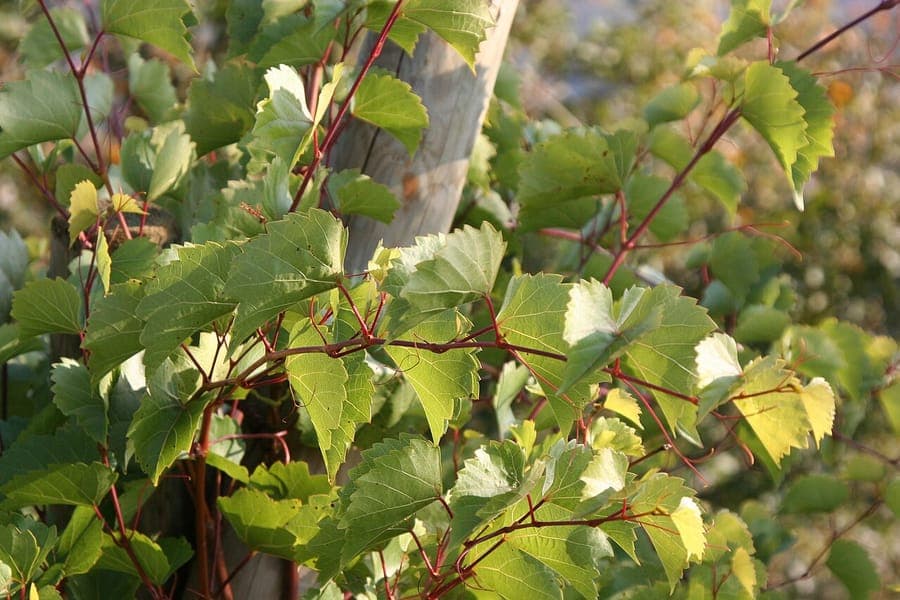
Rock grape grows quickly, reaching 3–5 meters in height with strong, woody stems and curling tendrils. The leaves are deeply lobed, palmate, and measure 10–15 cm across, turning a brilliant crimson in autumn. In late spring to early summer (late May to mid-June), small greenish flowers appear in panicles. They're not showy, but they're rich in nectar and attract bees, wasps, and hoverflies. By late summer, these develop into small, round berries (around 8–12 mm), ripening to dark purple by September. The fruit is tart and seedy - best used in jellies or as a rootstock hybrid rather than fresh eating.
Ideal location
Full sun is ideal - at least 6 hours daily - for strong flowering and fruiting. A south- or west-facing wall, pergola, or fence works best. It handles light shade, but growth becomes leggy and fruiting drops sharply. In cooler climates, a sheltered spot near a building helps it survive winter. Use trellises or wire supports spaced 30 cm apart to guide growth. Avoid planting near large trees that create dense shade or compete for moisture.
Soil requirements
This vine loves lean, well-drained soils - sandy, gravelly, or rocky types are perfect. It tolerates pH from 5.5 to 7.8 and actually performs worse in rich, compost-heavy beds. Over-fertilizing leads to excessive leafy growth and fewer flowers. If your soil is heavy clay, amend it with grit and sand to improve drainage. Raised beds or slope plantings are ideal. Never add manure or high-nitrogen fertilizers.
Watering
During the first growing season, water weekly with 10 litres per plant to establish roots. After that, Vitis rupestris is highly drought-tolerant. Water only during prolonged dry spells (over 3 weeks without rain), giving a deep soak every 10–14 days. Avoid frequent shallow watering, which encourages weak root systems. A drip irrigation line works well if you're training it on a large structure.
Free design
Want to see Rock grape: complete guide in your garden? Make a free design now.
Pruning
Prune in late winter or early spring (February to early March), before bud swell. Remove dead or damaged wood and thin out crowded stems to improve airflow. Cut back lateral shoots to 2–3 buds to encourage fruiting spurs. Avoid pruning in summer - the vine 'bleeds' sap, which weakens it. Use sharp bypass pruners and disinfect between cuts to prevent disease spread.
Maintenance calendar
- Jan: Inspect structure, plan pruning
- Feb: Prune main stems, remove dead growth
- Mar: Check for swelling buds, secure loose tendrils
- Apr: Monitor for aphids or powdery mildew
- May: Growth accelerates; guide new shoots
- Jun: Bloom period; beneficial insects active
- Jul: Minimal care; water only in extreme drought
- Aug: Berries begin to form; inspect for pests
- Sep: Harvest fruit for preserves
- Oct: Enjoy autumn colour; leaves drop naturally
- Nov: Clear fallen leaves if diseased
- Dec: Dormant period; no action needed
Winter hardiness
Vitis rupestris is hardy in USDA zones 6 to 9. In zone 6, it survives lows down to -23°C. Mature vines handle cold well, but young plants benefit from a mulch layer (5–8 cm of bark or leaf litter) in their first winter. Avoid wet soils in winter, as saturated roots lead to rot. In colder zones (5 or below), it's best grown against a warm wall with additional winter protection.
Companion plants
Pair rock grape with drought-tolerant perennials like Echinacea, Rudbeckia, Panicum virgatum, or Asclepias. These share similar soil and sun needs and create a pollinator-friendly habitat. Avoid aggressive spreaders like mint or ivy that can smother young vines. A mixed border with grasses and coneflowers under a trained vine creates depth and seasonal interest.
Closing
Vitis rupestris isn't a flashy garden star, but it's a quiet performer where others fail. It's perfect for stabilising slopes, covering unsightly walls, or adding vertical texture to native plantings. While not common in mainstream garden centres, it's worth seeking out for its toughness and ecological value. Look for it at specialist nurseries or online - in the UK and US, it may be sold as rootstock, but gardeners are increasingly growing it ornamentally. You can also explore planting options on gardenworld.app, where you can simulate how this vine would look on your pergola or fence over time. For reliable stock, check local garden centres in spring, or trusted suppliers online before planting season kicks off.
Want to see Rock grape: complete guide in your garden? Make a free design now.
Upload a photo, pick a style, and get a photorealistic design with plant list in under a minute.
No credit card required


Similar plants
Catbird grape: complete guide
Vitis palmata
Discover the Catbird grape (Vitis palmata), a hardy wild grapevine that draws songbirds. Learn about location, pruning, and year-round care.
Monkshoodvine: complete guide
Ampelopsis aconitifolia
Discover Monkshoodvine. Learn how to care for this plant in your garden.
Vitis girdiana: complete guide to this resilient desert wild grape
Vitis girdiana
Discover Vitis girdiana, the Desert Wild Grape: a resilient native vine from California and Mexico. Perfect for dry, warm gardens and pergola screening.