
Lucy Keith-Diagne / CC BY 4.0, via Wikimedia Commons
Fox grape: complete guide
Vitis labrusca
Want to see Fox grape: complete guide in your garden?
1 minute, no credit card
Overview
Vitis labrusca, commonly known as the fox grape, is a vigorous, deciduous vine native to the eastern United States. It's prized by home gardeners for its aromatic fruit, hardiness, and adaptability to cooler climates. Unlike European wine grapes (Vitis vinifera), labrusca thrives in USDA zones 6 to 9, making it a solid choice for gardeners across much of the UK, northern Europe, and similar temperate regions. The name 'fox grape' comes from its distinctive 'foxy' musky aroma - especially strong in cultivars like 'Concord' and 'Niagara'.
On gardenworld.app, you can design a vineyard-style row or a decorative arbor that maximizes sunlight and air circulation for your fox grape. Proper structure is key - this vine can reach 6 meters tall and needs sturdy support.
Appearance & bloom cycle
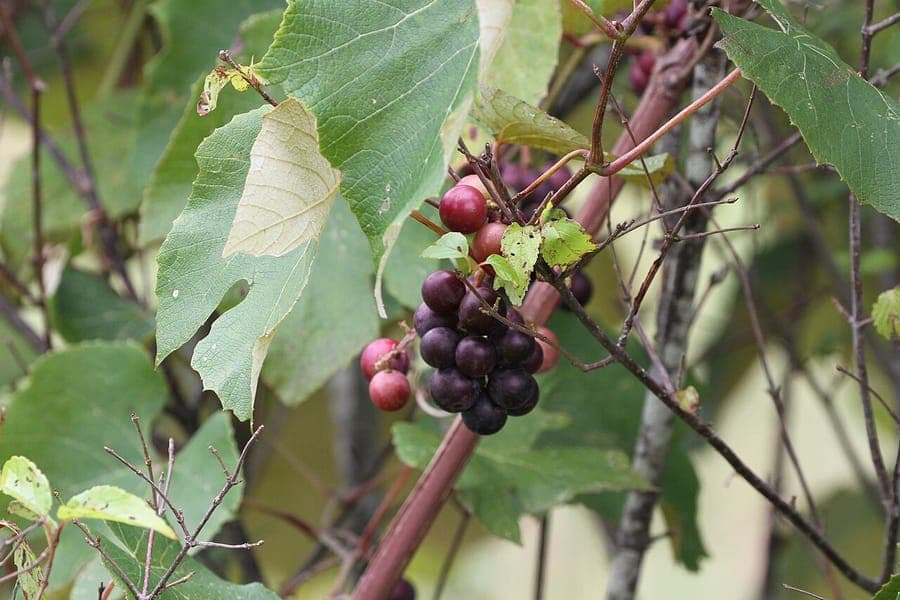
The fox grape unfurls large, five-lobed leaves in spring, bright green and slightly hairy on the underside. By midsummer, foliage deepens to a rich green, providing dense shade. In autumn, leaves turn vibrant yellow, bronze, or deep red, adding seasonal interest. Flowers appear in June - small, green, and inconspicuous, clustered in loose panicles. They're self-fertile, so you don't need multiple plants for fruit set.
Fruit develops in tight clusters, ripening from late August to mid-September. Berries are round, 1.5–2 cm in diameter, with a thick skin and juicy pulp. Skin colour ranges from deep blue to purple with a powdery bloom. The taste is sweet-tart with that classic labrusca 'foxy' tang - think Concord grape juice or homemade jelly.
Ideal location
Plant Vitis labrusca where it gets at least 7 hours of direct sun daily. A south- or southwest-facing wall, pergola, or fence works best. Avoid shaded areas under trees - insufficient light leads to poor fruiting. Ensure at least 1.5 meters of spacing between plants for airflow. In cooler regions, a warm microclimate (like against a brick wall) helps ripen fruit fully.
Use gardenworld.app to map sun exposure in your garden and pinpoint the best spot for your grapevine. This tool helps avoid planting in low-energy zones.
Soil requirements
Fox grape prefers well-drained, loamy to sandy soil with a pH between 6.5 and 7.0. Heavy clay soils should be amended with grit and compost to improve drainage. Avoid overly rich soils - excess nitrogen promotes leafy growth at the expense of fruit. The root zone should be at least 60 cm deep. Mulch with straw or wood chips in spring to suppress weeds and retain moisture, but keep mulch away from the base to prevent rot.
Free design
Want to see Fox grape: complete guide in your garden? Make a free design now.
Watering
Water deeply once a week during the first growing season - about 20 litres per plant. After establishment, the vine is moderately drought-tolerant but yields better with consistent moisture. Drought stress during fruit development leads to shrivelled berries. Always water at the base, not overhead, to reduce fungal diseases like powdery mildew.
Drip irrigation is ideal. Avoid soggy soil - root rot sets in quickly if water pools around the crown.
Pruning
Pruning is essential for productivity. Cut back in late winter (February) or early spring (March), before bud break. Use sharp, clean secateurs. Train the vine using a cordon or bilateral cordon system. Keep 2–4 main arms and prune lateral shoots to 2–3 buds. Remove dead, weak, or crossing canes. Thin fruit clusters if too dense to improve air flow and berry size.
Maintenance calendar
- January: Inspect canes, remove damaged wood
- February: Main pruning
- March: Apply balanced organic fertiliser
- April: Check for aphids and mildew
- May: Tie new shoots to support
- June: Thin flower clusters on young vines
- July: Monitor soil moisture; water during dry spells
- August: Begin harvesting (depending on cultivar)
- September: Allow final clusters to ripen
- October: Leaves fall; inspect for disease
- November: Clear fallen leaves
- December: Dormant period - no action needed
Winter hardiness
Vitis labrusca is hardy down to -20°C (USDA zone 6). Young plants may benefit from a mulch layer (straw or leaves) around the base in harsh winters. Mature vines are resilient, but extreme cold can damage fruiting buds. Avoid late-season pruning - it encourages soft growth vulnerable to frost.
Companion plants
Plant herbs like thyme, oregano, or chives nearby - they deter pests and improve soil health. Avoid invasive ground covers. Compatible companions include asparagus and strawberries, which occupy different root zones. Don't plant near black walnut trees - they release juglone, toxic to grapes.
Closing
The fox grape is a rewarding, low-maintenance addition to any garden. With proper pruning and sunlight, it yields abundant, aromatic fruit year after year. Use the harvest for juices, jams, or fresh eating - the flavour is unmistakably unique.
Buy Vitis labrusca at garden centres or online nurseries. Look for healthy, 2-year-old plants in 5-litre pots. Plant in spring or early autumn. Track growth and harvest dates using gardenworld.app's seasonal planner - it helps you stay ahead of maintenance tasks.
Want to see Fox grape: complete guide in your garden? Make a free design now.
Upload a photo, pick a style, and get a photorealistic design with plant list in under a minute.
No credit card required


Similar plants
Catbird grape: complete guide
Vitis palmata
Discover the Catbird grape (Vitis palmata), a hardy wild grapevine that draws songbirds. Learn about location, pruning, and year-round care.
Monkshoodvine: complete guide
Ampelopsis aconitifolia
Discover Monkshoodvine. Learn how to care for this plant in your garden.
Vitis girdiana: complete guide to this resilient desert wild grape
Vitis girdiana
Discover Vitis girdiana, the Desert Wild Grape: a resilient native vine from California and Mexico. Perfect for dry, warm gardens and pergola screening.