
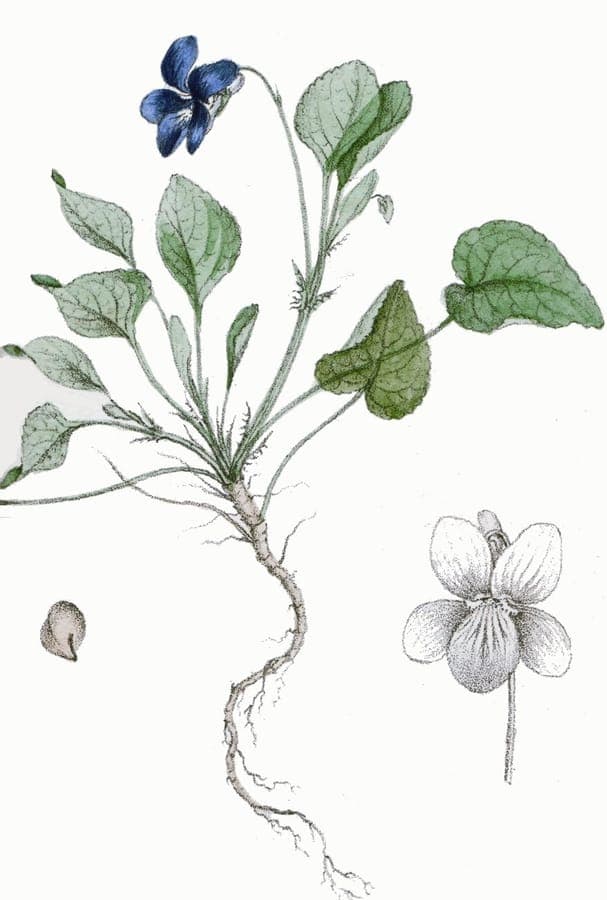
The original uploader was Greatpatton at French Wikipedia. / Public domain, via Wikimedia Commons
Heath dog violet: complete guide
Viola canina
Want to see Heath dog violet: complete guide in your garden?
1 minute, no credit card
Overview
Distribution: The Heath dog violet (Viola canina) inhabits European habitats from Atlantic coasts to Siberian forests. A widespread wild plant found across temperate Europe in woodlands, heaths, and grasslands. This hardy perennial adapts to diverse ecological niches.
Habitat Preference: Grows naturally in mixed deciduous forests, coniferous understory, and open heathland. Particularly common on moist mountain meadows and woodland margins where light reaches the forest floor.
Historical Significance: Traditional herbalism valued this violet for various medicinal properties, though modern efficacy remains unverified. Ecologically important for native insects and wildlife.
Appearance and Bloom
Foliage: Lance-shaped to oval leaves, 1-3 centimeters long, with finely serrated margins. Basal leaves form tufts; stem leaves smaller and more sparse. Foliage emerges in early spring and persists through summer.
Flowers: Purple to lavender-blue blooms, approximately 1-1.5 centimeters diameter. Distinctively lacks the spurred spur characteristic of horned violets. Blooms April through June with peak flowering in May.
Growth Pattern: Vigorous spreader forming dense colonies under suitable conditions. Rapidly establishes via underground runners and self-seeding.
Ideal Location
Light: Prefers partial shade beneath deciduous trees. Tolerates full sun in cool climates with consistent moisture. Shade-loving in hot summer regions.
Moisture: Thrives in consistently moist habitats. Particularly well-suited to waterlogged areas where most ornamentals struggle.
Woodland Setting: Ideal near shrubbery edges or beneath mixed plantings where dappled light penetrates.
Soil Environment: Accepts diverse soil conditions including clay and peat but prefers humus-rich substrates.
Soil
Soil pH: Prefers acidic to neutral soil (pH 4.5-7.0). Thrives on very acidic heathland soils where few plants succeed.
Drainage: Tolerates poor drainage exceptionally well. Grows on marsh and bog sites where waterlogging would kill most plants.
Soil Type: Highly adaptable to various soil compositions including clay, peat, sand, and organic-rich loam. Prefers humus-enriched substrates.
Fertility: Succeeds in nutrient-poor heathland but flowers more prolifically with moderate feeding.
Free design
Want to see Heath dog violet: complete guide in your garden? Make a free design now.
Watering
Moisture Requirements: Maintain consistent soil moisture during growing season. Tolerates wet conditions far better than dry extremes.
Watering Frequency: Water regularly during dry spells. Remarkably drought-tolerant once established. Container plants require daily watering in summer.
Winter Moisture: Tolerates wet winter conditions without rotting. Proper drainage essential in containers to prevent root diseases.
Pruning
Maintenance Trimming: Remove brown foliage after winter. Light trim post-blooming encourages compact growth and repeat flowering.
Spread Control: Regular trimming manages aggressive spreading in confined spaces.
Winter Dormancy: Partial winter die-back occurs; spring cleanup removes dead foliage for fresh appearance.
Maintenance Calendar
February/March: Clear winter debris, light trimming, fertilizer application.
April/May: Regular watering, monitor flower initiation, prepare deadheading supplies.
June/July: Peak bloom period, daily deadheading extends flowering, maintain consistent moisture.
August/September: Post-bloom trimming, gradually reduce feeding.
October/November: Winter preparation, reduce feeding gradually.
December/January: Minimal activity, monitor drainage during wet weather.
Winter Hardiness
Frost Tolerance: Extremely cold-hardy, tolerating -25 to -30 degrees Celsius. Native to taiga forest zones.
Protection: No winter protection required in temperate zones. Extreme freezing in very cold regions occasionally damages young growth.
Winter Blooming: In exceptionally mild winters, scattered flowers may appear January-February.
Companion Plants
Woodland Associates: Hepatica, Trillium, Anemone nemorosa, Sanguinaria canadensis.
Other Viola Species: Viola odorata, Viola reichenbachiana.
Groundcover Combinations: Asarum, Epimedium, Helleborus, Liriope muscari.
Height Contrast: Ferns, taller hellebores, finely-textured foliage plants.
Closing Thoughts
Viola canina excels in woodland gardens, wildlife plantings, and moist sites where conventional garden plants fail. Its purple blooms, ecological value, and extreme adaptability provide years of value with minimal intervention. Perfect for naturalistic gardens. Visit gardenworld.app/en for additional woodland plant guidance. Widely available at UK garden centers and specialist native plant nurseries.
Want to see Heath dog violet: complete guide in your garden? Make a free design now.
Upload a photo, pick a style, and get a photorealistic design with plant list in under a minute.
No credit card required


Similar plants
Woodland white violet: complete guide
Viola blanda
Discover the woodland white violet (Viola blanda), a fragrant North American groundcover for shady gardens. Site, soil, and care covered in full.
Canada violet: complete guide
Viola canadensis
Learn to grow the Canada violet (Viola canadensis), a tall, fragrant woodland violet for shade borders. Site, soil, pruning, and hardiness explained.
Mont Cenis violet: complete guide
Viola cenisia
Grow the Mont Cenis violet (Viola cenisia), an alpine cushion plant from the Alps for rock gardens and troughs. Site, soil, and hardiness explained.