
Lalitstar at English Wikipedia / CC BY-SA 3.0, via Wikimedia Commons
Vigna aconitifolia: complete guide to moth bean cultivation
Vigna aconitifolia
Want to see Vigna aconitifolia: complete guide to moth bean cultivation in your garden?
1 minute, no credit card
Overview
The moth bean, scientifically Vigna aconitifolia, is an underrated vegetable legume from the Fabaceae family. Native to South Asia, this crop has been a dietary staple in India, Pakistan, and neighboring regions for thousands of years. Also called mat bean or rice bean, it combines excellent nutritional value with remarkable adaptation to diverse growing conditions.
In European gardens, this legume remains relatively uncommon, yet it merits greater attention. The plant grows compactly, produces delicate pods filled with flavorful seeds, and demands substantially less maintenance than traditional bean varieties.
Appearance and Bloom
The moth bean is a herbaceous annual that reaches approximately 60 centimeters in height. Its leaves are compound and finely divided, giving the plant an elegant, feathery appearance. During growth, small yellow or white flowers emerge; after pollination, they develop into slender 8-10 centimeter pods.
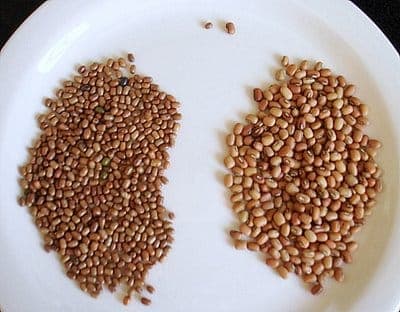
Each pod contains roughly 10 to 15 small, rounded seeds that vary in color from reddish-brown to grey. The seeds form the primary harvest product, though young pods may also be eaten raw or cooked.
Ideal Location
This plant thrives in warm, sunny positions. Ensure at least 6-8 hours of direct sunlight daily. As a South Asian species, it tolerates heat excellently and can flourish even during hot summers.
The moth bean grows well in containers, making it ideal for balconies or small gardens. Select a pot with at least 20-liter capacity for optimal root development.
Soil
Although not demanding, moth bean performs best in well-draining soil with slightly acidic to neutral pH between 5.5 and 7.5. Sand and clay are acceptable; the plant adapts well to various soil mixtures.
Amend planting beds with organic matter such as compost to enhance water and nutrient retention. As a legume, it fixes atmospheric nitrogen, so intensive fertilization proves unnecessary.
Free design
Want to see Vigna aconitifolia: complete guide to moth bean cultivation in your garden? Make a free design now.
Watering
Keep soil evenly moist but never waterlogged. During dry spells, watering twice to three times weekly suffices. Once established, this plant demonstrates considerable drought tolerance thanks to its deep root system.
If you observe leaf drooping, it is time to water. Early morning irrigation prevents disease and ensures efficient water use.
Pruning
The moth bean requires minimal pruning. Generally, light shaping when young promotes a full, compact form. Regularly remove dead or damaged leaves and stems.
If the plant grows too vigorously, pinch or trim top stems. This encourages lateral branching and higher yield.
Maintenance Calendar
March-April: Sow indoors or direct seed once frost danger passes. May-June: Thin seedlings and water regularly during dry periods. July-August: Flowering and fruiting; monitor for pests. September-October: Harvest mature pods and seeds. Leave some pods on the plant to dry for seed collection. November: Remove plant debris and prepare the garden for the following season.
Winter Hardiness
The moth bean lacks winter hardiness and suffers frost damage. In temperate climates, it grows as an annual; in warm regions, it may behave as a half-hardy annual. Resow each year or store seeds in a cool, dry location.
Companion Plants
Moths beans make excellent garden companions for other vegetables. They grow well alongside eggplants, peppers, and basil. Due to nitrogen fixation, they benefit nearby leafy greens. Avoid planting with other legumes in the same row.
Conclusion
The moth bean deserves a place in modern vegetable gardens. With minimal care, limited water demands, and a valuable harvest, it offers considerable advantages. Try this fascinating bean and discover why it has been valued across South Asia for millennia.
Seeds are available at garden centers. Choose organically grown seed to ensure pure plant material. Visit gardenworld.app for more vegetable cultivation guides and garden design ideas.
Want to see Vigna aconitifolia: complete guide to moth bean cultivation in your garden? Make a free design now.
Upload a photo, pick a style, and get a photorealistic design with plant list in under a minute.
No credit card required


Similar plants
Tall Silky Lupine: complete guide
Lupinus elatus
Tall silky lupine is a fast-growing Californian perennial with silvery foliage and blue-purple flower spikes, ideal for a prairie-style garden.
Garfield Lupine: complete guide
Lupinus garfieldensis
The Garfield lupine is a rare, fast-growing American perennial for alkaline, dry grassland gardens, with striking blue flower spikes.
Lupinus elegans: complete guide
Lupinus elegans
Lupinus elegans, the elegant lupine, is a spectacular blooming plant from Mexico with blue flower spikes. Care, cultivation and garden use.