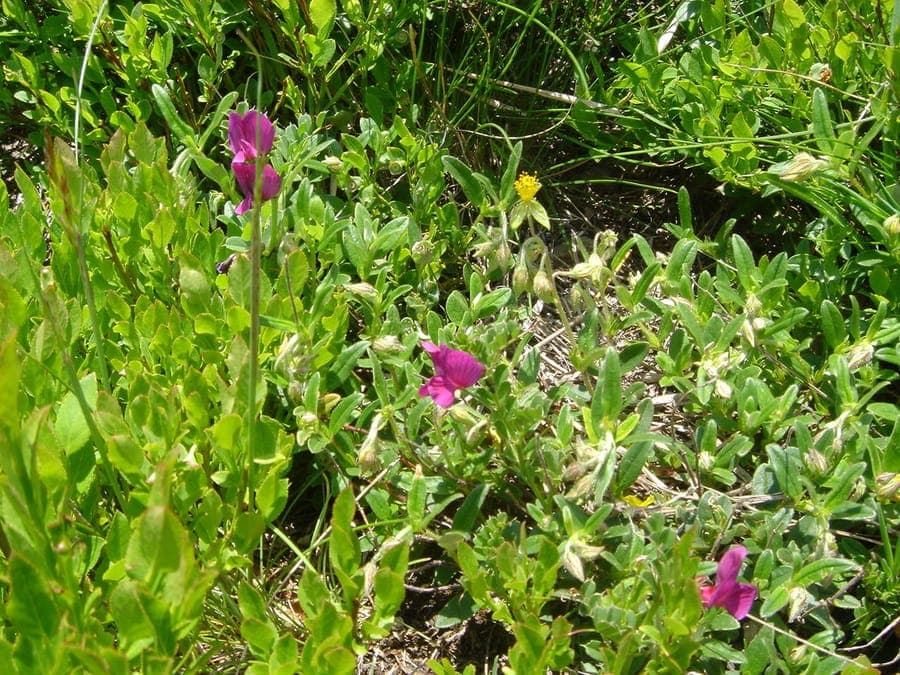
Ghislain118 http://www.fleurs-des-montagnes.net / CC BY-SA 3.0, via Wikimedia Commons
Vicia pyrenaica: complete guide to this elegant Pyrenean alpine plant
Vicia pyrenaica
Want to see Vicia pyrenaica: complete guide to this elegant Pyrenean alpine plant in your garden?
Full design in HD: €7.99
Look after your Vicia pyrenaica with the GardenWorld app
Identify plants with your camera and get a care calendar with reminders for this plant.


Overview
Vicia pyrenaica, known as Pyrenean Vetch or Mountain Vetch, is a delicate alpine plant native to the limestone mountains of southern France and northeastern Spain. Cherished for its refined blue flowers blooming from June through August, this tendril-climbing legume brings elegant charm to rock gardens and alpine troughs.
At GardenWorld, we recommend Vicia pyrenaica for gardeners managing rocky, well-drained slopes. The plant is extremely drought-tolerant and nutrition-frugal - perfect for poor soils and challenging sites where conventional plants struggle.
Appearance and Bloom
Vicia pyrenaica grows as a slender, tendril-climbing plant reaching 30-60 cm in height. Leaves are compound and feathery, with terminal tendrils for support. From June to August, delicate blue flowers appear in loose clusters of 5-8 blooms per truss.
Individual flowers are approximately 10-12 mm long, displaying the characteristic papilionaceous (butterfly) shape characteristic of legumes. Following flowering, narrow, flattened seed pods develop, though these lack significant ornamental value.
Ideal Location
Vicia pyrenaica thrives in full sun (6-8 hours direct sunlight daily) and tolerates partial shade. The plant prefers elevated positions with good air circulation and wind exposure.
Optimal applications:
- Rock gardens and scree beds
- Alpine troughs and raised containers
- Sunny, dry borders
- Between paving stones or crevices
- Sloping terrain with excellent drainage
- Dry-climate mixed borders
Soil Requirements
Vicia pyrenaica demands excellently drained soil. Sandy or gravelly substrates are ideal; heavy clay is fatal. The plant thrives in nutritionally modest soil (pH 6.5-7.5).
Soil preparation:
- Mix: 50% horticultural sand, 30% fine gravel, 20% compost
- Provide 15-20 cm drainage layer beneath planting level
- For containers: use very porous alpine soil mix with perlite
- Avoid waterlogging completely
- No supplemental feeding needed; excess fertility reduces flowering
Free preview
Want to see Vicia pyrenaica: complete guide to this elegant Pyrenean alpine plant in your garden? Make a free preview of your design.
Watering
Vicia pyrenaica requires minimal water, especially when established. Overwatering is more harmful than drought.
Watering guidelines:
- Water moderately during growing season (May-June)
- After flowering: reduce watering significantly
- During drought: deep water once weekly if necessary
- Container-grown: water only when soil is bone-dry
- Never overhead water; wet foliage encourages fungal issues
Pruning
Pruning is not essential but can improve plant shape. Remove dead stems in spring.
Pruning practices:
- After flowering: can trim one-third of growth for compactness
- Remove dead wood in March
- Tendril can gently be trained on small supports
- Avoid heavy pruning; plant recovers slowly
Maintenance Calendar
March: Check for winter damage, remove dead material April-May: Resume normal watering June-August: Enjoy flowering display, minimal maintenance September-October: Collect seeds if desired November-February: Minimal care; protect from wet conditions
Winter Hardiness
Vicia pyrenaica is hardy to zone 5 (approximately -20 degrees Celsius), though seedlings are more tender. In zone 4 and colder, consider it semi-hardy.
Winter preparation:
- In zone 4: Protect with grit or stone mulch
- Ensure excellent drainage (wet is deadlier than cold)
- Container-grown plants: place in sheltered location
- Start seed indoors in January for spring sowing
Companion Plants
Vicia pyrenaica pairs well with:
- Other alpines: Saxifrage, Armeria, Dianthus
- Silver-foliage plants: Artemisia, Teucrium, Stachys
- Ornamental grasses: Festuca glauca, Stipa
- Succulents: Sempervivum, Sedum
- Aromatic groundcovers: Thyme, Origanum
Closing Thoughts
Vicia pyrenaica is an exquisite, underappreciated alpine plant offering striking blue flowers and elegant foliage. For gardeners managing dry, rocky terrain, this is the quintessential choice. Minimal effort yields maximum visual reward.
Visit gardenworld.app for additional rock garden design guidance. Seeds are readily available online; the species germinates easily in well-drained seed compost.
This Pyrenean treasure deserves pride of place in every alpine enthusiast's garden.
Frequently asked questions about Vicia pyrenaica
Is Vicia pyrenaica winter hardy?
Vicia pyrenaica is hardy to zone 5 (approximately -20 degrees Celsius), though seedlings are more tender. In zone 4 and colder, consider it semi-hardy.
When and how do you prune Vicia pyrenaica?
Pruning is not essential but can improve plant shape. Remove dead stems in spring.
How much water does Vicia pyrenaica need?
Vicia pyrenaica requires minimal water, especially when established. Overwatering is more harmful than drought.
Where does Vicia pyrenaica grow best?
Vicia pyrenaica thrives in full sun (6-8 hours direct sunlight daily) and tolerates partial shade. The plant prefers elevated positions with good air circulation and wind exposure.
What soil does Vicia pyrenaica need?
Vicia pyrenaica demands excellently drained soil. Sandy or gravelly substrates are ideal; heavy clay is fatal.

See it in your garden
See Vicia pyrenaica in your garden
One photo of your garden and a few questions. You see the result in about a minute.
Try it with a photoIdentify this plant in your own garden. Identify a plant
Similar plants
Pineapple broom (Argyrocytisus battandieri): complete guide
Argyrocytisus battandieri
Everything about pineapple broom (Argyrocytisus battandieri), the Moroccan wall shrub with silver leaves and pineapple-scented flowers: site, pruning and hardiness.
Blue false indigo: complete guide
Baptisia australis
Everything about blue false indigo (Baptisia australis): position, soil, watering, cutting back, hardiness and toxicity. A long-lived prairie perennial with indigo flowers.
Warminster broom (Cytisus × praecox): complete guide
Cytisus × praecox
Everything about Warminster broom (Cytisus × praecox): position, poor soil, pruning after flowering, hardiness and what you need to know about its toxicity.
