
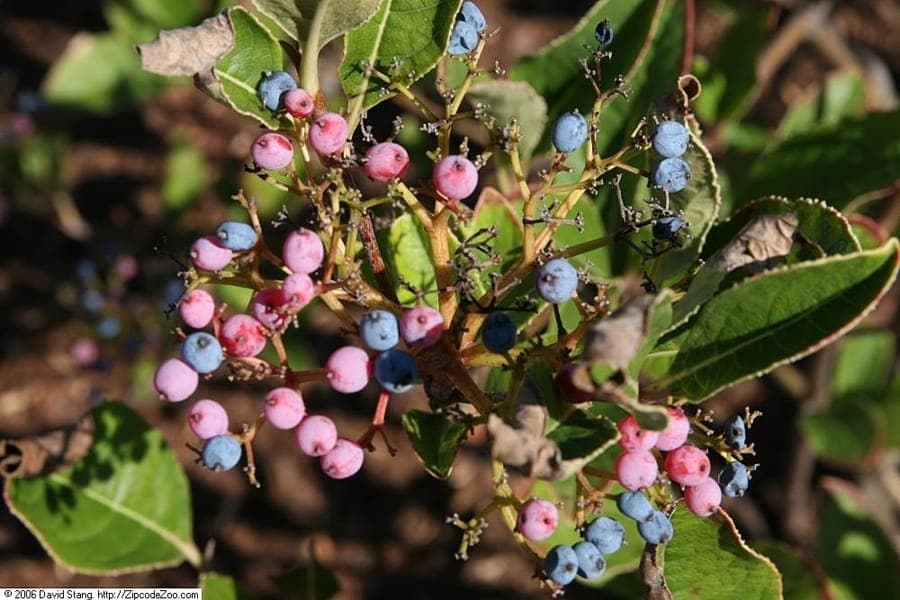
Photo by David J. Stang / CC BY-SA 4.0, via Wikimedia Commons
Viburnum Nudum: complete guide
Viburnum nudum
Want to see Viburnum Nudum: complete guide in your garden?
1 minute, no credit card
Overview
Viburnum nudum, commonly known as possumhaw or smooth witherod, is an elegant native North American shrub celebrated for its subtle white flowers and spectacular blue-green berries. This plant bridges seasons beautifully, offering structure and wildlife value from spring through winter. For gardeners seeking biodiversity, Viburnum nudum is an essential choice.
Appearance and Bloom
This deciduous to semi-evergreen shrub grows 6-10 feet tall and wide, creating a naturally arching form. The leaves are glossy, elongated, and fine-textured, turning burgundy-purple in autumn. In late May and June, small white or pale pink flowers appear in flat clusters, attracting pollinators. These flowers are followed by round berries that ripen from red through coral to striking blue-green by midsummer, persisting well into November.
The gray-brown bark adds winter interest, making this plant valuable year-round.
Ideal Location
Viburnum nudum thrives in partial to dappled shade but tolerates full sun with adequate moisture. Place it where it receives afternoon shade in hot climates. For maximum berry production, plant in groups of 3-5 specimens, as cross-pollination increases fruit set and ensures abundant berries.
Soil
While adaptable, Viburnum nudum prefers moderately fertile, well-draining soil. It tolerates slightly acidic to neutral pH (5.5-7.0). Avoid heavily compacted clay; amend with compost or peat moss to improve drainage and structure. This plant adjusts well to slightly moist conditions but resents waterlogged soils.
Watering
Water regularly during establishment and the growing season. Once mature, Viburnum nudum is moderately drought-tolerant. During dry spells in summer, provide supplemental water, especially for young plants. Avoid constant wetness, which invites root rot and fungal issues.
Free design
Want to see Viburnum Nudum: complete guide in your garden? Make a free design now.
Pruning
Viburnum nudum requires minimal pruning. Remove dead or weak wood in early spring. Light shaping after flowering maintains form without sacrificing flower and berry production. Avoid heavy pruning, which reduces the following year's blooms.
Maintenance Calendar
- March: Remove dead wood and weak growth
- May-June: Enjoy the delicate white flowers
- July-August: Monitor for cross-pollination and fruit set
- September-November: Appreciate the striking blue-green berries
- December-February: Enjoy winter form and bark
Winter Hardiness
Viburnum nudum is exceptionally winter-hardy, suitable for USDA zones 5-9. It withstands temperatures to -13 deg F (-25 deg C). In severe winters, some twig die-back may occur, but recovery is rapid. This plant thrives throughout the temperate northern regions.
Companion Plants
Pair Viburnum nudum with:
- Winterberry (Ilex verticillata) for extended berry color
- Native grasses (Panicum, Andropogon) for texture
- Blueberry (Vaccinium corymbosum) for additional wildlife food
- Serviceberry (Amelanchier) for spring blooms
Together, these create a robust wildlife habitat and season-long interest.
Closing
Viburnum nudum embodies the quiet elegance of native plants. Its modest flowers, eye-catching berries, and reliability make it indispensable in ecological gardens and borders. Whether you're creating a wildlife sanctuary or simply adding year-round structure, this American treasure delivers. Available at most specialty nurseries and garden centers. Discover how Viburnum nudum fits your garden design at Gardenworld.app.
Want to see Viburnum Nudum: complete guide in your garden? Make a free design now.
Upload a photo, pick a style, and get a photorealistic design with plant list in under a minute.
No credit card required


Similar plants
Squashberry: complete guide
Viburnum edule
Grow mooseberry (Viburnum edule): ultra-hardy North American shrub with fragrant white flowers and red autumn berries. Perfect for boreal gardens. Zone 3.
Witherod: complete guide to this elegant North American shrub
Viburnum cassinoides
Discover Viburnum cassinoides: an elegant North American shrub with white flowers, yellow fall foliage, and blue berries. Perfect for temperate garden zones.
Buddlejaleaf viburnum: complete guide
Viburnum buddleifolium
Elegant evergreen shrub with delicate foliage and white spring flowers. Perfect for sheltered borders in temperate gardens.